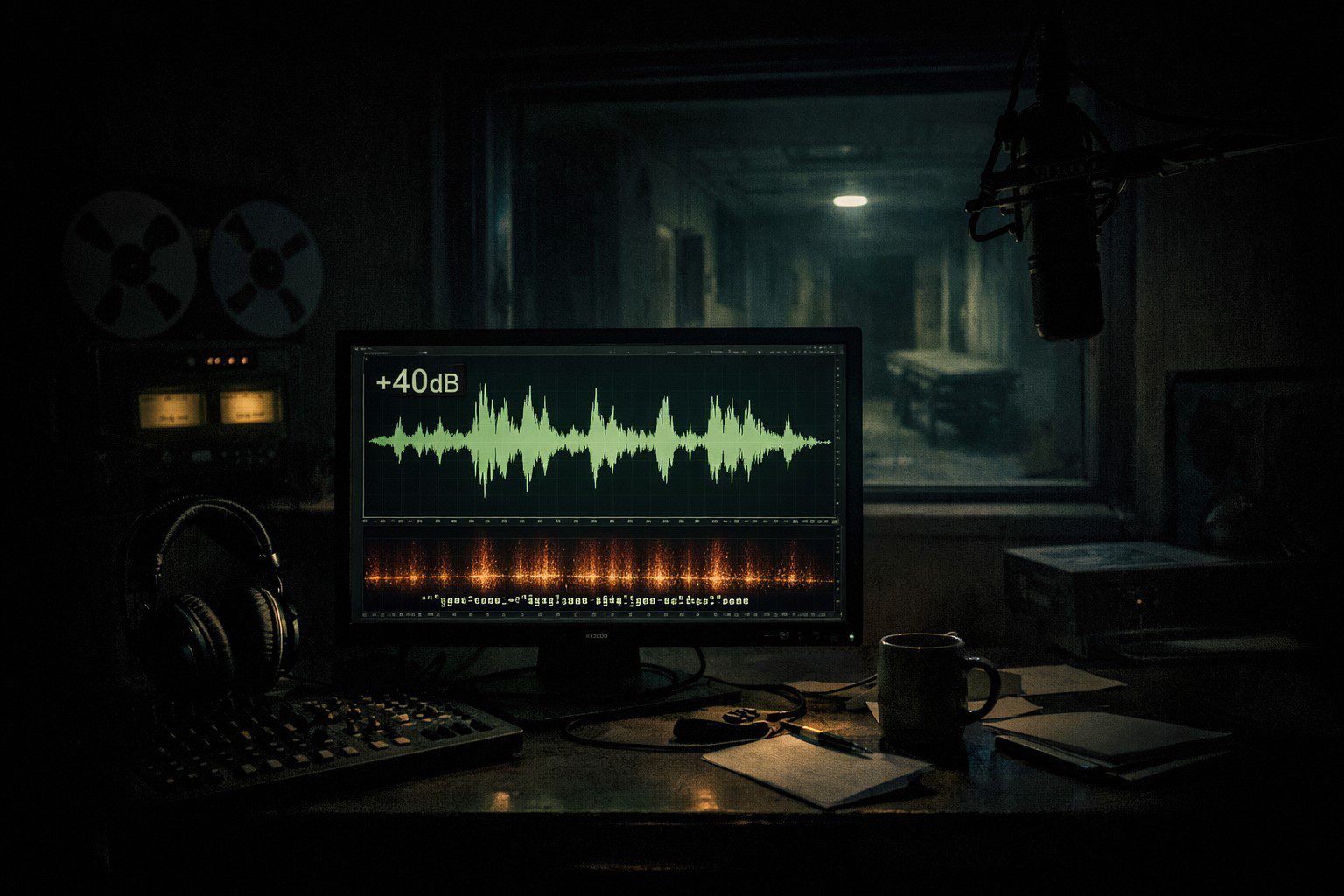
And then returned to the original interval after I had stopped listening in that session and moved on to a different file.
The voice — whatever it was, whatever it came from — had not been speaking at a consistent rate throughout the seventeen minutes. It had sped up during the period when it was being heard, and slowed down again when the listening stopped.
I have kept the drive in a desk drawer. I have not listened to the recording again. Not because I am afraid of what I will hear, but because I am afraid of what the rhythm will do when I begin to hear it.
Of whether it will speed up again.
Of whether, this time, it will not slow down when I stop.
Dr. Mabry called me last month. She had heard from one of the academics who had written the papers and had some follow-up questions for me about the original processing. I answered them. At the end of the call, before she said goodbye, she was quiet for a moment.
“The recording,” she said. “Do you still have it?”
“Yes,” I said.
Another pause. “I’ve been thinking about it quite a lot,” she said. “More than I would like.”
“Me too,” I said.
“Do you think,” she said carefully, “that it was trying to say something specific? That there was a content to it, beyond the repetition?”
I thought about the quality of the voice. Patient, urgent, relieved. The way it had changed in small ways each time it repeated the phrase. The way it had moved faster when there was an ear in the room.
“I think,” I said, “that it was trying to be heard.”
She was quiet for a moment.
“Yes,” she said. “That’s what I thought too.”
Neither of us said anything after that for a little while.
Then she said goodbye, and I said goodbye, and I put the phone down and looked at the desk drawer.
I have not opened it since.
I am not sure that matters.

 WhatsApp
 Telegram
 Email







Leave a Reply