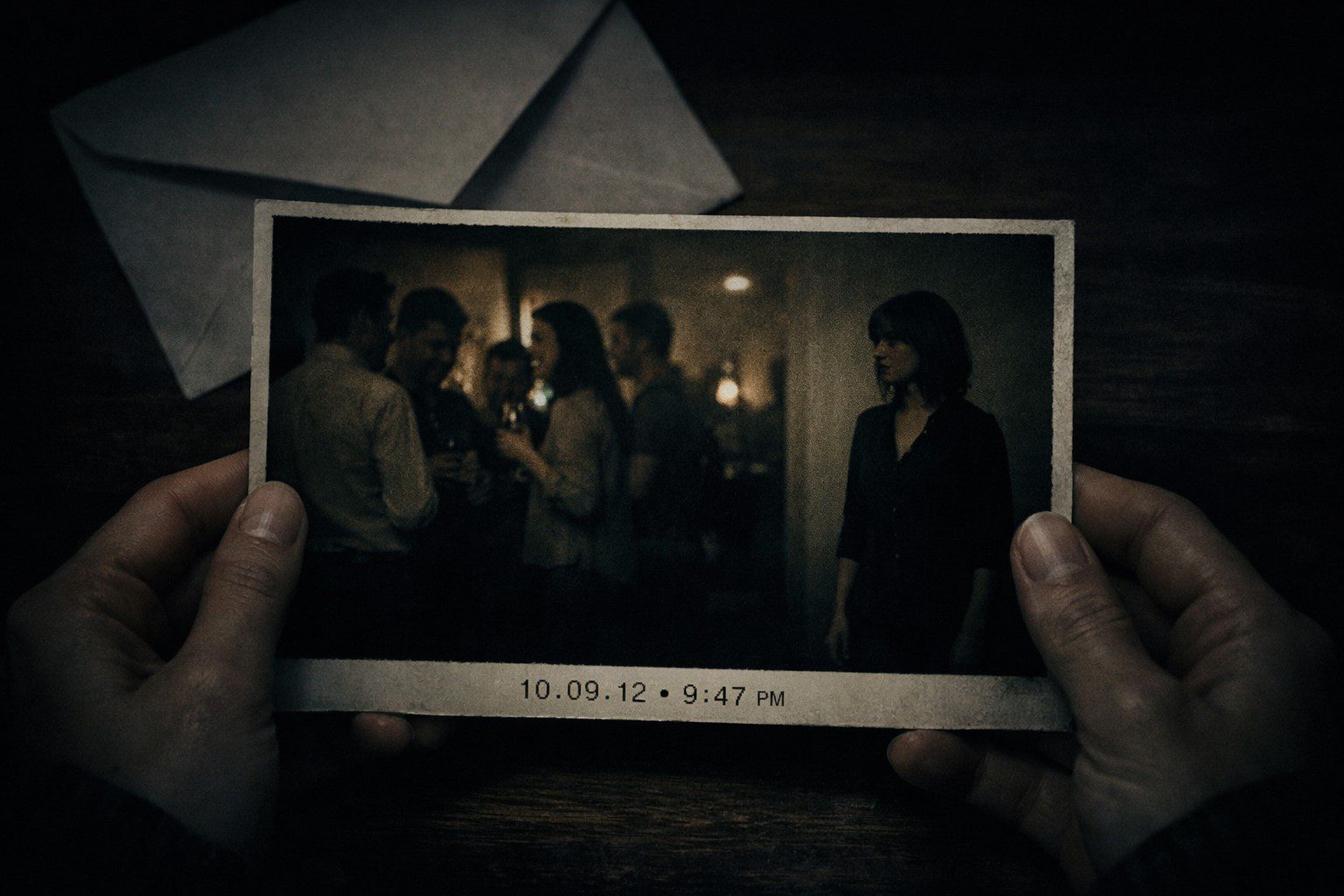
The metadata, she said, was intact and unedited — which was unusual for a photograph this old, because most image files accumulated edits, resaves, and transfer compressions that degraded or altered their metadata over the years. This file was clean. Pristine, she said. As though it had never been opened between the moment it was taken and the moment it was sent to me.
The camera model embedded in the file was a specific make of digital camera that had been discontinued in 2018. The lens signature matched the body. The file was, by every metric she had, authentic. Taken when it said it was taken, in the conditions the metadata described — interior, artificial light, moderate humidity, consistent with an indoor gathering in autumn.
Nine forty-seven p.m. on a Monday in October. When my diary said I had been home since six.
I went back through every piece of documentation I had from that period. Bank statements — no card transactions that evening. Transport records — no Oyster card usage after five forty-three, when I had used it to come home. Phone records I requested through my network provider: no calls, no data usage between six twelve p.m. and eight forty-four the following morning. Every digital record I could find placed me at home from six p.m. onward.
The photograph placed me at a gathering at nine forty-seven.
One of these was wrong. The photograph’s metadata was clean, Drew had confirmed. My records were original documents, not reconstructions.
I sat with the impossibility for a long time.
Then I thought of something I had not thought of before, something I should have thought of immediately but had been circling around without approaching directly, the way you sometimes circled things you were not ready to face.
I did not recognise the people in the photograph. But I recognised the location.
It was the hallway of a house I had not been in since I was twenty-six. A house in North London that had belonged to a woman named Ruth Hale, who had been my friend for two years in my late twenties before a disagreement — serious enough to end the friendship, small enough that I could no longer clearly remember its shape — had put a permanent distance between us. I had not spoken to Ruth in fourteen years. I had not been in her house since the year of the disagreement.
The party in the photograph had been at Ruth’s house.
I knew this because I remembered the hallway exactly — the particular curve of the staircase banister, the pendant light with the amber shade, the narrow window beside the front door that was always slightly drafty. These were the details you retained from a place you had spent time in and then lost.
I had not been at a party at Ruth’s house nine years ago. We had not spoken in fourteen years. The timeline made no sense.
But the hallway was Ruth’s hallway. The photograph was real. And I was in it, not smiling, watching something outside the frame.
I found Ruth through a professional network — not difficult, she was still in the same city, still in the same industry, a development architect now. I sent a message so neutral I read it back three times to make sure it revealed nothing: that I had come across a photograph that I thought might be from a gathering at her home some years ago, and I would welcome the chance to speak if she was open to it.
She replied the same day. She said she was glad I had been in touch. She said she had been expecting to hear from me for a while.
That phrasing stopped me. Not glad to hear from you — expecting.

 WhatsApp
 Telegram
 Email







Leave a Reply