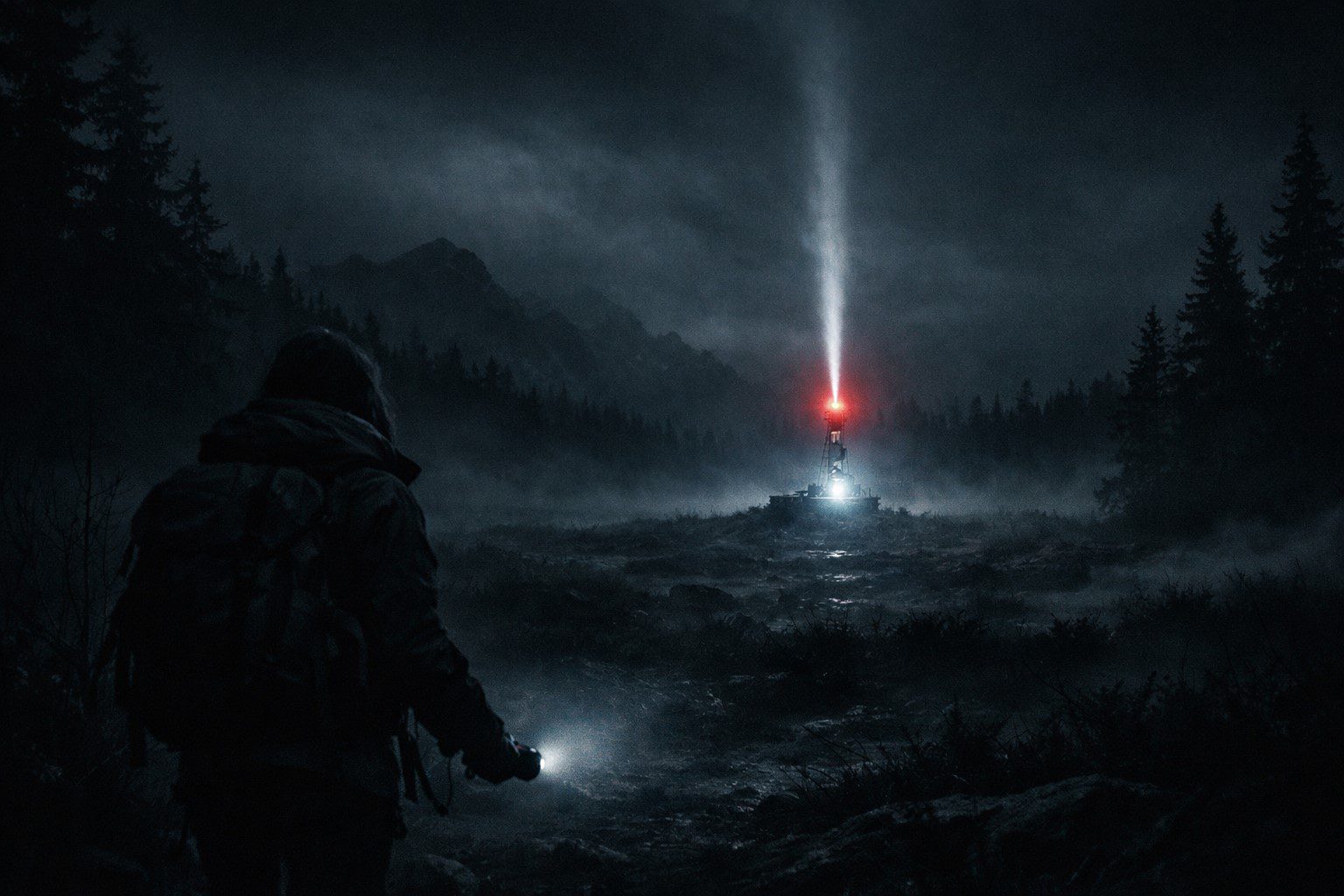
They had seen me before I saw them. They were watching me with the stillness of someone who had been waiting for a very long time.
I descended carefully. The valley floor was solid and the terrain was navigable, and by the time I reached the tent my receiver was registering the beacon at full strength — the source was a PLB clipped to the tent guy-rope, still transmitting, battery indicator still showing green.
The person was a man. Fifties, bearded, the look of someone who had been outside for a long time — weathered and drawn but not critically so. He was hydrated; the water filter and the collapsed bottles beside him told me he had found a source. He was not injured in any obvious way. He watched me cross the last twenty metres with an expression that was relief, certainly, but complicated by something else I couldn’t immediately name.
“Search and rescue?” he said.
“Yes. Rosa Keel. Are you injured?”
“No.” He paused. “How many tries did it take you to get here?”
“First try,” I said.
He looked at me for a moment. “The others turned back.”
“Three teams,” I said. “They reported navigation failure.”
He nodded slowly. “I know. I watched them. They got to the ridge and then they turned around.” He glanced down at his hands. “I thought the location was the problem. That something about this valley was preventing anyone from descending into it.”
“What made you think that?”
“Because I couldn’t leave,” he said. “I’ve tried twelve times in eleven days. My navigation holds until I reach the rim, and then something goes wrong and I end up back here. Every time.”
I sat down on the rock across from him and looked at the valley walls. The beacon signal pulsed steadily on my receiver.
“Your name?” I said.
“Martin Voss. I’m a geological surveyor. I came out here independently — private commission, mapping a mineral survey.” He looked at the valley. “I found something that explained the navigation issues. The rock formation here — there’s a significant iron ore deposit beneath the valley floor, concentrated enough to produce a substantial local magnetic anomaly. It affects compasses, disrupts GPS signals.” He paused. “What it doesn’t explain is why I keep ending up back here when I try to leave.”
I thought about that while I assessed the situation. Martin Voss was physically capable of walking out. His equipment was functional. The terrain between the valley and the treeline was navigable — I had just come down it. The anomaly he had described was real and consistent with what I had measured, but I had navigated through it.
“You said you’ve tried to leave twelve times,” I said.
“Yes.”
“Always getting disoriented at the rim?”
“Always ending up back here. I don’t always remember the journey back.” He said it matter-of-factly, the way people stated things that frightened them when they had had too much time alone to become frightened of.
“Tell me exactly what happens when you try to leave,” I said.
He described it methodically. He would reach the valley rim, always at a different point — he had tried to vary his exit direction. At the rim, his compass would give inconsistent readings, his GPS would cycle. He would pick what seemed like a clear landmark and walk toward it. And he would find himself back in the valley, sometimes hours later, once with no memory of a gap at all.
I listened to all of it. Then I said: “Have you always been trying to navigate out on your own?”

 WhatsApp
 Telegram
 Email






Leave a Reply