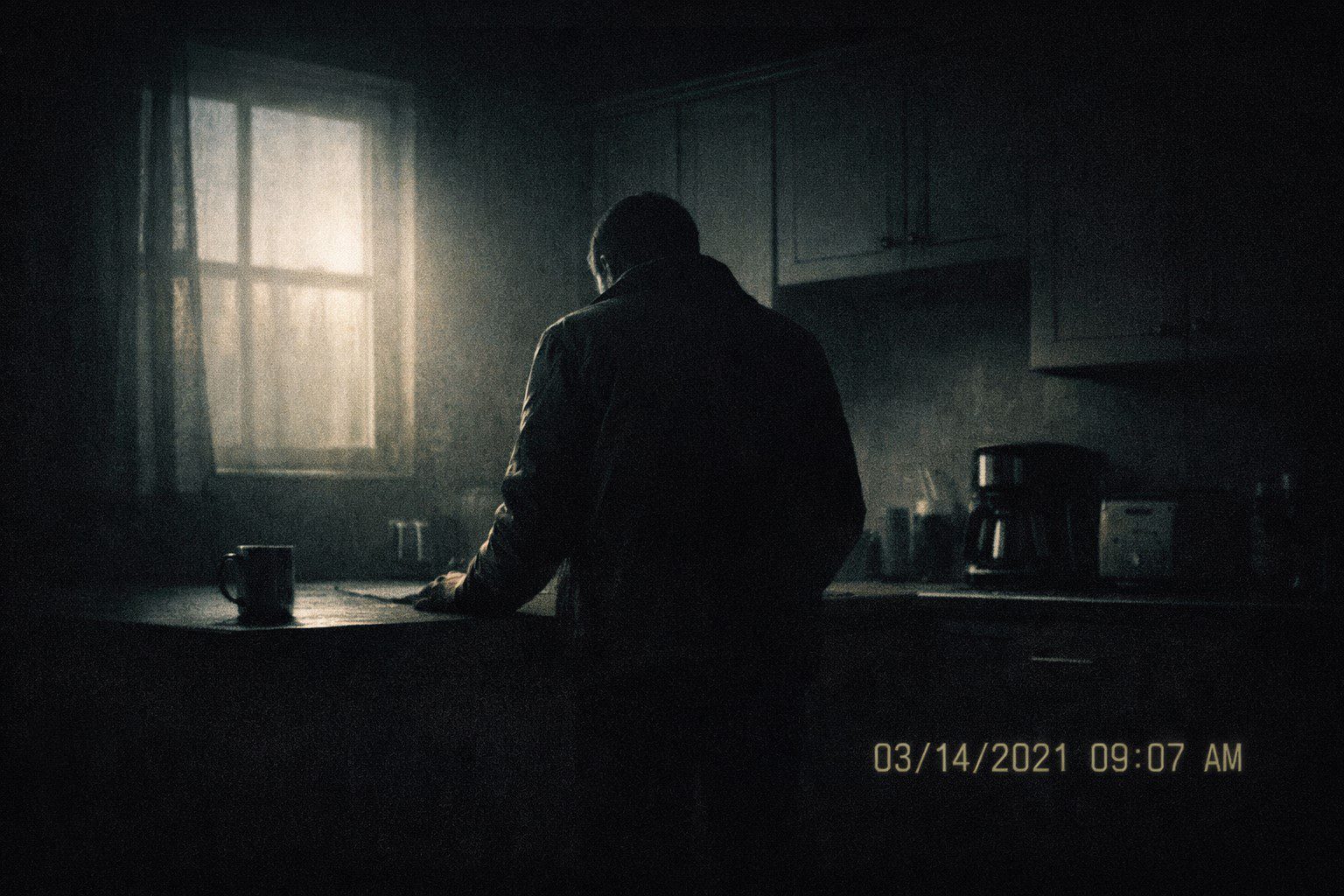
The fresh ink on my name was a message from a dead man in a notebook sealed in a box. Which meant the house had written it. Or something in the house had. Something that knew I was coming before I knew I was coming, that had recorded my arrival before it happened, that had waited while I found the storage device and the photographs and the notebooks, and had been patient in the particular way of something that knew exactly how the sequence went.
I am still in the house. I want to be clear about that, because it seems like the thing a person reading this would want to know. I am in the house and I am not leaving, and I want to be careful about why.
It is not that I cannot leave. I could. There is nothing preventing me — no locked doors, no compulsion I can identify, no threat I have experienced in the weeks since I found the notebook. The house is ordinary in every physical sense. The windows open. The front door unlocks. I drove to the supermarket on Thursday and came back and nothing was different.
I am staying because of the notebook.
Edmund Vaas had spent thirty-one years here. Thirty-one years of systematic records, of keeping logs, of living alongside whatever the house was doing and documenting it with the patience of a researcher who had found something genuinely unknown and chosen, deliberately, to stay and understand it rather than leave and never know.
He had written give them time in his final entry. He had written it about me specifically, about the person who would come next and find the records and not understand what they were seeing at first.
I am the person who came next. I am at the beginning of something Edmund Vaas spent thirty-one years studying. I have his notebooks, his photographs, his thirty-one years of observation, as a starting point.
And on my desk, next to the storage device, there is a new image file that appeared this morning in a folder that was empty yesterday.
I have not opened it yet.
I am deciding whether I want to know what it shows, or whether some part of the sequence is better experienced in real time, without the preview.
Edmund Vaas, I think, would understand that question. He would probably have a notebook entry about it.
I am beginning to understand why thirty-one years was not enough.

 WhatsApp
 Telegram
 Email







Leave a Reply