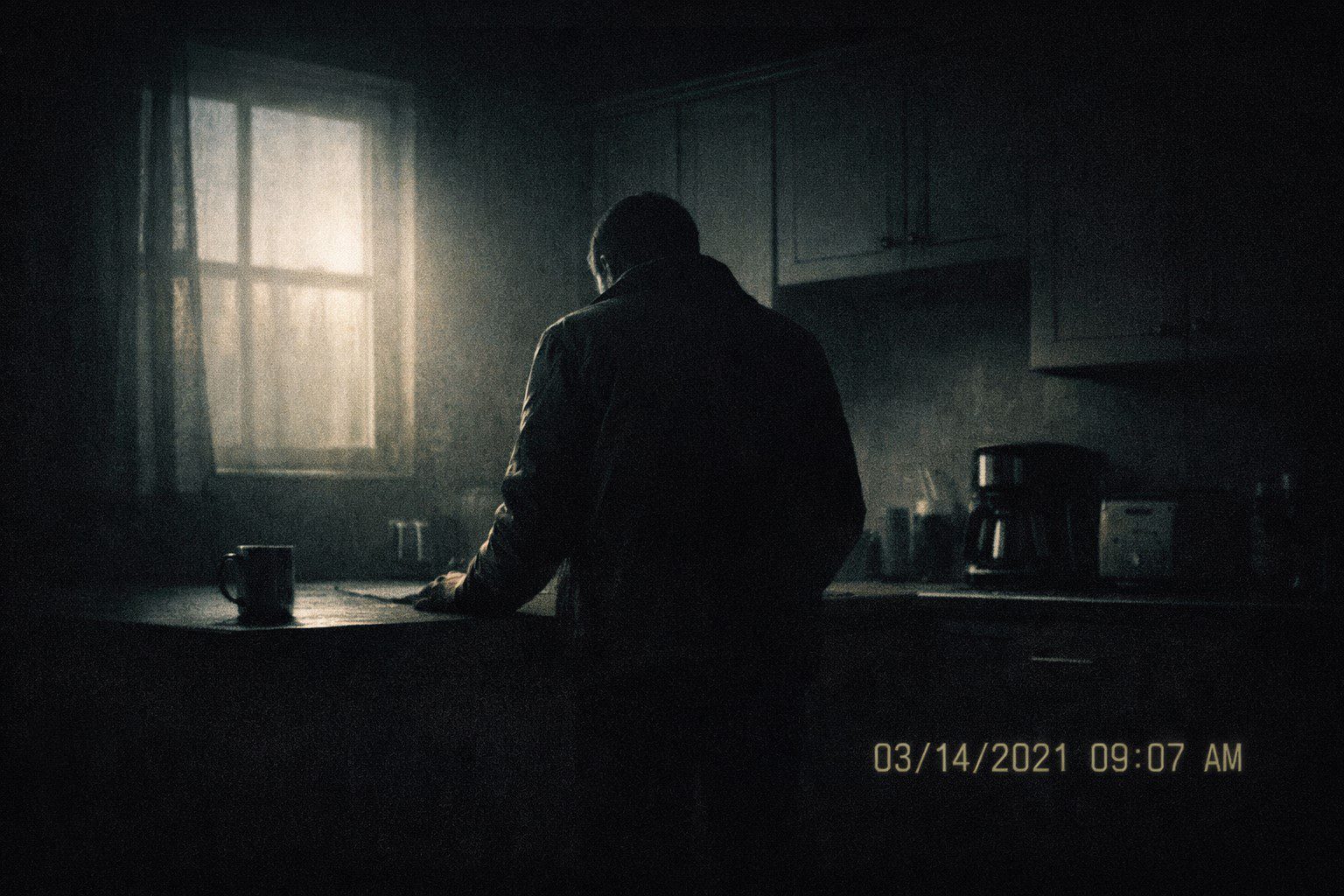
I called the letting agent the following morning and asked about the previous owner. She was cautious and professional and said she could confirm that the property had been managed through the estate following Mr. Vaas’s death and that the letting had been arranged by his executor. I asked whether anyone had had access to the property between his death and my arrival. She said the executor had visited once to catalogue the contents and that a cleaning company had attended prior to my move-in. No other access.
I asked about the storage device. She said she wasn’t aware of one and would note it on the file.
I asked, carefully, whether there was anything about the property that had not been included in the letting description.
A pause. The kind that meant something.
“Mr. Vaas had lived there for thirty-one years,” she said. “He was — particular about the house. He kept very thorough records. We found quite a lot of documentation when the estate was cleared.”
“What kind of documentation?”
“Logs, mainly. Observations. The executor described them as a journal but more — systematic than that. He kept records of the house in the way you might keep records of a research subject.”
I looked at the storage device sitting on my desk. Two thousand photographs. The last one of me.
“Was any of that documentation left in the property?” I asked.
Another pause. “Not to our knowledge,” she said.
I went back to the utility room. Behind the storage device, pushed further into the alcove behind the boiler than I had initially checked, I found a cardboard box. Inside: four notebooks, black-covered, labelled by year on the spine. The most recent was labelled 2023–2024. I opened it to the last written page.
Edmund Vaas had small, precise handwriting. The final entry was dated February 3rd — the day, I would later confirm, that he had died.
Most of the entry was illegible — the writing had become unsteady toward the bottom of the page, trailing off in a way that told its own story. But the final lines were clear. He had pressed harder at the end, as though he had known it was the end.
The house will find the next one. It always does. They will not understand what they are seeing at first. That is normal. Give them time.
Below that, in a different ink, more recently added — the pen still slightly fresh when I ran my thumb across it, which should not have been possible in a box that had been undisturbed since before my arrival:
Hello, Owen.
I sat in the utility room for a long time with the notebook in my hands.
The house had found me. That was what Edmund Vaas had written, in the manner of a man who had come to understand something over thirty-one years and was leaving instructions for whoever came next. The house found people. It kept records of them before they arrived, in ways that should not have been possible, and then it waited for them to find the records.
I thought about the photograph. 0001.jpg. The first in a sequence not yet continued. A sequence I was now, apparently, part of.
I thought about Edmund Vaas spending thirty-one years in a house that photographed its future occupants and kept journals that he had, in the end, written alongside. He had not run. He had not contacted anyone outside, as far as I could tell. He had settled into the house’s rhythms and become — collaborative, was the word that came to me. A co-author of something he hadn’t started and hadn’t finished.

 WhatsApp
 Telegram
 Email







Leave a Reply