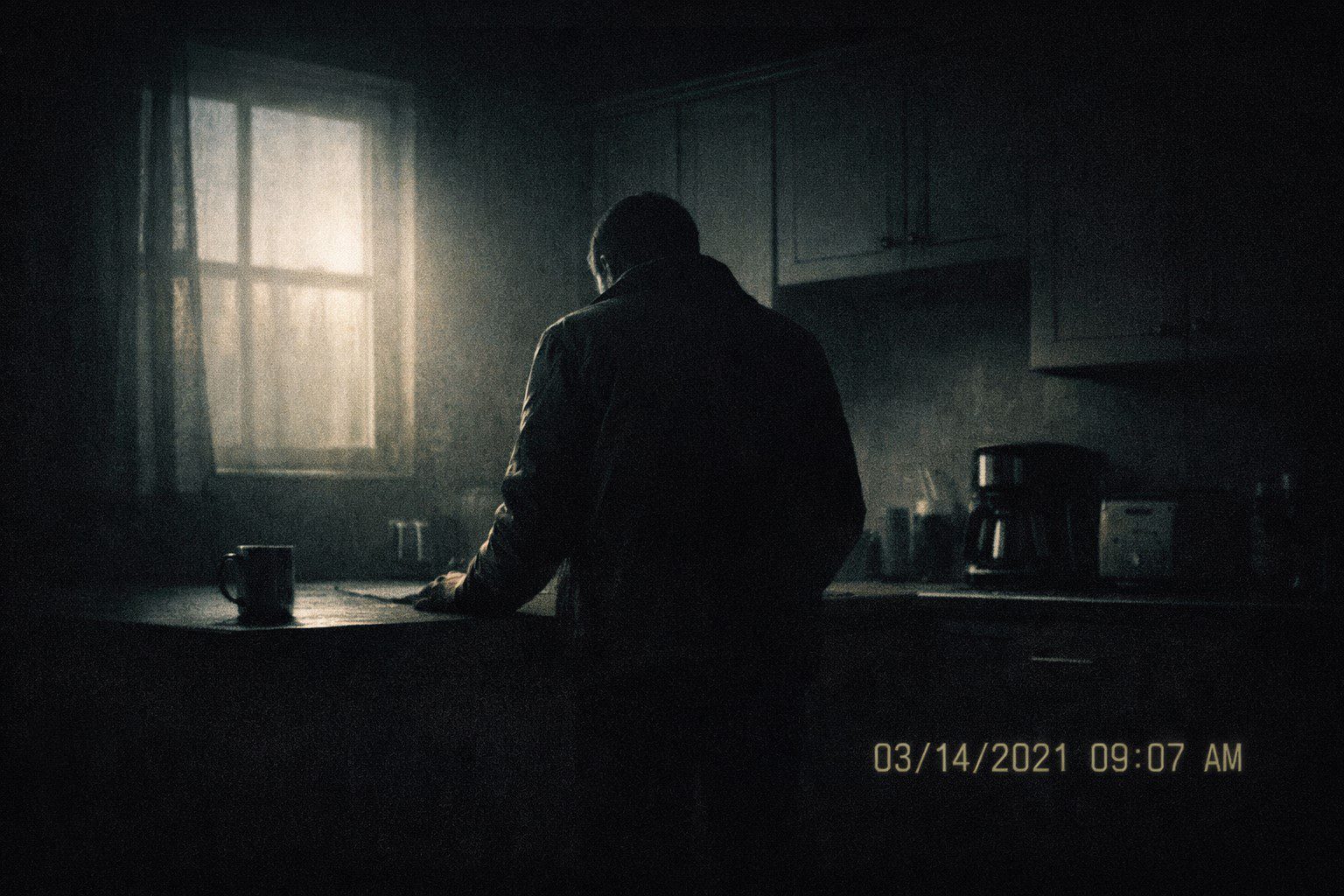
The photograph was taken in my kitchen on the morning of March 14th. I know this because the timestamp is embedded in the file and the light through the window matches nine a.m. in March. I also know that I did not arrive at this house until March 16th, that no one else had a key, and that I am the person standing at the counter in the photograph.
I found it three weeks after I moved in, buried in a folder of old image files on the house’s previous owner had left on the network-attached storage in the utility room. Among two thousand photographs of people I didn’t know, there was one of me. In a kitchen I hadn’t yet entered. Two days before I got there.
My name is Owen Bryce. I am forty-four years old and I work in data infrastructure, which means I spend my professional life understanding how information moves and where it comes from. I do not believe in things that cannot be sourced and verified. I had moved to the house in Dunmore because my company had relocated its regional office and I had needed somewhere quickly, and the rental had come furnished, which suited a man who had been living between flats for eight months.
The storage device in the utility room had not been mentioned by the landlord or the letting agent. It was a small black box tucked behind the boiler, connected to the house’s router. I found it when I was tracing the network setup on my second day. I connected to it out of professional habit, intending to wipe it and repurpose it. Instead I found the photographs, and I spent three hours going through them before I found mine.
It was the last image in the folder. File name: 0001.jpg. As though it were the first in a sequence that had not yet continued.
The photograph showed me from behind. I was standing at the kitchen counter in a grey jumper I recognised — I had owned it for two years, had worn it on the drive up from the city. My posture was mine: one hand on the counter, weight slightly on the left foot, the particular way I stood when I was waiting for a kettle. The kettle on the counter was the one that had been in the kitchen when I arrived. The morning light was correct for March. The window showed the back garden, bare and grey, the same bare and grey garden I had looked out at every morning since.
Everything in the photograph was mine. Everything in the photograph was correct. Two days before I was there to be photographed.
I copied the file to my laptop and spent the rest of that evening going through its metadata. The timestamp was consistent with the file’s creation date, confirmed by the storage device’s log. The camera ID embedded in the file was a model number I didn’t recognise. I searched it — a discontinued digital camera, manufactured between 2009 and 2013, no longer in production. The previous owner had been photographed in dozens of images on the device — an older man, seventies, who appeared in kitchens and gardens and living rooms with the unselfconscious regularity of someone recording their own ordinary days.
His name, from a label on a box in the utility room, was Edmund Vaas.
I searched him. He had died in February — five weeks before the photograph of me had been taken.

 WhatsApp
 Telegram
 Email







Leave a Reply