The mountain lodge smelled of pine resin and woodsmoke, and Dulce Anaya was winning.
She had been winning for most of the afternoon, in fact — at cards, at the trivia rounds, at the small, cheerful competitions the retreat organizers had scattered through the weekend like party favors. The lodge sat high in the Blue Ridge Mountains of western North Carolina, its wide timber deck overlooking a valley already turning amber and rust with early October, and the whole place carried that particular feeling of a world that had decided, just for a few days, to be uncomplicated. Dulce had needed uncomplicated. She had come here after eight months of project deadlines and a relationship that had dissolved slowly, like something left too long in water, and she had allowed herself, finally, to feel light.
The final game of the evening was called Meridian.
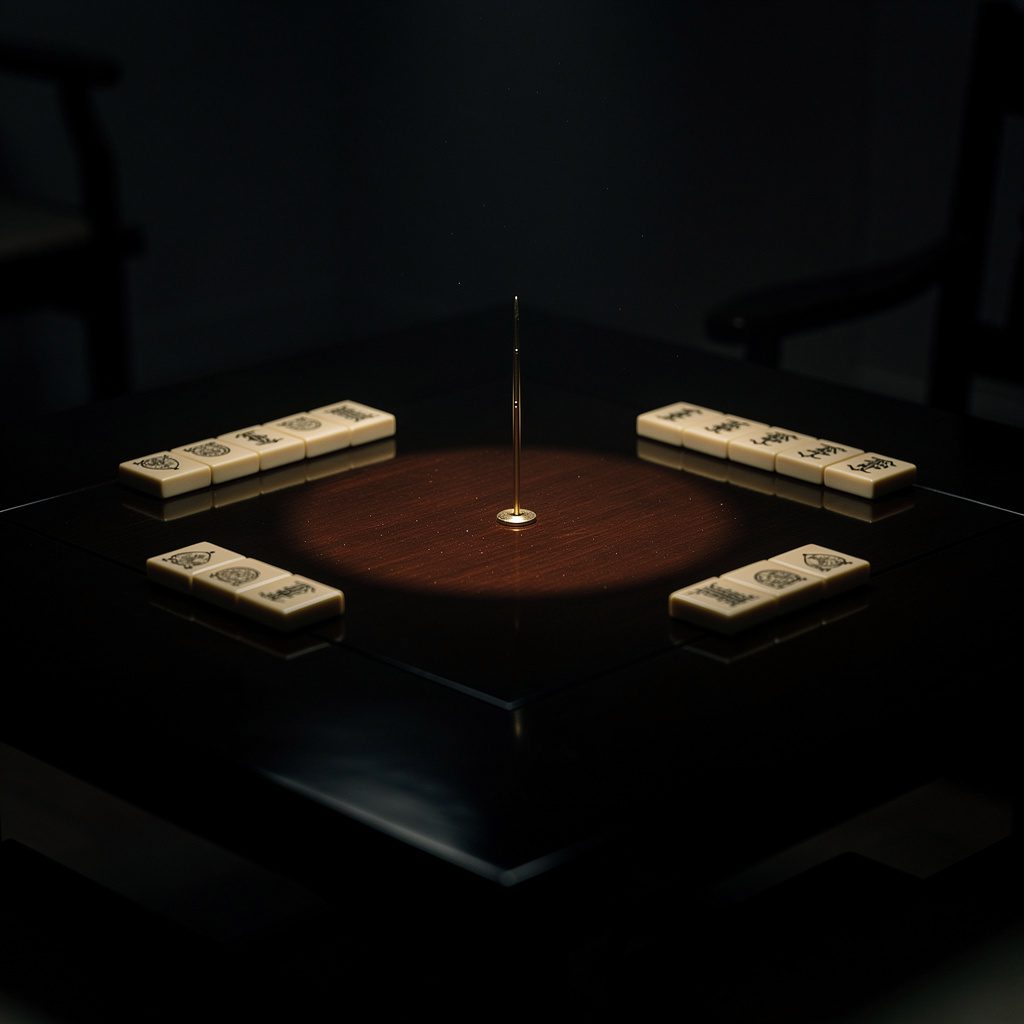
Nobody at the table had heard of it. There were six of them gathered in the lodge’s great room — Dulce, two colleagues from her firm, and three other guests she’d met only that morning over breakfast. The organizer, a compact man with close-cropped silver hair who had introduced himself simply as Peet, set the board on the table with the careful reverence of someone placing a museum piece. The board was unusual: black lacquered wood, inlaid with a circular track of ivory tiles, each tile bearing a symbol rather than a number. In the center sat a brass dial, and from the dial rose a thin vertical needle that trembled faintly, though there was no draft in the room.
“Meridian is a strategy game,” Peet said. “The goal is simple. Move your marker around the track. Reach the center before the clock expires.”
He pointed to a small brass timer on the board’s edge. It was already wound.
Dulce looked at the board, then at Peet. “What does the winner get?”
Peet smiled. It was a pleasant smile. “The winner gets to leave.”
Everyone laughed. Dulce laughed too. She assumed it was a joke about the game’s mechanics — a metaphor, the kind of thing a clever game designer would say. She picked up her marker, a small obsidian disc, and set it on the starting tile.
The timer began.
The first few rounds were genuinely fun. The symbols on the tiles corresponded to cards drawn from a worn deck Peet produced from his coat pocket, and the cards dictated moves, reversals, trades of position. There was strategy involved — real strategy — and Dulce felt the familiar sharpening of focus she always felt when a problem had clean rules. She moved confidently. She advanced.
It was after the fourth round that she noticed the door.
The lodge’s main entrance, a heavy oak door with iron hardware, had been closed when they sat down. It was still closed. But Dulce could see, at the base of the door, that the small green indicator light on the electronic lock had turned red. She wasn’t certain when it had changed. She hadn’t been watching. None of them had been watching.
She kept playing.
The man to her left — a guest named Rowan, a tall, soft-spoken architect from Portland — drew a card that sent his marker backward six tiles. He groaned good-naturedly and reset his position. But Dulce noticed his jaw tighten in a way that didn’t match the groan. She noticed his eyes move, just briefly, to the window.
The window showed only dark. The valley was gone. The trees were gone. There was a mist out there now, dense and low, pressing against the glass like something with weight.
Peet watched them all with that same pleasant expression.
Dulce drew her next card. The symbol on it was one she hadn’t seen before — a horizontal line bisected by a vertical one, forming a simple cross. She held it up. “What does this one mean?”
“That one,” Peet said, “means you stay exactly where you are.”
“For how long?”
“Until someone else draws the same card.”
She set the card face-up on the table. No one else moved. The timer ticked. The needle at the center of the board trembled.
It was Rowan who finally spoke what everyone in the room had begun, in their separate ways, to feel. He did it quietly, almost casually, as if he were commenting on the weather. “The door is locked,” he said.
Peet did not deny it.
“Why is the door locked?” Dulce asked.

 WhatsApp
 Telegram
 Email







Categories
- AI & Technology
- Contemporary
- Corporate Control
- Creepypasta
- Crime Thriller
- Cyberpunk
- Dark Fantasy
- Enemies to Lovers
- Fairy Tale Retelling
- Fantasy
- First Contact
- Forbidden
- Genetic/Body Horror
- High Fantasy
- Monster Hunter
- Mythic/Folklore
- Paranormal
- Portal/Otherworld
- Post-Apo
- Post-Collapse Society
- Psychological Thriller
- Romances
- SCI-FI
- Second Chance
- Slow Burn
- Space Combat
- Spacepunk
- Surveillance State
- Survival Thriller
- Thrillers
- Time Travel
- Treasure Hunter
- Urban Fantasy
- Witchcraft/Curses
Tags
10min stories atmospheric atmospheric fantasy atmospheric fiction contemporary romance Creepy creepypasta crime thriller dark fantasy debt dystopia emotional fiction enemies to lovers ensemble cast epistolary fantasy female protagonist first person forbidden romance framed narrative high fantasy love story magic Memory mystery Paranormal psychological horror psychological thriller romance sci-fi second chance second chance romance short fiction short story slow burn space station speculative fiction supernatural Survival survival thriller suspense thriller travel romance witchcraft workplace romance
Leave a Reply