They did the collaboration. It took four weeks and it was the hardest and most absorbing work she had ever done, and she understood by the end of the first week that she was in serious trouble, and by the end of the second week that she had been in serious trouble since the morning he put a coffee on her desk without asking. They argued about everything — structure, tone, the exact moment a piece of music should enter a scene, the precise weight a silence should carry — and the arguments were alive in a way that working alone had never been, and she found that she was better inside the friction than outside it, sharper and more certain and more herself. He pushed back on every weak choice and she pushed back on his, and the work that came out of it was genuinely good, better than either of them would have made alone, and this was the most inconvenient fact of all.
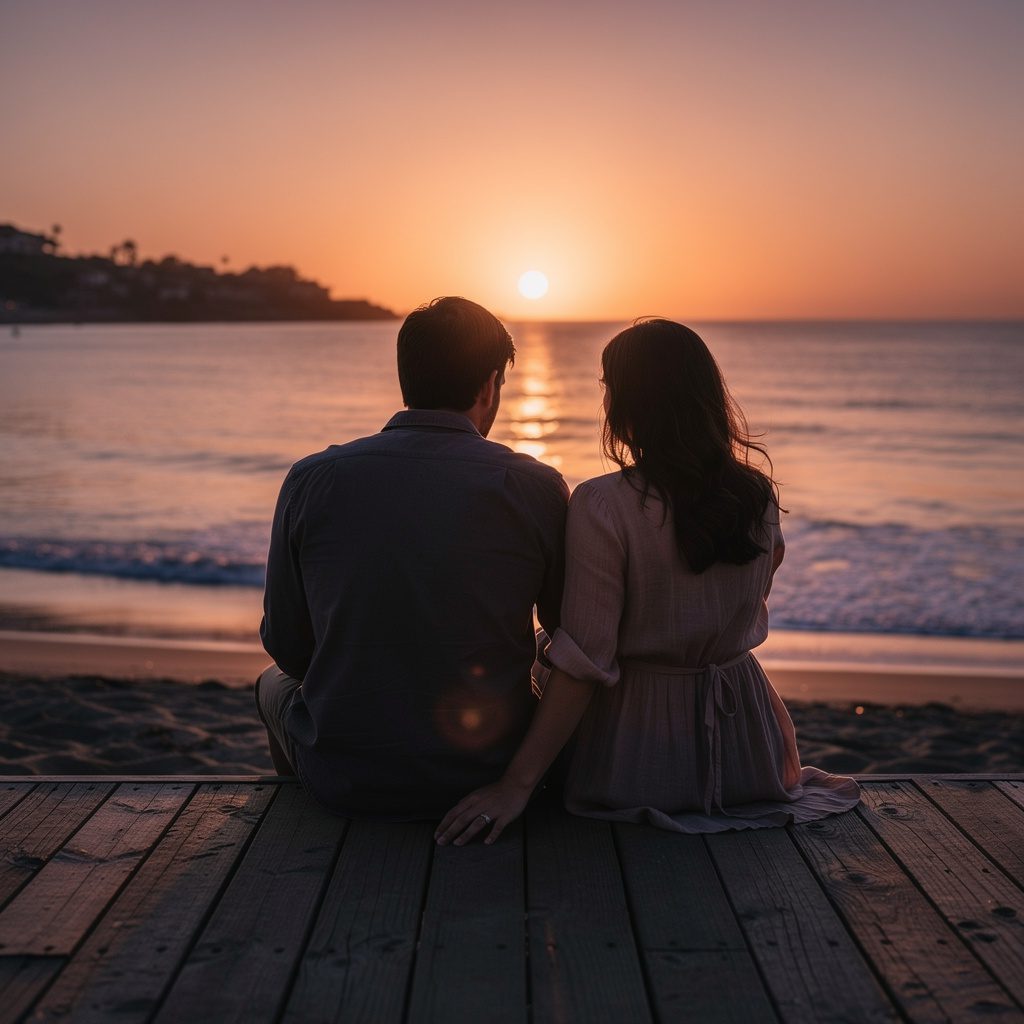
The last evening before the retreat ended, they sat on the back deck as the sun went down over the water. The Pacific was doing its late-summer thing — going all copper and rose at the horizon, the waves smaller and quieter than they had been in the mornings, the air still warm and carrying that particular Santa Barbara smell of salt and eucalyptus and something faintly floral that she had never been able to name. They had finished the project that afternoon. They had sent it in. There was nothing left to do.
She had been very quiet for an hour. He had let her be quiet, which was one of the things about him that she had not expected and had not prepared for — he understood the difference between a silence that needed filling and one that didn’t. She was going back to Los Angeles in the morning. He was going to New York. These were facts she had been holding at arm’s length for two weeks, examining only in the abstract, the way you examine something that might hurt if you look at it directly.
“I keep thinking about the scene,” she said finally. She didn’t specify which one. She didn’t need to.
He turned to look at her. The light was in his eyes and he squinted slightly and she thought she would remember that exact image for a very long time. “The one where they can’t say the true thing?” he said.
“I think I was writing about myself,” she said. It cost her something to say it. She felt the cost clearly, like a pressure in her chest, and she held his gaze anyway.
Karim was quiet for a moment. Then he said, “I know. I knew when you slid the page across the desk.” He paused. “I was waiting for you to catch up.”
She laughed, a short surprised sound. “That is incredibly arrogant.”
“Yes,” he agreed, and he was smiling now, that particular smile she had catalogued without meaning to, the one that was warm and a little rueful and entirely genuine. “But I’m also right.”
She looked at the water for a moment. The last of the copper light was fading and the sky above the horizon was going soft and dark. She thought about being careful. She thought about the cost of carelessness and the cost, equally real, of being so careful that nothing could reach you. She thought about four short beats and one long one and the way his music had fit her words like it had always known where to go.
“So what do we do?” she said.
He reached over and covered her hand with his, unhurried, like it was the most natural thing. “We say the true thing,” he said. “Finally.”
And she turned her hand over and held on, and the ocean kept going, and the sky went dark, and that was how it started — or rather, that was how she finally let it.

 WhatsApp
 Telegram
 Email







Categories
- AI & Technology
- Contemporary
- Corporate Control
- Creepypasta
- Crime Thriller
- Cyberpunk
- Dark Fantasy
- Enemies to Lovers
- Fairy Tale Retelling
- Fantasy
- First Contact
- Forbidden
- Genetic/Body Horror
- High Fantasy
- Monster Hunter
- Mythic/Folklore
- Paranormal
- Portal/Otherworld
- Post-Apo
- Post-Collapse Society
- Psychological Thriller
- Romances
- SCI-FI
- Second Chance
- Slow Burn
- Space Combat
- Spacepunk
- Surveillance State
- Survival Thriller
- Thrillers
- Time Travel
- Treasure Hunter
- Urban Fantasy
- Witchcraft/Curses
Tags
10min stories atmospheric atmospheric fantasy atmospheric fiction contemporary romance Creepy creepypasta crime thriller dark fantasy debt dystopia emotional fiction enemies to lovers ensemble cast epistolary fantasy female protagonist first person forbidden romance framed narrative high fantasy love story magic Memory mystery Paranormal psychological horror psychological thriller romance sci-fi second chance second chance romance short fiction short story slow burn space station speculative fiction supernatural Survival survival thriller suspense thriller travel romance witchcraft workplace romance
Leave a Reply