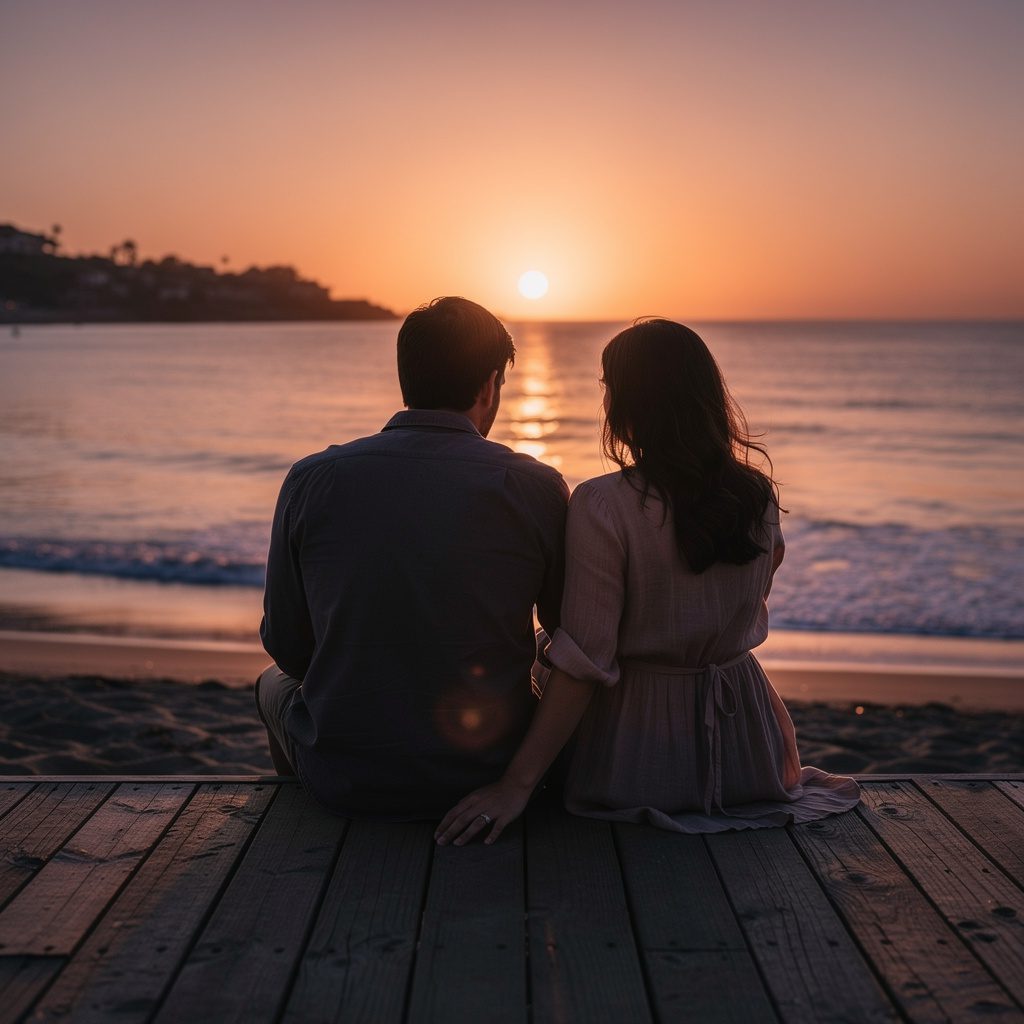
She couldn’t have said exactly when the banter started. It crept in the way those things do, through small cracks in the professional armor — a dry comment about the Wi-Fi, a shared eye-roll at a production email, an argument about whether the window should be open or closed that lasted forty-five minutes and ended with both of them laughing and the window open exactly halfway. He called her “the novelist” even though she wasn’t a novelist, and she called him “the maestro” even though he winced every time, and these became the names they used when they wanted to needle each other gently, which was often. She noticed that he worked with headphones around his neck rather than over his ears, and she understood this to mean he wanted the option of hearing the room, and she chose not to think about what that meant. She noticed that when he was stuck on something, he would turn his chair slightly toward the window and drum a pattern on his knee with two fingers, the same pattern every time, and she had mapped it without meaning to — four short beats, one long, a pause, repeat. She noticed too many things. She made a private note to stop.
The obstacle was not the rivalry, exactly. It was never really the rivalry. The obstacle was this: Lina had spent the better part of two years being very carefully unattached. Not bitterly, not dramatically — just deliberately, the way you are deliberate about something after you’ve learned the cost of carelessness. She had loved someone before and it had unraveled slowly and then all at once, the way those things do, and she had come out of it intact but careful. Careful with her time, careful with her attention, careful about who she let past the pleasant and professional version of herself that she kept ready at the front. The beach house was supposed to be work. The work was supposed to be the whole point. And then Karim had to go and bring oat milk and play piano in the evenings and look at her sometimes like she was the most interesting thing in the room, and she had no good plan for any of it.
They had their first real argument in the third week. It was about the project — or it started that way. The platform had asked them to consider a collaboration, a short film, score and script developed together, and Lina had said she worked alone and Karim had said he did too and they had both said this with such identical firmness that there had been a beat of surprised silence before he said, “So we agree,” and she said, “We agree,” and somehow that should have been the end of it. But it wasn’t. Because two days later she had read the brief again and thought about the way his music moved — she had looked it up, she admitted this only to herself — and she had thought about a particular scene she was stuck on, a scene about two people in a room who couldn’t say the true thing, and she had thought about the four short beats and the long one, and she had hated herself a little for what she was about to do.
She slid a printed page across the desk to him without saying anything. He picked it up. He read it. His expression did something she couldn’t fully read, and then he said, quietly, “This is the scene you’ve been stuck on.”
Not a question.
“I thought you might hear something in it,” she said. She kept her voice even.
He was quiet for a long moment. Outside, the ocean was doing what it always did — indifferent, enormous, beautiful. The afternoon light had gone amber and low, and the succulents on her windowsill threw small shadows across the desk. He set the page down and turned to look at her, and she felt the full weight of his attention in a way that was different from all the other times, more direct, less easy to deflect with a dry remark about the Wi-Fi.
“Lina,” he said.
Just her name. That was all.
She looked at the page instead of him. “It’s just a scene,” she said.
“I know what it is,” he said.

 WhatsApp
 Telegram
 Email







Categories
- AI & Technology
- Contemporary
- Corporate Control
- Creepypasta
- Crime Thriller
- Cyberpunk
- Dark Fantasy
- Enemies to Lovers
- Fairy Tale Retelling
- Fantasy
- First Contact
- Forbidden
- Genetic/Body Horror
- High Fantasy
- Monster Hunter
- Mythic/Folklore
- Paranormal
- Portal/Otherworld
- Post-Apo
- Post-Collapse Society
- Psychological Thriller
- Romances
- SCI-FI
- Second Chance
- Slow Burn
- Space Combat
- Spacepunk
- Surveillance State
- Survival Thriller
- Thrillers
- Time Travel
- Treasure Hunter
- Urban Fantasy
- Witchcraft/Curses
Tags
10min stories atmospheric atmospheric fantasy atmospheric fiction contemporary romance Creepy creepypasta crime thriller dark fantasy debt dystopia emotional fiction enemies to lovers ensemble cast epistolary fantasy female protagonist first person forbidden romance framed narrative high fantasy love story magic Memory mystery Paranormal psychological horror psychological thriller romance sci-fi second chance second chance romance short fiction short story slow burn space station speculative fiction supernatural Survival survival thriller suspense thriller travel romance witchcraft workplace romance
Leave a Reply