The wedding was in four hours.
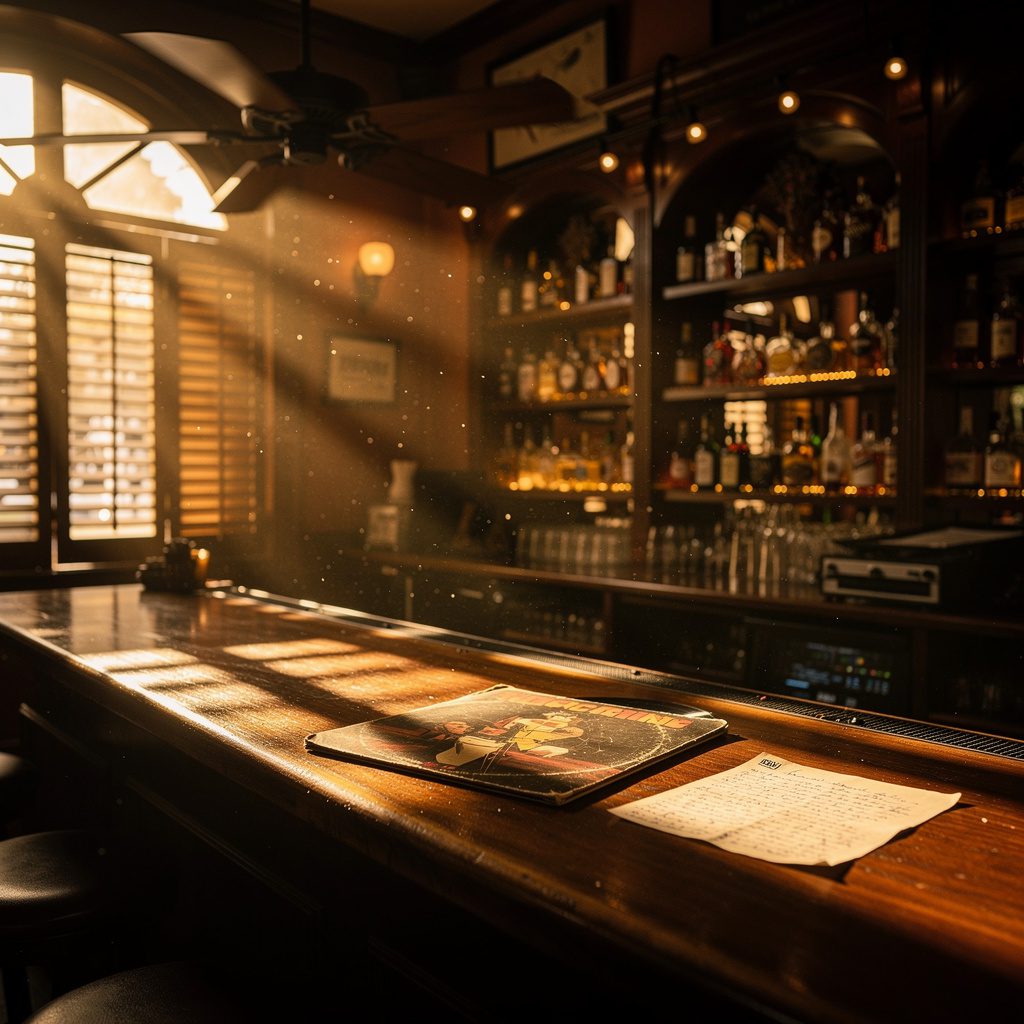
Nandini knew this the way she knew her own heartbeat — not because she was happy about it, but because she had been counting down since the moment she found the letter folded inside Marcus’s old copy of *Kind of Blue*, tucked on the shelf above the bar where she had worked for the last three years.
She had not been looking for it. That was the thing she kept returning to, standing behind the long mahogany counter of the jazz bar on Frenchmen Street, the ceiling fans turning slow overhead, the afternoon light coming in gold and heavy through the shuttered windows. She had been looking for a pen.
The letter was handwritten. Her name was at the top.
—
Marcus had written it eight months ago, on a Tuesday in October when the bar was empty between sets and the rain was coming down hard enough to blur the neon signs on the street outside. He had written it and folded it and slid it inside the record sleeve because he did not know what else to do with the feeling, and he had told himself — firmly, with the kind of conviction that only works in the dark — that he would never give it to her.
She was his coworker. She was his friend. She had laughed at his terrible impressions of the regulars and brought him café au lait on slow Sunday mornings and never once looked at him the way the letter described looking at her.
He had forgotten it was there.
Or he had chosen to forget. The distinction, he was beginning to understand, mattered enormously.
—
Nandini read it twice before she heard the back door open.
She had time to refold it, to press it flat against her palm, to think about slipping it back into the record sleeve as if she had never touched it. She did not do any of those things. She stood very still with the letter in her hand when Marcus came in carrying a crate of limes and looking exactly the way he always looked — a little distracted, a little warm from the walk, his linen shirt already rumpled at the collar.
He saw her face before he saw what she was holding.
“What happened?” he said, setting the crate down.
She held up the letter.
The silence that followed was not like any silence Nandini had experienced in three years of working in a jazz bar, where silence was always just music that hadn’t started yet. This one had weight. It pressed.
Marcus went very still.
“Nandini.”
“You wrote this in October.” It was not a question.
“I did.”
“And you put it in the record.”
“I did.”
“And you were never going to give it to me.”
He was quiet for a moment. “No.”
She looked at him. He looked back. Neither of them moved, and the ceiling fan kept turning, and somewhere outside on the street a trumpet was warming up, that loose exploratory sound of a musician finding the edges of something before committing to the shape of it.
—
From Marcus’s side, this was every version of the conversation he had rehearsed and then dismantled, all at once, without warning.
He had spent eight months managing the feeling. That was the word he used privately: *managing*. As if it were a difficult employee, something that needed to be redirected, given tasks, kept busy enough not to cause trouble. He had watched Nandini tie her hair back before a busy shift. He had watched her argue passionately with the pianist about whether Coltrane’s later period was transcendent or self-indulgent. He had watched her laugh — the real laugh, not the polite one she used on difficult customers — and he had managed.
And then Ambrose had walked in.
Ambrose Pembroke: old money, easy charm, the kind of man who entered a room already comfortable in it. He had come in six months ago for a private event, and he had looked at Nandini the way men in films look at women they intend to pursue, and he had been right about himself. He and Nandini had been together since February. Marcus had managed that too.
What he had not managed — what he had apparently failed to manage entirely — was removing the letter from the record sleeve.

 WhatsApp
 Telegram
 Email







Categories
- AI & Technology
- Contemporary
- Corporate Control
- Creepypasta
- Crime Thriller
- Cyberpunk
- Dark Fantasy
- Enemies to Lovers
- Fairy Tale Retelling
- Fantasy
- First Contact
- Forbidden
- Genetic/Body Horror
- High Fantasy
- Monster Hunter
- Mythic/Folklore
- Paranormal
- Portal/Otherworld
- Post-Apo
- Post-Collapse Society
- Psychological Thriller
- Romances
- SCI-FI
- Second Chance
- Slow Burn
- Space Combat
- Spacepunk
- Surveillance State
- Survival Thriller
- Thrillers
- Time Travel
- Treasure Hunter
- Urban Fantasy
- Witchcraft/Curses
Tags
10min stories atmospheric atmospheric fantasy atmospheric fiction contemporary romance Creepy creepypasta crime thriller dark fantasy debt dystopia emotional fiction enemies to lovers ensemble cast epistolary fantasy female protagonist first person forbidden romance framed narrative high fantasy love story magic Memory mystery Paranormal psychological horror psychological thriller romance sci-fi second chance second chance romance short fiction short story slow burn space station speculative fiction supernatural Survival survival thriller suspense thriller travel romance witchcraft workplace romance
Leave a Reply