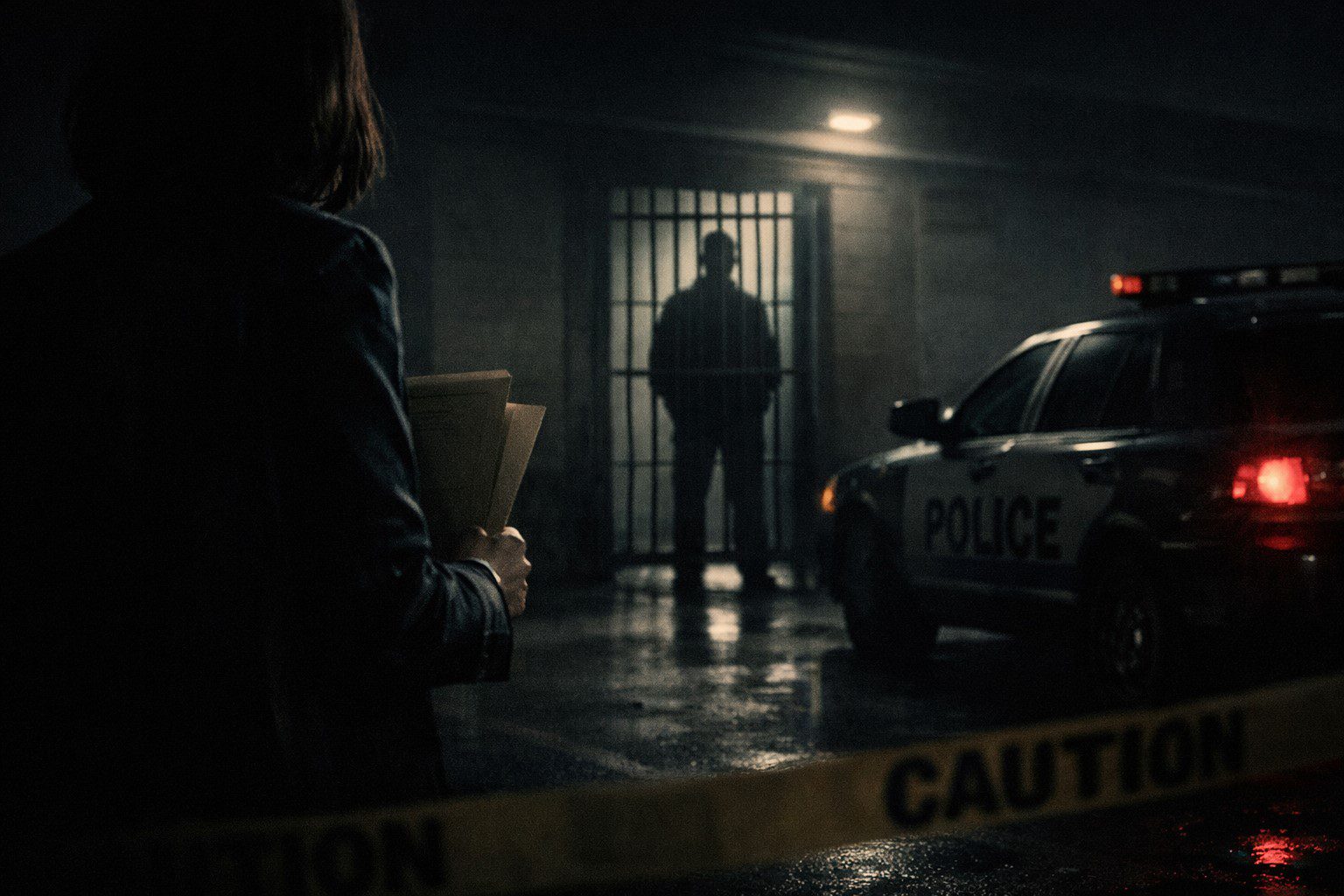
Jean was quiet for a moment. “That’s the thing about this work,” she said. “You can know something professionally for a long time before you know it personally.” She set the papers down. “File the statement. Let the legal team take it from here. And Nora — this isn’t your fault in the way you’re thinking about it as your fault.”
I nodded. I was not certain I agreed. But I filed the statement.
Damien Cole’s appeal was heard eight months later. The Court of Appeal found that the non-disclosure of the vendor statement constituted a material irregularity and that the conviction was unsafe. He was released after serving three years and two months of a nine-year sentence.
I was not in court for the judgment. Jean advised against it and she was right.
I read the judgment when it was published. It was forty-seven pages. My identification and its limitations were addressed in pages twelve through nineteen, with reference to research on eyewitness reliability under stress that I had cited myself in three previous case reviews. Reading my name in that context — as a subject of the analysis I had spent years conducting on others — was an experience I do not have adequate language for.
Damien Cole gave a brief statement outside the court. He did not mention me by name. He said he hoped the case would lead to changes in how eyewitness evidence was weighted in trials without corroboration. He said he held no bitterness toward anyone who had acted in good faith.
I read that sentence several times.
I am not sure I deserved the generosity of it. I am not sure good faith, where it exists, is enough. I am certain, in a way I was not certain before, that certainty is the thing we should be most careful about — not because our eyes and our memories betray us constantly, but because they betray us selectively, at the worst moments, in the ways that matter most.
I am still at Caldwell. I am still reviewing cases. I am, if anything, more thorough than I was before, and more honest in my review notes about the nature of identification evidence, and more precise in my language when I explain to families and legal teams why witnesses who are certain are not always right.
I know this because I was certain.
I know this because I was wrong.
I know it now in the way that Jean described — not professionally, but personally.
The difference between those two things is three years of a man’s life that he will not get back.
That is not a difference I intend to forget.

 WhatsApp
 Telegram
 Email







Leave a Reply