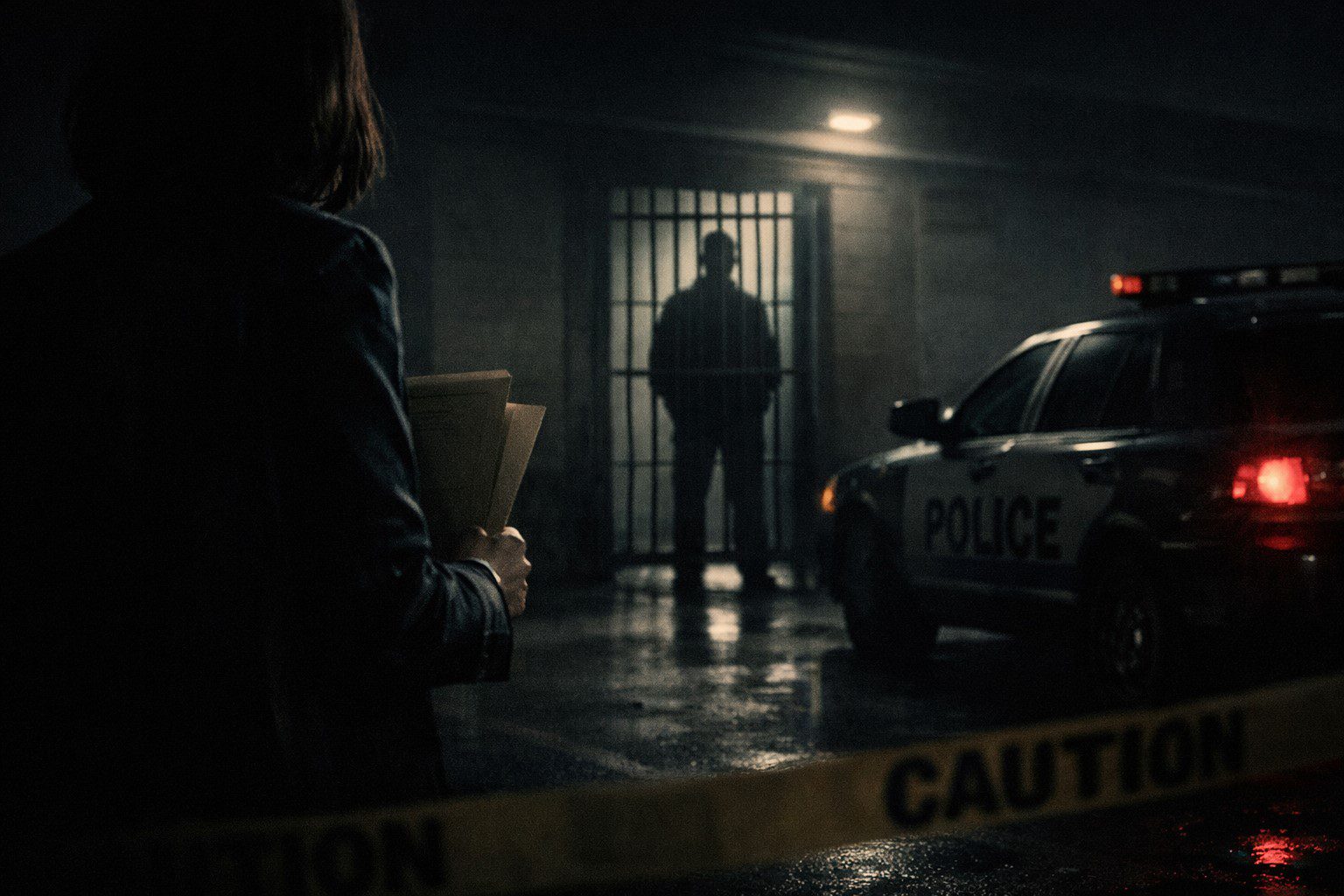
It took three days to assemble. I spent two evenings reading it at the table in our small office with a cold cup of tea going stale beside me. Priya sat across from me and did not ask questions, which was the right thing to do.
What the file showed me was this: the identification procedure had been conducted correctly by the standard of the time. I had been shown twelve photographs and had identified Damien Cole. The procedure had been recorded. Nothing in it was procedurally improper.
What was not in the file was a note from the investigating officer, which Priya found referenced in a disclosure log but not included in what had been passed to the defence. The note recorded a conversation the officer had with a street vendor near the scene who had described a man in a dark red jacket moving quickly away from the area before the police arrived. The note had been logged, categorised as a potential alternative suspect line, and not pursued.
The note had not been disclosed.
I am a former prosecutor. I understand disclosure obligations in ways that are not abstract. I understand that there are failures of disclosure that are inadvertent and failures that are not, and I understand that the line between them matters enormously and is also, sometimes, very hard to establish.
What I understood, sitting in that office with the file in front of me, was that there had been a vendor statement pointing to an alternative suspect, that it had not been disclosed to the defence, and that this omission — whether inadvertent or deliberate — had allowed my identification to stand as the only substantial evidence in a case where there was a second account pointing in a different direction.
Damien Cole had served three years of a nine-year sentence.
I had put him there.
I had been certain. I had been wrong. And the system that should have caught the difference between those two things had not.
I took the case to the senior partner at Caldwell, a woman named Jean who had been doing this work for twenty years and who received the disclosure of my involvement with the particular stillness of someone who was not surprised but was choosing her words carefully.
“You need to recuse yourself from the case review,” she said.
“I know.”
“And you need to make a formal statement about your involvement — your original identification, the nature of your current role, and the conflict.”
“I’ve already drafted it.”
She looked at the draft. She made two changes. She told me it was correct.
Then she looked at me over her reading glasses and said: “The question of disclosure — the vendor statement — that’s a serious matter. If it was deliberate, we’re looking at misconduct. If it was inadvertent, we’re looking at a systemic failure.” She paused. “Either way, Damien Cole’s appeal is substantially stronger than it was this morning.”
“Yes,” I said.
“How are you?”
I had not been asked that yet. I thought about it properly before I answered.
“I’m not sure,” I said. “I know the research. I’ve known for years that eyewitness evidence is fallible in exactly the ways mine was. I’ve argued it in case reviews. I’ve explained to families why their loved one’s conviction was unsafe in part because the witness was certain and wrong.” I paused. “I did not understand it the way I understand it now.”

 WhatsApp
 Telegram
 Email






Leave a Reply