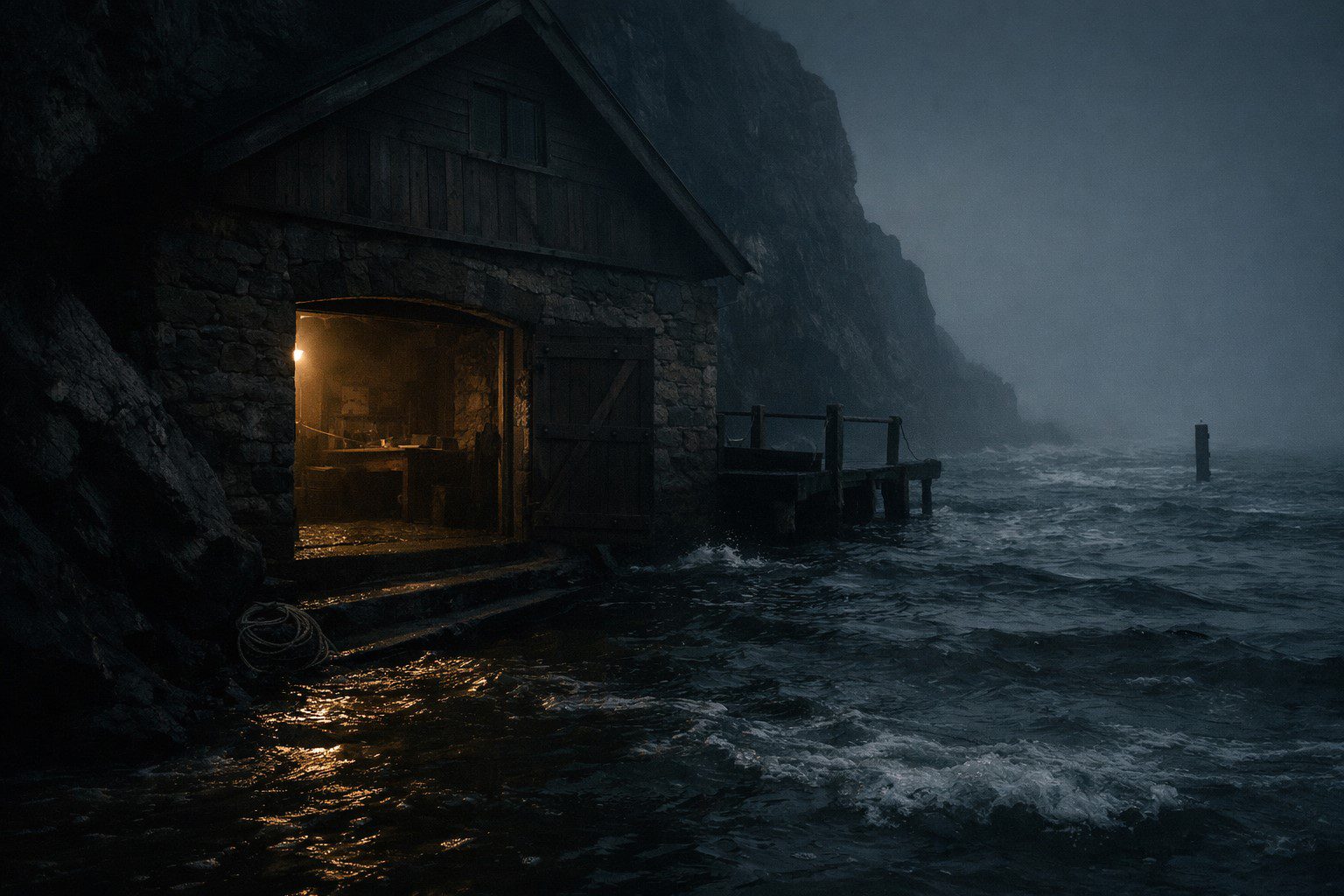
I submitted the survey report four days later. In addition to the standard heritage assessment, I included a supplementary section on the boathouse’s performance under surge conditions — the mortar joint behaviour, the water ingress patterns, the structural response to sustained pressure above normal tidal range. It was, I noted in the covering letter, an inadvertently thorough field test of a Victorian coastal structure under abnormal load, and the results were instructive.
My supervisor called when she read it. She asked whether I was using the word inadvertently in its correct sense, given that I had been inside the building at the time.
I said I was.
She was quiet for a moment. Then she asked whether I intended to revise my protocol for solo island surveys.
I said I would be adding a requirement to check the met office surge forecast in addition to the standard tide table before commencing any tidal causeway crossing.
She said that seemed sensible.
I said I thought so too.
I go back to Caldey Holm six weeks later. The causeway is clear, the timing is right, and the building is waiting. The survey is unfinished — the surge interrupted the interior assessment, and the structure deserves a complete record. I tell myself that is the reason I go back.
But standing at the boathouse door in the January cold, looking up at the waterline still faintly visible on the north wall stone, I think about the three hours I spent in the loft above the water, writing notes by hand in a building that might not have held, and I find that what I feel is not relief, exactly, and not residual fear.
It is something closer to respect.
The building was built in 1887 by people who understood the sea and built for it anyway. They laid those mortar joints knowing what the water would do to them over decades, and they laid them to hold. And when the water came higher than anyone had predicted, the joints held.
I had trusted the building because I had assessed it. I had sat in the loft and watched the north wall and known, from an hour’s careful work that morning, that it was more likely to hold than to fail.
Preparation is a kind of trust. The work you do before the thing happens is the thing that carries you through it.
I had assessed a hundred buildings. I had never thought about it in quite this way before.
I finish the survey by two in the afternoon and cross the causeway with an hour to spare.
This time I watch the tide tables all the way home.

 WhatsApp
 Telegram
 Email







Leave a Reply