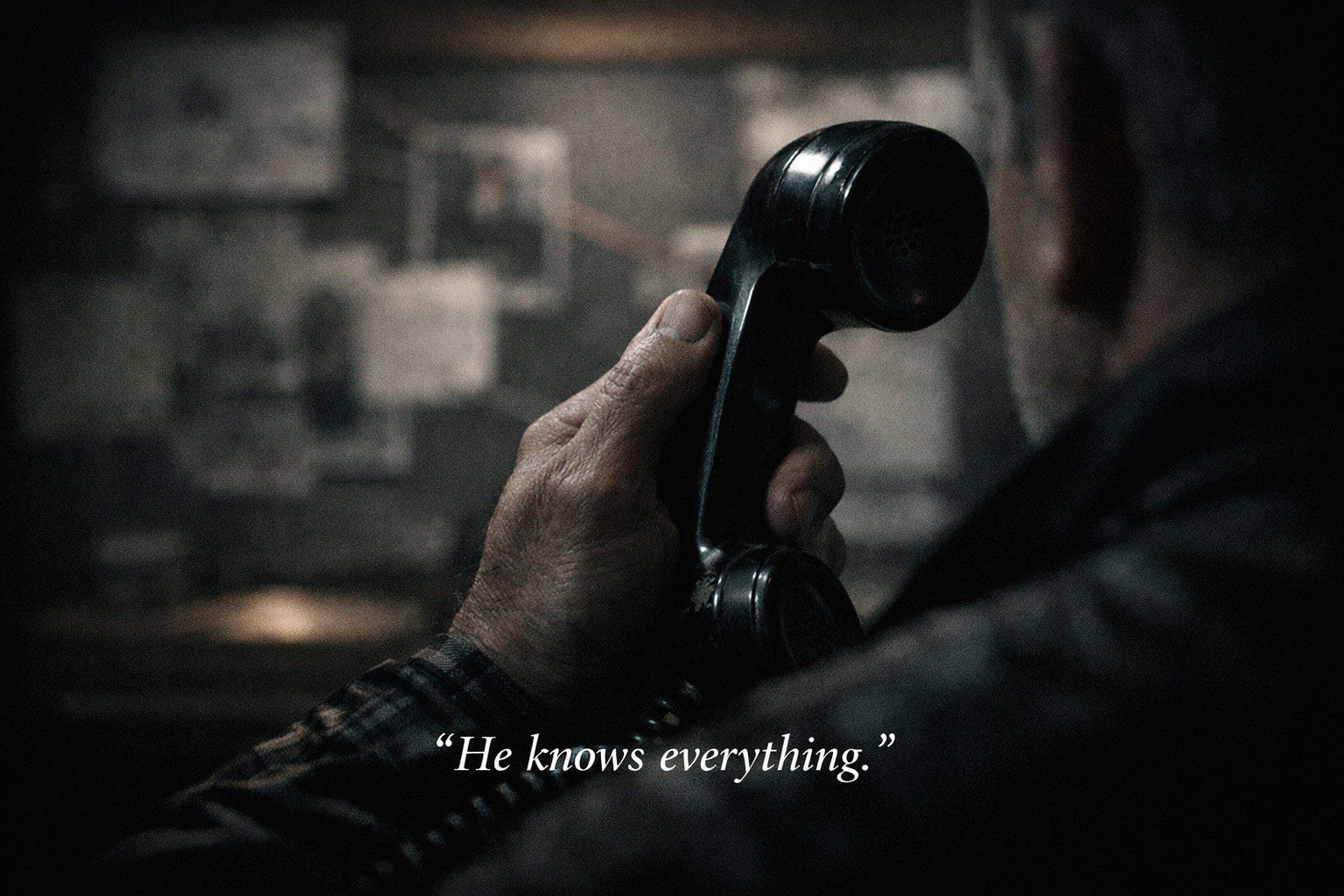
The voicemail lasted eleven seconds. A woman’s voice, low and careful, saying three words before the line went dead: “He knows everything.” My problem was that the number belonged to my wife — and my wife had been missing for six days.
Detective or not, your hands shake when it’s personal.
My name is Marcus Hale. I had been a detective with the city’s major crimes unit for fourteen years, which means I had learned, through repetition and loss, how to keep my face neutral when everything inside was moving fast. I was good at my job. I believed in process. I believed that evidence was patient and that the truth, given enough time and enough pressure, always came to the surface.
I had believed all of that until six days ago, when I came home to an empty house, a cold dinner on the stove, and a single sentence written on the notepad by the phone. Don’t look for me. My wife’s handwriting. No explanation, no context, nothing. I had turned the house over twice before I called it in, which I knew even then was too long to wait, and my sergeant had looked at me across the desk with an expression that was careful and kind and said he would assign someone else to lead the search. That someone was Detective Yara Osei, who was thorough and good and who had, in six days, found exactly nothing.
Then the voicemail arrived, and I stopped waiting to be kept informed.
I played it sixteen times in the car outside the precinct. The voice was my wife’s — I was certain — but the quality was wrong. Not distorted, not filtered. Compressed, the way a voice sounds when someone is speaking as quietly as possible in a space where sound carries. A bathroom, maybe. A stairwell. Somewhere she had gone to be briefly unheard.
He knows everything.
I ran the number through the system before Yara could tell me not to. It had been registered three weeks ago to a prepaid SIM purchased with cash from a convenience store on the east side. No camera coverage at the purchase point. The number had made two calls in its entire existence: one to me, at 11:47 the previous night, and one, six days earlier, to a number I didn’t recognise.
The second number resolved to a man named Peter Carrow. Mid-fifties, no criminal record, listed occupation as a property consultant. An address in the newer part of the waterfront development — the expensive part, the part where the buildings still smelled of fresh concrete and the lobbies had art on the walls.
I told myself I was going to drive there calmly and knock on the door and ask a few questions. That is what I told myself.
The lobby had a security desk and a clerk who took his job seriously, which I respected even when it slowed me down. I showed my badge — technically I was on compassionate leave, but the badge was still valid and I had not been explicitly told not to use it, which was the kind of line I had always been good at walking. The clerk called upstairs. Carrow agreed to see me, which surprised me, and I rode the elevator to the twelfth floor with my hands loose at my sides and my mind running through everything I didn’t know.
Carrow opened the door himself. He was tall, well-dressed in the understated way that suggested habit rather than effort, and he looked at me with an expression I couldn’t immediately read — not guilty, not alarmed, but watchful in a particular way. The way someone looks when they have been expecting a knock but not sure which door it would come from.
He offered coffee. I said yes because accepting gives you time to look at a room, and I wanted to look at this one.

 WhatsApp
 Telegram
 Email







Leave a Reply