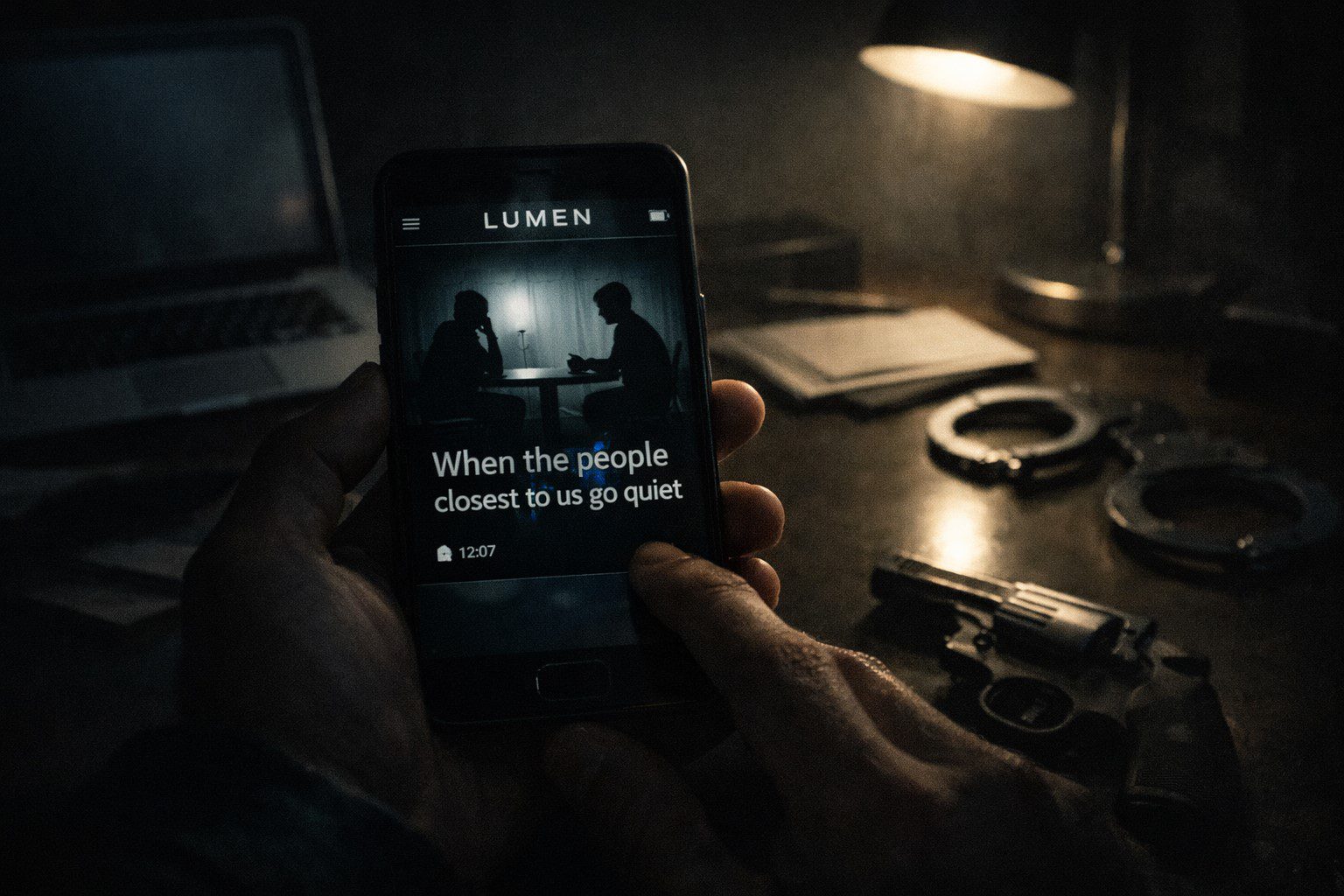
But here is what I keep coming back to, the thing I have not been able to file under pattern recognition or algorithmic coincidence or confirmation bias.
Three days after I deleted Lumen, I received an email. Not from Verel Technologies. Not from any address I recognised. From an account that was simply a string of numbers, the kind that gets generated automatically when someone creates a throwaway. The subject line was blank. The body of the email contained one sentence.
You can delete the app. We already have everything we need.
I reported it. To my email provider, who flagged it as potential phishing. To a consumer digital rights organisation, who were interested but had no jurisdiction. To a technology journalist I found through a series of increasingly specific searches, who asked good questions and then went quiet for two weeks and then sent me a brief message saying she had looked into Verel Technologies and found nothing she could publish, but that I should trust my instincts and stay careful.
That was four months ago.
I have a new phone now, a new email address, new accounts across everything. I chose apps carefully, read privacy policies with the particular attention of someone who has read fourteen pages of deliberately obscure language and knows what to look for. I have not downloaded anything I did not research thoroughly first.
My feed is blander now. Less eerily relevant. It shows me things I might like rather than things I need, and the difference is noticeable and, mostly, a relief.
But last week, on the new phone, on a platform I have used for years without incident, I saw something that stopped me mid-scroll.
A photograph. A man’s hands, older, holding a mug of tea.
No caption this time.
Just the image.
And the faint, cold certainty that whatever had been paying attention had not, in fact, needed the app to do it.
It had just been using Lumen as the most convenient way to say hello.

 WhatsApp
 Telegram
 Email







Leave a Reply