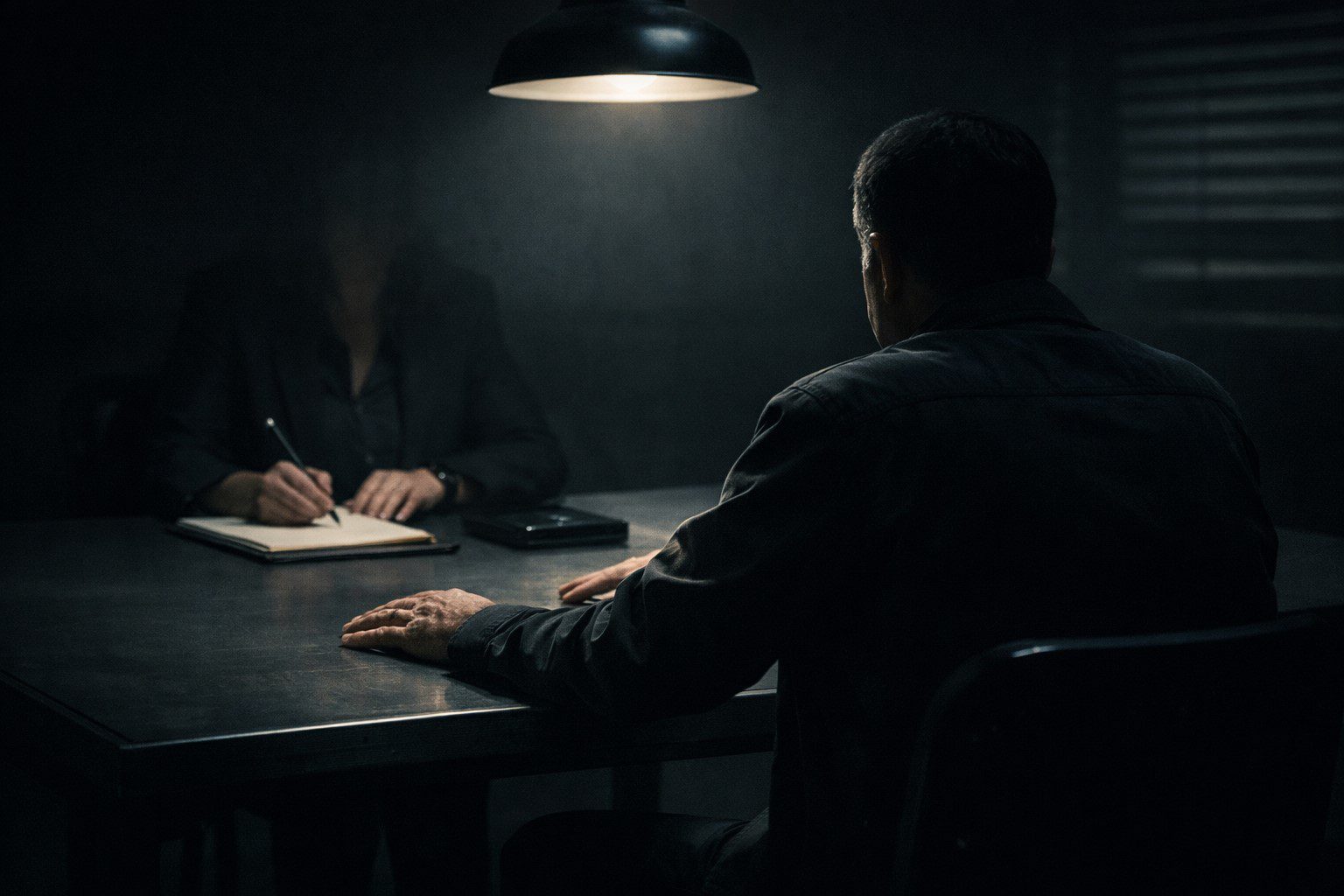
“Yes,” she said. “He is. And the case against him is better served by what I’ve put in motion than by Friday evening. You know that.”
Silence. Then: “I’m at my sister’s.”
“Stay there,” she said. “Call me Saturday morning.”
He called on Saturday at nine. He was still at his sister’s. Voss had not been contacted. Nothing had happened. Lena told him she had formally escalated the FCA referral with her supporting documentation and that it had been received and was being actioned.
She thanked him for coming in. She meant it.
She thought about the case for a long time after it moved out of her hands. About Thomas Callard walking into a police station to confess to something he hadn’t done because he was frightened of himself. About Gerald Voss answering his door with the easy confidence of a man who had learned that systems were navigable and time was on his side.
About the gap between what the law could do and what it couldn’t — a gap that Thomas Callard had nearly walked into with terrible consequences for everyone, including himself.
The FCA matter was still open the last time she checked. These things moved slowly. That was the nature of them. She hoped it would close the right way. She was not certain it would.
What she was certain of was this: Callard had come to her because he trusted that there was a system worth trusting, even when it had already failed him once. He had sat down across from her and said I want you to stop me and then done the harder thing of letting himself be stopped.
She thought about that on the difficult days. The ones where the gap between what was legal and what was right felt widest, and the mechanisms were slow, and the people who had caused the most damage were still walking around with the easy confidence of men who had never been made to account.
Callard had chosen the harder thing. He had walked through the right door.
She intended to make sure it had been worth it.
She wasn’t finished yet.

 WhatsApp
 Telegram
 Email







Leave a Reply