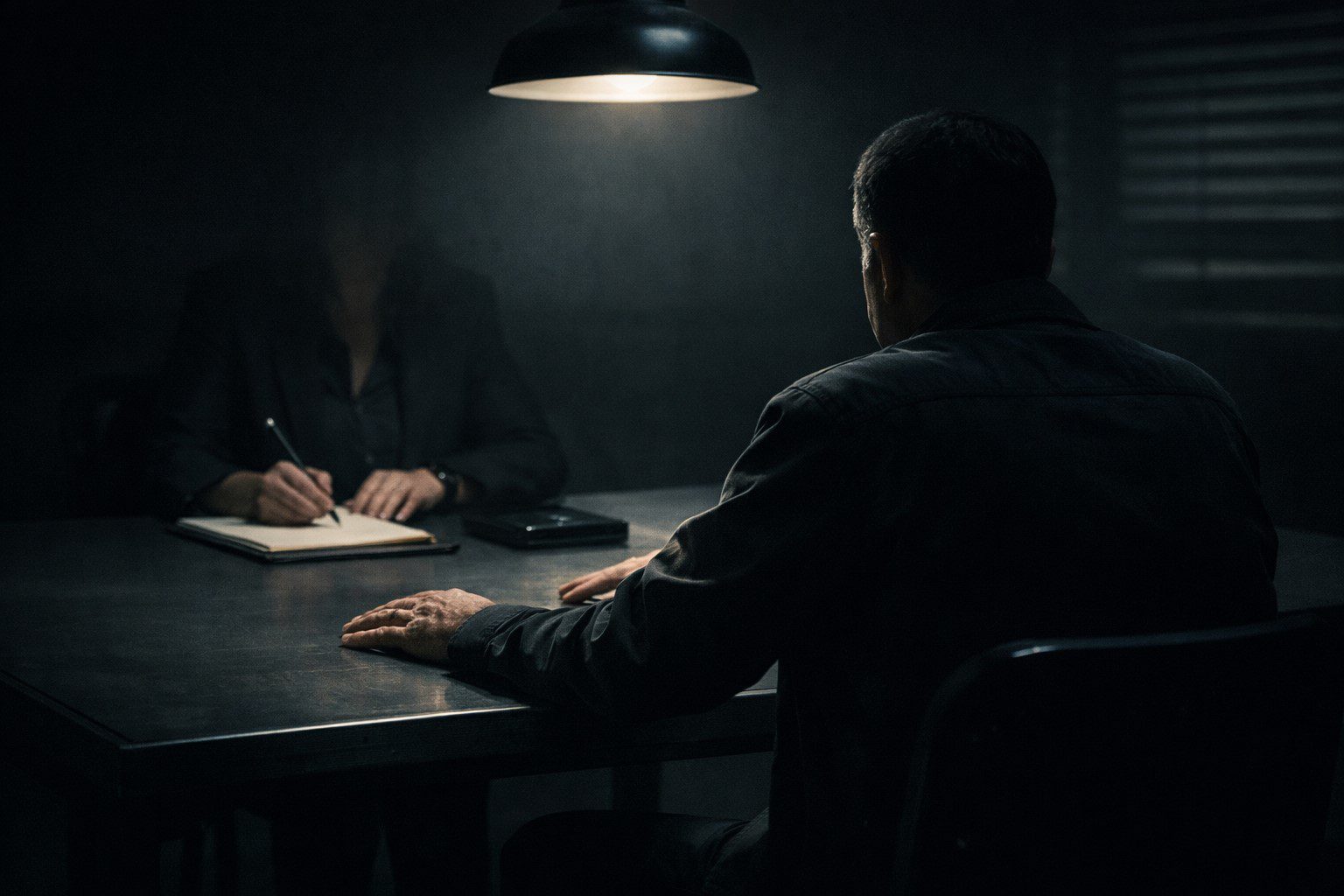
He nodded, slowly, and stood.
“Friday evening,” he said. “Seven o’clock. If I’m still at my sister’s then, it means I didn’t go. If you don’t hear from me by eight, I’d check.”
He left. Lena sat in the interview room and looked at the address in her notebook for a long time.
She ran everything she could on Gerald Voss that afternoon. The two FCA investigations were a matter of record, and the details were not flattering — in both cases the case had been discontinued not because Voss had been found innocent but because key documentation had not survived in a form that made prosecution viable. One former colleague, quoted in a financial news piece from two years ago, had used the phrase strategic record management, which was as close to an accusation as the article’s lawyers had permitted.
The fund collapse had affected sixty-three investors. Lena pulled the list. Several were elderly. One had died in the year following, and the coroner’s report — which she tracked down through a contact at the county level — cited severe financial stress as a contributing factor alongside the underlying cardiac condition.
Thomas Callard’s father. Right there in the coroner’s language.
She called the FCA liaison she had used twice before. She described the situation without naming Callard — a potential imminent threat to a subject of past investigation, she said, and did anything make Voss a current active concern? The liaison was quiet and then said, carefully, that she couldn’t comment on active matters but that anything Lena could pass along through the formal channel would be noted.
Active matters.
She went to Voss’s address on Thursday morning. A detached house in a residential street, well-maintained, a late-model car in the drive. She rang the bell. Voss answered — the photograph from the FCA files was accurate, a compact, well-dressed man with the surface ease of someone who had spent years managing impressions.
She told him she was following up on a report they had received regarding a potential threat to his security. She didn’t name Callard. Voss’s reaction was careful and measured and told her almost nothing, except that he was not surprised in the way an innocent man was surprised. He was not surprised in the way of a man who understood that his choices had consequences and had made himself comfortable with the risk.
“Is there anything you’re aware of,” she asked, “that might make you a target for someone with a grievance?”
He looked at her with the patient expression of a man who had answered harder questions than this in rooms with better lawyers.
“People always look for someone to blame,” he said. “It’s human nature.”
She thanked him and left and sat in the car outside his house and thought.
She called Callard at five o’clock on Thursday. He answered from his sister’s — she could hear a television in the background, the ordinary sound of an ordinary evening.
“You went to her,” Lena said.
“You said you were going to look into it.”
“I did. Mr. Callard, I need you to stay where you are tomorrow evening. Can you do that?”
A long pause. “Did you find what I told you you’d find?”
“I found enough to make sure this is being looked at properly,” she said. “Not by me — by the people whose job it is. That’s happening. But it takes time, and it won’t happen if something goes wrong tomorrow.”
“He’s still walking around,” Callard said. Not anger. Something flatter and more tired.

 WhatsApp
 Telegram
 Email







Leave a Reply