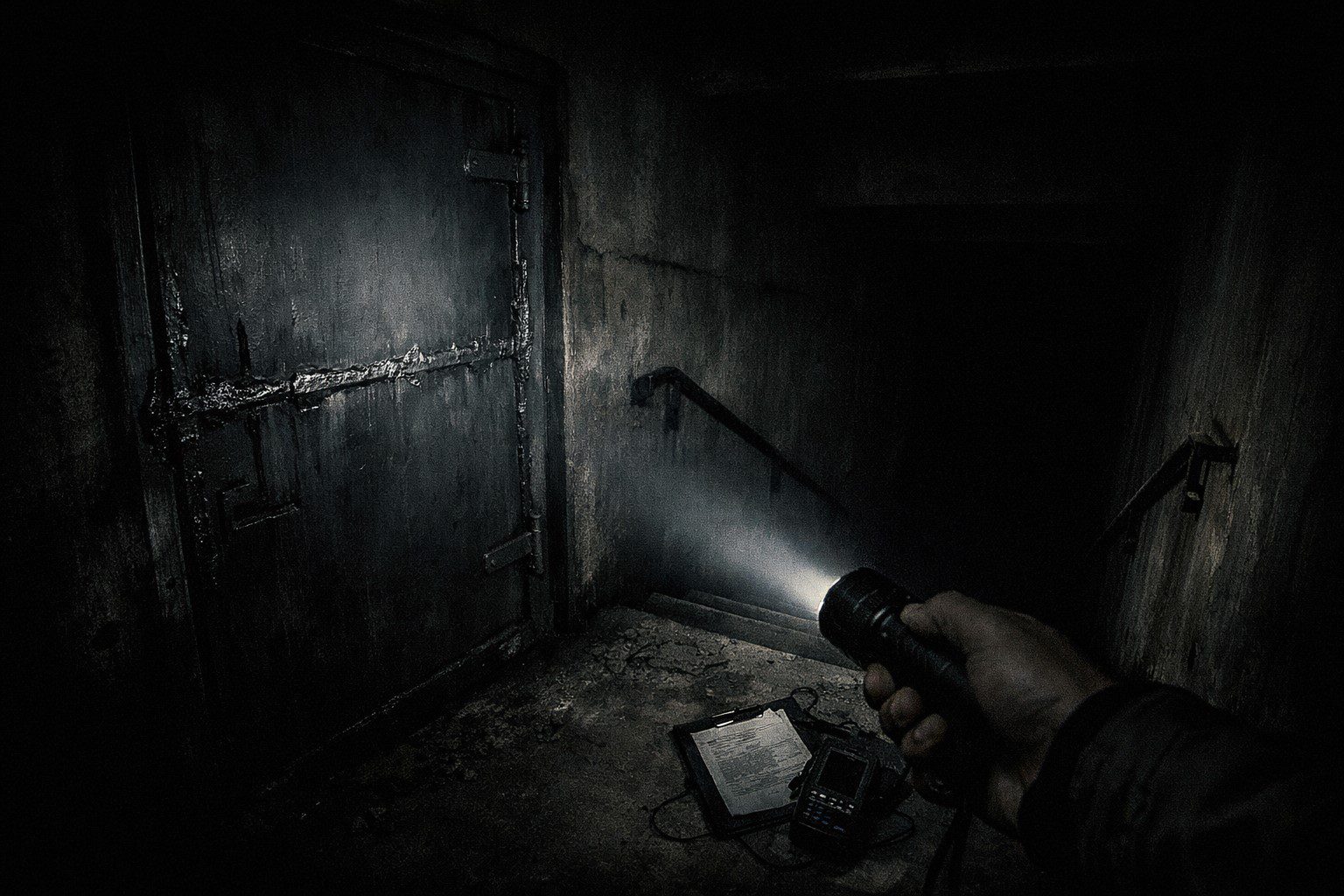
The investigation is still open. I am not privy to its details, though the detective assigned has kept in reasonable contact. What I know is that the welding equipment used on the door was traced to a contractor with access to the site, and that the access log for the Hartfield property showed two entries on the morning of my inspection — mine, and one made ninety minutes before mine. The second entry has not yet been matched to a specific individual, because the access system had developed a logging fault that had not been flagged in maintenance records.
A logging fault discovered after the fact. On the same day.
I have thought about the timing a great deal. Whoever sealed that door had planned it carefully. They had arrived before me, prepared the weld points while I was in transit, and executed while I was below ground. They had accounted for my satellite communicator losing signal. They had not accounted for the emergency egress behind the maintenance partition.
Which means they did not know the building as well as I did.
That is the thing I come back to most often, when I think about the ninety minutes between their entry and mine. They were counting on me not knowing about the second exit. They had assessed the bunker and found one door and concluded that one sealed door was enough.
Nine years in these buildings taught me that there is always another way out. The designers of Cold War infrastructure understood that primary exits failed, that blast doors jammed, that the obvious route was often the compromised one. So they built redundancy into the structure. They built escape into the design.
Whoever sealed me in there had not been in enough bunkers to know that.
I have since submitted a report recommending that all decommissioned military sites on the active inspection list be added to a secondary safety register, flagging known emergency egress points for the record.
I have also, for the first time in nine years, updated my solo inspection protocol to include a mandatory surface check-in every twenty minutes rather than every forty.
Small adjustments. The kind you make after the thing that almost wasn’t fine.
I am back at work. The job is the same. The buildings are the same.
I pay more attention to the secondary doors now.
I always knew they were there. I just know, now, exactly how much they matter.

 WhatsApp
 Telegram
 Email







Leave a Reply