The man turned. And the face was not Jabari’s face. It was close — similar bone structure, similar coloring, the resemblance that might make a stranger do a double-take — but it was not the same face. It was the face of someone younger, drawn tighter by some long anxiety, with eyes that moved the way hunted things’ eyes move. “You don’t know me,” the man said. “But I know you. I’ve been trying to reach you for two months.”
His name was Kwame. He was a freelance translator, also French and Portuguese, also working remotely, also living alone. Someone had stolen his professional identity eight months ago — built a fraudulent profile, used his credentials to secure contracts, collected payments into accounts he could not trace. He had gone to the police. He had contacted the platforms. He had been ignored or disbelieved at every turn, because the person doing this was meticulous, and meticulous fraud looks, from the outside, like an honest dispute. Then he had found Jabari’s name in the fake profile’s revision history — a clerical error, a real name left attached to a document edit — and he had come to Baltimore to find the man behind it.
I should tell you now who I am, because you have earned that.
My name is not important. What is important is that I am the one who built both profiles. Jabari’s and Kwame’s and seven others, in seven cities, a network of borrowed faces and borrowed credentials sustaining a business that does not exist except as a series of transactions. I study people the way I was trained to study them, at a university in Kiev where we learned to map the interior architecture of behavior — the patterns, the vulnerabilities, the gaps between what people show and what they are. I chose careful, invisible people because they are the hardest to believe when they say something is wrong. I chose men who looked slightly alike because the similarity created confusion, made each one doubt his own perception. The car, the opened mail, the wrong window latch — those were not mistakes. They were calibrated. A man who doubts his own senses is slower to act.
What I did not calculate was Jabari crossing the street. Or Kwame, who should have given up months ago, making the trip to Baltimore with a printout of metadata and the specific stubbornness of a man with nothing left to lose. Or the two of them sitting on a bench by the reservoir, comparing notes, their voices low and careful, building between them the shape of something that looked very much like evidence.
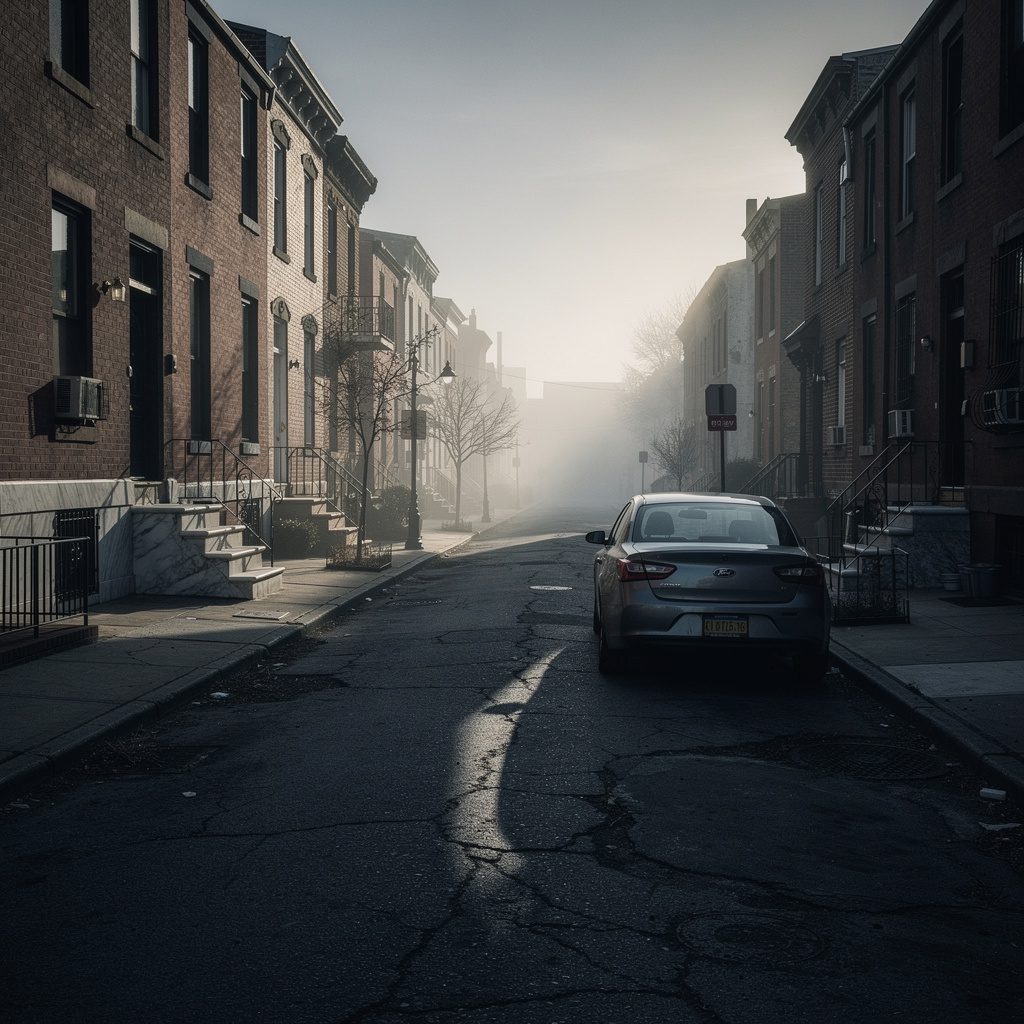
I am telling you this because I was there. On the far side of the reservoir path, on a bench of my own, watching them talk. I had come to see whether Jabari had found the profile yet, whether I needed to move faster or dissolve the operation and begin again elsewhere. I watched them for twenty-three minutes. Then I stood up and walked away, back through the neighborhood, past the row houses and the recycling bins and the pigeons on the gutters.
Behind me, Jabari Diallo took out his phone and dialed a number. Not the police non-emergency line this time. A detective he had found, a woman who specialized in digital fraud, who had agreed to a consultation the following morning. I know this because I can read a man’s posture when he has finally decided to stop waiting for someone to believe him and has found someone who will.
I walked faster.
I have studied fear my entire professional life — its architecture, its triggers, its uses. I have always understood it as something that lives in other people. Standing on a Baltimore street in the thin September light, I felt it settle into me the way cold settles into a room when a window is opened: not dramatically, not all at once, but with a completeness that leaves no warm corner untouched.
I had spent two months watching Jabari Diallo. I had not, until that moment, considered that someone might be watching me.

 WhatsApp
 Telegram
 Email







Categories
- AI & Technology
- Contemporary
- Corporate Control
- Creepypasta
- Crime Thriller
- Cyberpunk
- Dark Fantasy
- Enemies to Lovers
- Fairy Tale Retelling
- Fantasy
- First Contact
- Forbidden
- Genetic/Body Horror
- High Fantasy
- Monster Hunter
- Mythic/Folklore
- Paranormal
- Portal/Otherworld
- Post-Apo
- Post-Collapse Society
- Psychological Thriller
- Romances
- SCI-FI
- Second Chance
- Slow Burn
- Space Combat
- Spacepunk
- Surveillance State
- Survival Thriller
- Thrillers
- Time Travel
- Treasure Hunter
- Urban Fantasy
- Witchcraft/Curses
Tags
10min stories atmospheric atmospheric fantasy atmospheric fiction contemporary romance Creepy creepypasta crime thriller dark fantasy debt dystopia emotional fiction enemies to lovers ensemble cast epistolary fantasy female protagonist first person forbidden romance framed narrative high fantasy love story magic Memory mystery Paranormal psychological horror psychological thriller romance sci-fi second chance second chance romance short fiction short story slow burn space station speculative fiction supernatural Survival survival thriller suspense thriller travel romance witchcraft workplace romance
Leave a Reply