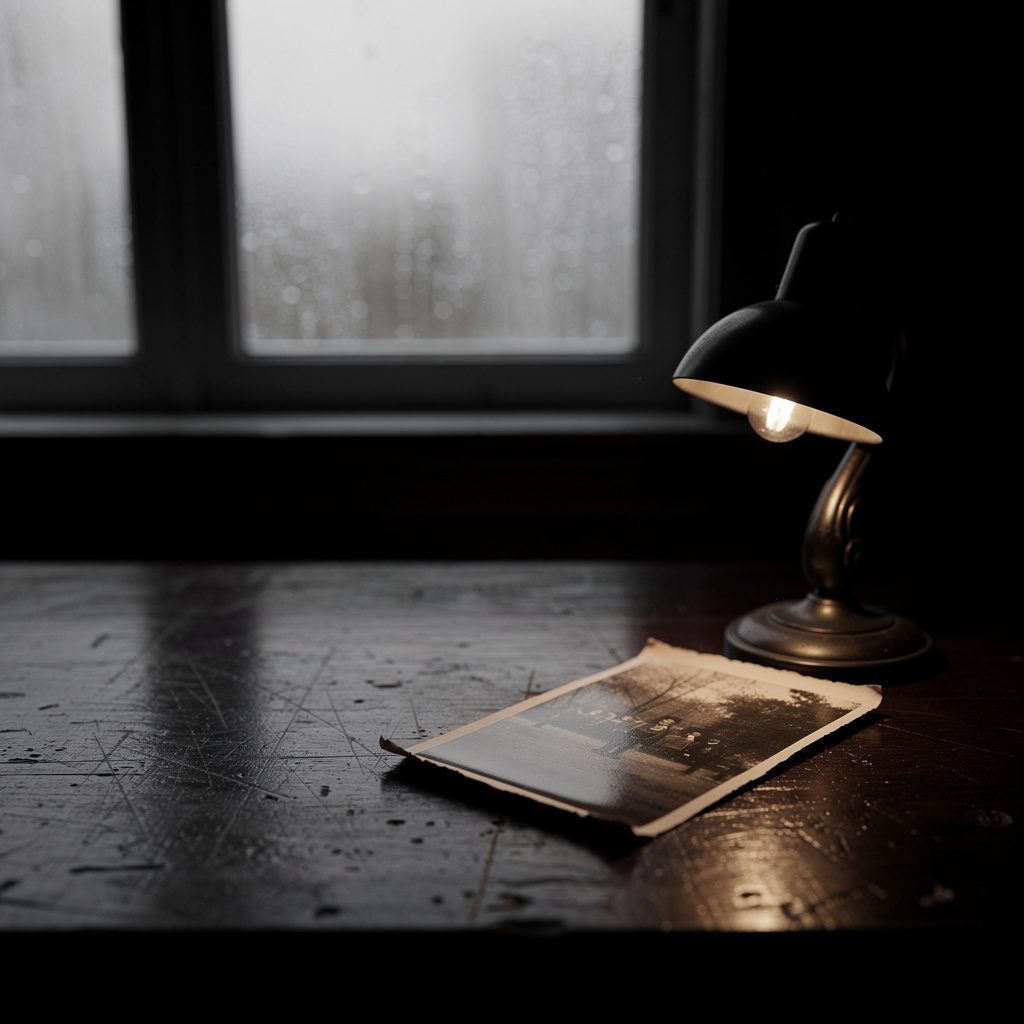
She had been so fixated on the impossibility — on the scar, the eyebrow, the irrefutable biological evidence of her own presence in a time before her existence — that she had not once asked what she looked like in the photograph. What she was feeling.
She looked now. She held the scan close in the good reading lamp light.
The woman at the edge of the frame was not afraid. She was not confused. She was not performing belonging for a camera. She was watching the other four people in the photograph with an expression Vibeke recognized not from mirrors but from memory — the specific, concentrated tenderness of someone who knows they are about to leave, and is trying to hold the moment in place by the force of attention alone.
It was a look of goodbye.
Vibeke set the photograph down.
She sat on the edge of the bed for a long time, in the quiet of the waterfront room, while the river traffic moved past her window and the fog did what the fog in Portland always does — gathered itself slowly, patiently, until it had changed the quality of every light in the city.
The sticky note on the bathroom mirror said FIND IT OR LET IT GO. She had found it, or something adjacent to it. Not the answer. Something more unsettling than an answer.
She had been there. In 1963. Saying goodbye to people she loved. And she had no memory of it — not because the memory had been taken from her, but because the memory hadn’t happened yet. She was going to be there. In some configuration of time she had no framework for, she was going to stand on that porch and hold still for a camera and look at four people she hadn’t met yet with the full weight of knowing she was leaving them.
The photograph was not evidence of something that had been taken from her.
It was evidence of something she would one day choose.
—
The watcher, by now, had understood this too. Had understood it perhaps a few hours before Vibeke did, from the particular way she had stopped searching — the quality of stillness that replaced the driven, methodical inquiry of the preceding weeks. The watcher had stood outside the narrow house on the waterfront, watching the light in the second-floor window, and felt something that had no clean name. Not relief. Not dread. Something closer to the feeling a person has at the end of a long journey, when the destination turns out to be real.
The timer on the yellow sticky note reached zero sometime before dawn.
Vibeke did not set another one.
In the morning she made coffee and drank it by the window, watching the river. She did not throw the photograph away. She did not frame it. She placed it in the inside pocket of her field jacket, close to her chest, where she carried the things she needed to keep track of — a compass, a folded map, the small specific tools of someone whose life’s work was knowing exactly where she stood.
She would go back to Astoria, she decided. Not to search. Not to investigate. Just to stand on the porch and look at the river estuary where the fog came in before noon and rarely left before dark, and to see whether the place felt like somewhere she had already been, or somewhere she was just beginning to arrive.

 WhatsApp
 Telegram
 Email






Categories
- AI & Technology
- Contemporary
- Corporate Control
- Creepypasta
- Crime Thriller
- Cyberpunk
- Dark Fantasy
- Enemies to Lovers
- Fairy Tale Retelling
- Fantasy
- First Contact
- Forbidden
- Genetic/Body Horror
- High Fantasy
- Monster Hunter
- Mythic/Folklore
- Paranormal
- Portal/Otherworld
- Post-Apo
- Post-Collapse Society
- Psychological Thriller
- Romances
- SCI-FI
- Second Chance
- Slow Burn
- Space Combat
- Spacepunk
- Surveillance State
- Survival Thriller
- Thrillers
- Time Travel
- Treasure Hunter
- Urban Fantasy
- Witchcraft/Curses
Tags
10min stories atmospheric atmospheric fantasy atmospheric fiction contemporary romance Creepy creepypasta crime thriller dark fantasy debt dystopia emotional fiction enemies to lovers ensemble cast epistolary fantasy female protagonist first person forbidden romance framed narrative high fantasy love story magic Memory mystery Paranormal psychological horror psychological thriller romance sci-fi second chance second chance romance short fiction short story slow burn space station speculative fiction supernatural Survival survival thriller suspense thriller travel romance witchcraft workplace romance
Leave a Reply