“I believe you,” he said quietly. “That’s the part that worries me.”
He told her to leave. Not in a threatening way — almost gently, with the directness of someone delivering a medical opinion they wish were different. He said he had been monitoring the property records from a distance for two years and he came in person only when he saw someone new enter the chain. He said he had gotten to Fenwick Osei too late. He said he did not know what “too late” meant, precisely, only that Osei was gone.
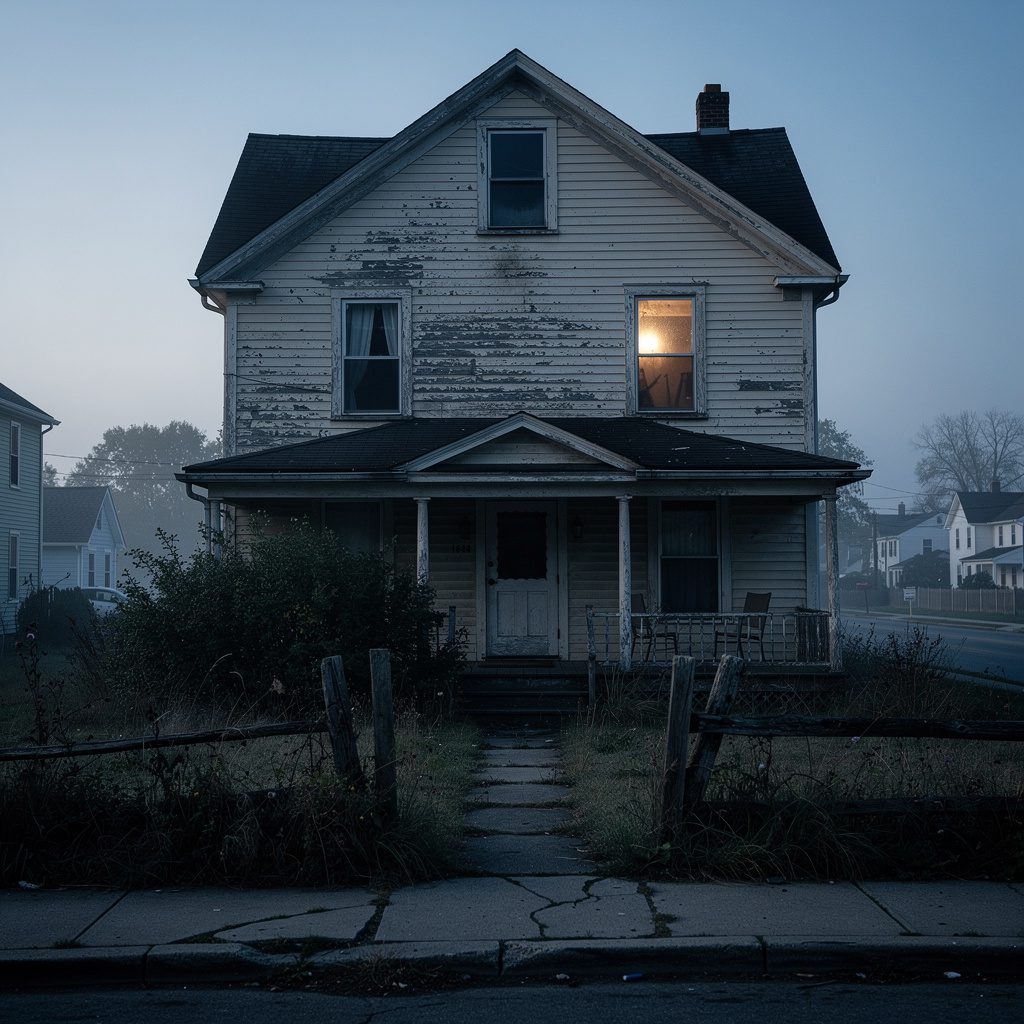
He walked her to the front door. On the porch he stopped and looked back at the house once, the way you look at a thing you are not sure you believe in but cannot afford to dismiss.
“Don’t file anything,” he said. “Whatever notes you’ve taken, whatever case you’re building — stop. Don’t create more record. That’s my best theory about how it works. The more documentation you generate around this property, the more tightly you get threaded into it.”
“That’s insane,” Livia said.
“Yes,” he agreed. He walked down the porch steps and turned left on the sidewalk and was gone around the corner before she had thought to ask his name.
She stood on the porch for a long moment. The street was quiet, the kind of quiet that Providence gets in the gap between afternoon and evening, that specific urban stillness where the day traffic has thinned and the night hasn’t started yet. The clapboard siding of the house was gray in the fading light. A single window upstairs reflected a slice of pale sky.
She drove home. She made tea. She opened her laptop.
The deed transfer was there, exactly as she had left it. She scrolled to the page with the embedded image and stopped.
The woman at the counter was still there.
But now she was turned all the way toward the camera.
Livia’s tea went cold. She sat very still, looking at the face in the photograph — the face that wore her jaw, her hairline, her particular way of holding tension in the muscles around her eyes. The face looked back from a document scanned and filed fourteen months ago, from a kitchen in a gray house two streets back from the water, from a moment that had not happened yet or had already happened in some accounting she didn’t have the language for.
She closed the laptop.
Then she opened it again, because she needed to see if anything else had changed, and because she could not — even now, even knowing what the man on the porch had told her — she could not stop following the trail.
The photograph was gone.
The page was blank, the embedded image replaced by a white rectangle, clean and empty as a room after someone has moved out. She checked the file properties. Last modified: four minutes ago.
She had not touched the file.
She sat in her apartment in the dark that had gathered while she wasn’t paying attention, and she thought about paper machines, and records that pull people in, and a man named Fenwick Osei who had stopped existing in the public record without explanation, and she understood — with a certainty that was worse, somehow, than fear — that she had already generated too much documentation to stop now.
Her case notes. Her search history. Her cross-reference logs. The screenshot she had taken of the photograph on the first day, which was saved to a folder on a firm server she did not fully control.
She was already in the record.
The question the man on the porch had left unanswered sat with her through the night, patient as a house waiting to be entered: whether the machine had grown by accident, or whether something had built it, and whether that distinction mattered at all to the people it had already swallowed.

 WhatsApp
 Telegram
 Email







Categories
- AI & Technology
- Contemporary
- Corporate Control
- Creepypasta
- Crime Thriller
- Cyberpunk
- Dark Fantasy
- Enemies to Lovers
- Fairy Tale Retelling
- Fantasy
- First Contact
- Forbidden
- Genetic/Body Horror
- High Fantasy
- Monster Hunter
- Mythic/Folklore
- Paranormal
- Portal/Otherworld
- Post-Apo
- Post-Collapse Society
- Psychological Thriller
- Romances
- SCI-FI
- Second Chance
- Slow Burn
- Space Combat
- Spacepunk
- Surveillance State
- Survival Thriller
- Thrillers
- Time Travel
- Treasure Hunter
- Urban Fantasy
- Witchcraft/Curses
Tags
10min stories atmospheric atmospheric fantasy atmospheric fiction contemporary romance Creepy creepypasta crime thriller dark fantasy debt dystopia emotional fiction enemies to lovers ensemble cast epistolary fantasy female protagonist first person forbidden romance framed narrative high fantasy love story magic Memory mystery Paranormal psychological horror psychological thriller romance sci-fi second chance second chance romance short fiction short story slow burn space station speculative fiction supernatural Survival survival thriller suspense thriller travel romance witchcraft workplace romance
Leave a Reply