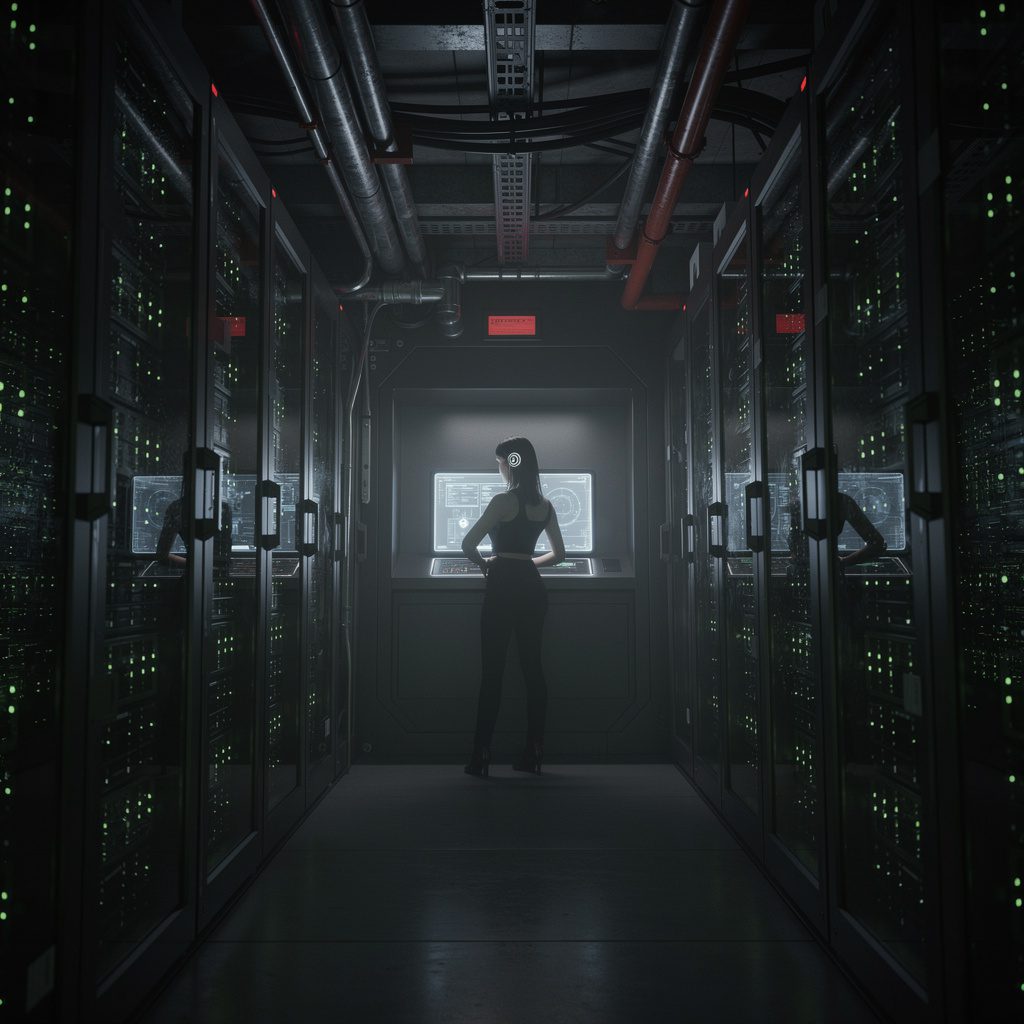
Instead, she’d spent six days watching the futures it showed her, cataloguing them with the methodical patience of someone who had spent a career reading data, looking for the one thing she’d glimpsed on the first night — the image that had made her refuse the surgery, that had made her sit in this room and endure the doubling and the vertigo and the slow erosion of the line between now and not-yet. On the first night, before the cycling had become continuous, the implant had shown her something that lasted less than twelve seconds: a room she recognized as the PRN-4’s firmware maintenance terminal on Sub-Level 3, a set of hands that were her hands moving across a haptic interface, and on the screen, a diagnostic cascade that ended with the implant’s cycling loop interrupted — cleanly, completely, without surgery, without loss. A software fix. A path through. And then the vision had ended and the next one had begun and she’d been too disoriented to act, but she’d held onto it the way you hold onto the logic of a dream just after waking, pressing it flat in her memory before it could curl at the edges and disappear.
The problem was that the PRN-4 did not show her the same future twice.
That was the architecture. Each preview was drawn from a different probability branch, weighted by neural state at the moment of generation. She had seen herself in that maintenance room dozens of times since the first night, but never in the same configuration — different timestamps, different sequences on the screen, hands moving in different orders across the interface. The implant was showing her every version of the moment except the right one. And with her cognitive bleed now at seventy-one percent, the futures were starting to feel more real than the room she was sitting in, more solid, more textured, more present. She could smell the Sub-Level 3 corridor in visions that hadn’t happened — the particular mix of coolant and old metal and the faint ozone bite of active server stacks. She could feel the haptic interface’s resistance under her fingertips in a room she hadn’t entered yet.
She stood up.
The room tilted. She steadied herself against the examination table and waited for the current vision to pass — she was standing in the corridor outside, watching a maintenance bot round the corner, and then she was back, here, the porthole window, the Earth below, the amber light pulsing in the reflection of the chrome cabinet beside her. She had four hours. Maybe less. The physicians had gone to consult with Meridian’s legal team about overriding her refusal, which gave her a window, a real one, not a previewed one, and she intended to use it.
She left the examination room and moved through Tier 9 with her head down and her left hand pressed flat against the wall for orientation, because the corridor kept trying to be other corridors. The station’s lower ring was quieter at this hour — a skeleton crew, the soft mechanical hum of life support, the occasional transit pod sliding past on its overhead rail. Beatriz knew Corda Station’s layout from eleven years of working in it, and she used that knowledge now like a rope in the dark, pulling herself from junction to junction, ignoring the visions that overlaid the real geometry with phantom doors and phantom people. She took the maintenance elevator to Sub-Level 3 because the main lifts had cameras that logged destination data, and she did not want a record of where she was going until she’d already been there.
Sub-Level 3 smelled exactly as the visions had promised: coolant and old metal and ozone. The server stacks ran the length of the corridor in tall black columns, their indicator lights a steady, untroubled green — the color she hadn’t seen on her own implant in six days. The PRN-4 firmware terminal was at the far end, a recessed alcove with a haptic interface and a diagnostic screen, accessible to any senior calibration technician with a valid biometric, which she still was, her credentials not yet flagged, the clerical error that had installed the implant not yet fully processed through the system’s bureaucratic machinery. She pressed her palm to the reader and it opened for her without hesitation, the screen blooming to life with the quiet confidence of a machine that did not know anything was wrong.

 WhatsApp
 Telegram
 Email







Categories
- AI & Technology
- Contemporary
- Corporate Control
- Creepypasta
- Crime Thriller
- Cyberpunk
- Dark Fantasy
- Enemies to Lovers
- Fairy Tale Retelling
- Fantasy
- First Contact
- Forbidden
- Genetic/Body Horror
- High Fantasy
- Monster Hunter
- Mythic/Folklore
- Paranormal
- Portal/Otherworld
- Post-Apo
- Post-Collapse Society
- Psychological Thriller
- Romances
- SCI-FI
- Second Chance
- Slow Burn
- Space Combat
- Spacepunk
- Surveillance State
- Survival Thriller
- Thrillers
- Time Travel
- Treasure Hunter
- Urban Fantasy
- Witchcraft/Curses
Tags
10min stories atmospheric atmospheric fantasy atmospheric fiction contemporary romance Creepy creepypasta crime thriller dark fantasy debt dystopia emotional fiction enemies to lovers ensemble cast epistolary fantasy female protagonist first person forbidden romance framed narrative high fantasy love story magic Memory mystery Paranormal psychological horror psychological thriller romance sci-fi second chance second chance romance short fiction short story slow burn space station speculative fiction supernatural Survival survival thriller suspense thriller travel romance witchcraft workplace romance
Leave a Reply