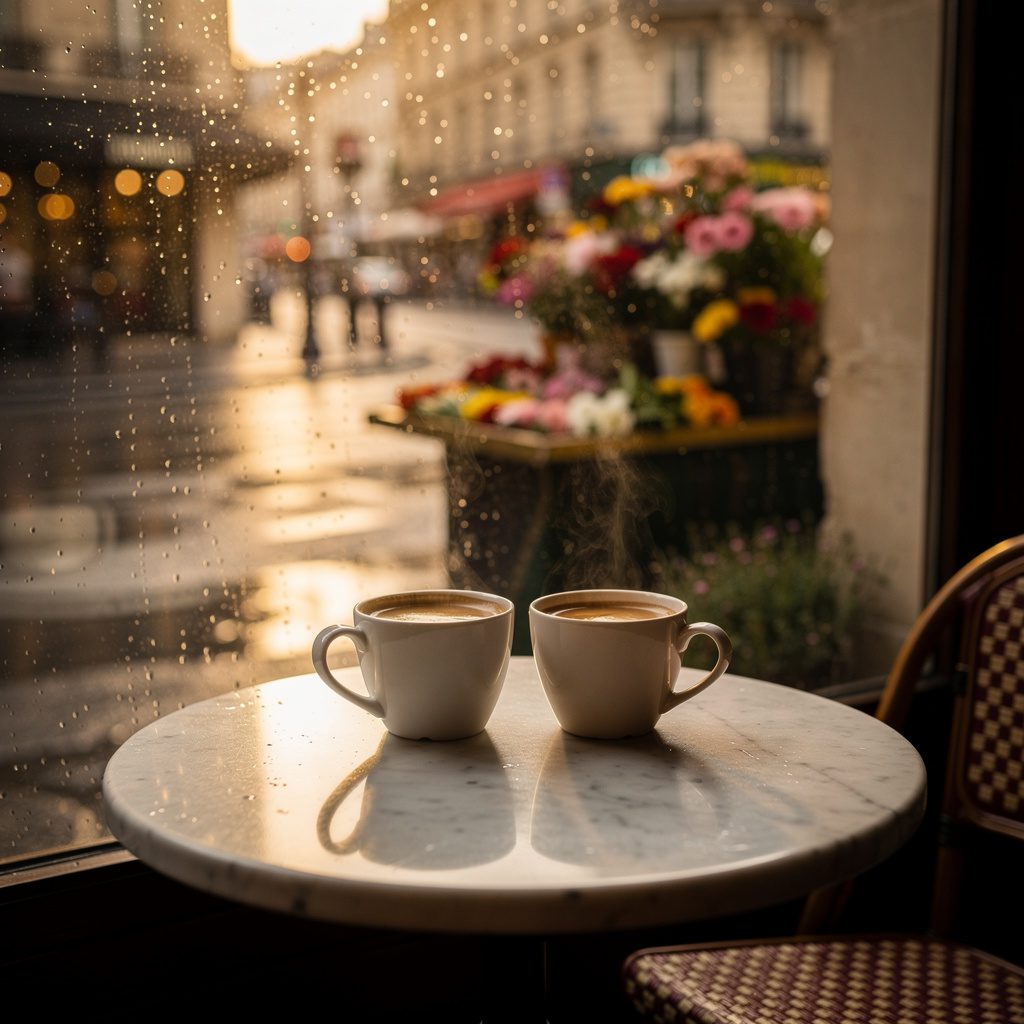
He sat down. He ordered his espresso. He opened his book. For seven full minutes, neither of them said anything, and it was the most natural seven minutes Deirdre had spent in Paris.
Then he said, without looking up: “You’re reading it upside down.”
She looked down at her own book — a French grammar guide she had been pretending to study — and discovered that he was correct. She had been holding it upside down for an unknown quantity of time. The heat that moved through her was spectacular.
“I learn better this way,” she said.
He looked up then. He had grey eyes, she noticed, the particular grey of the Seine on overcast mornings. He almost smiled. “Viktor,” he said.
“Deirdre,” she said.
And that was that. Or rather, that was the beginning of that.
They talked about Herbert — she confessed her failed Polish semester, he laughed, a real laugh, surprised out of him — and then about the rain, and then about Paris in general, and then about the project she was working on, and then about the firm he consulted for, and then about nothing in particular, which is the best kind of conversation. He was Czech, based in Vienna, in Paris for a contract that would last until the end of the month. He was precise and a little dry and occasionally, without warning, devastatingly funny. Deirdre felt the morning slide away from her like water off a windowpane.
Fergus arrived at half past nine, took one look at the situation, ordered a pain au chocolat with enormous satisfaction, and proceeded to be absolutely no help whatsoever. He asked Viktor questions about Vienna with the cheerful relentlessness of a man who has decided something is going to happen and intends to assist the universe along. Neville joined them at ten, fresh from an argument with Mervin about the lift situation, and within twenty minutes the whole table had somehow become a small, chaotic, laughing thing, and Viktor was in the middle of it, and he did not look like a man who wanted to leave.
After that, the mornings changed. Viktor joined them — or they joined Viktor, depending on the day — and the window seats multiplied, and the coffee kept coming, and Deirdre learned the particular way he held his cup (two hands, always, like it was something worth holding carefully) and the way he paused before he said something he found genuinely interesting, a half-second of stillness before the words. She learned these things the way you learn the layout of a room you keep returning to: without noticing, and then all at once.
The obstacle was not dramatic. It did not arrive with trumpets. It arrived, as most real obstacles do, quietly, in the form of a calendar.
Viktor mentioned it on a Wednesday, in passing, while Fergus was arguing with Neville about whether a particular bridge they could see from the window was Haussmann-era or later. “My contract ends Friday,” Viktor said, to his coffee cup. “I’ll be back in Vienna by the weekend.”
Deirdre said, “Oh.”
It was a very small word for a very large feeling.
She did not say anything else. Neither did he. Fergus and Neville continued their argument. The café continued its warm, oblivious hum. And Deirdre looked out the window at the street and understood, with the particular clarity that only arrives too late, that she had let six weeks pass in a pleasant, careful haze, and had not once said the obvious thing, and now there were two days left and she did not know how to begin.
Thursday was terrible in the specific way that last days are terrible — too bright, too ordinary, the world refusing to acknowledge that something is ending. The team had their project dinner that night, a long, wine-soaked meal at a brasserie near the Seine, and Mervin gave a speech, and Fergus got sentimental in the way only Fergus could, loud and warm and entirely without embarrassment, and Deirdre smiled at all the right moments and thought about Friday morning.
She went to the café anyway. Earlier than usual. She told herself it was just coffee.

 WhatsApp
 Telegram
 Email







Categories
- AI & Technology
- Contemporary
- Corporate Control
- Creepypasta
- Crime Thriller
- Cyberpunk
- Dark Fantasy
- Enemies to Lovers
- Fairy Tale Retelling
- Fantasy
- First Contact
- Forbidden
- Genetic/Body Horror
- High Fantasy
- Monster Hunter
- Mythic/Folklore
- Paranormal
- Portal/Otherworld
- Post-Apo
- Post-Collapse Society
- Psychological Thriller
- Romances
- SCI-FI
- Second Chance
- Slow Burn
- Space Combat
- Spacepunk
- Surveillance State
- Survival Thriller
- Thrillers
- Time Travel
- Treasure Hunter
- Urban Fantasy
- Witchcraft/Curses
Tags
10min stories atmospheric atmospheric fantasy atmospheric fiction contemporary romance Creepy creepypasta crime thriller dark fantasy debt dystopia emotional fiction enemies to lovers ensemble cast epistolary fantasy female protagonist first person forbidden romance framed narrative high fantasy love story magic Memory mystery Paranormal psychological horror psychological thriller romance sci-fi second chance second chance romance short fiction short story slow burn space station speculative fiction supernatural Survival survival thriller suspense thriller travel romance witchcraft workplace romance
Leave a Reply