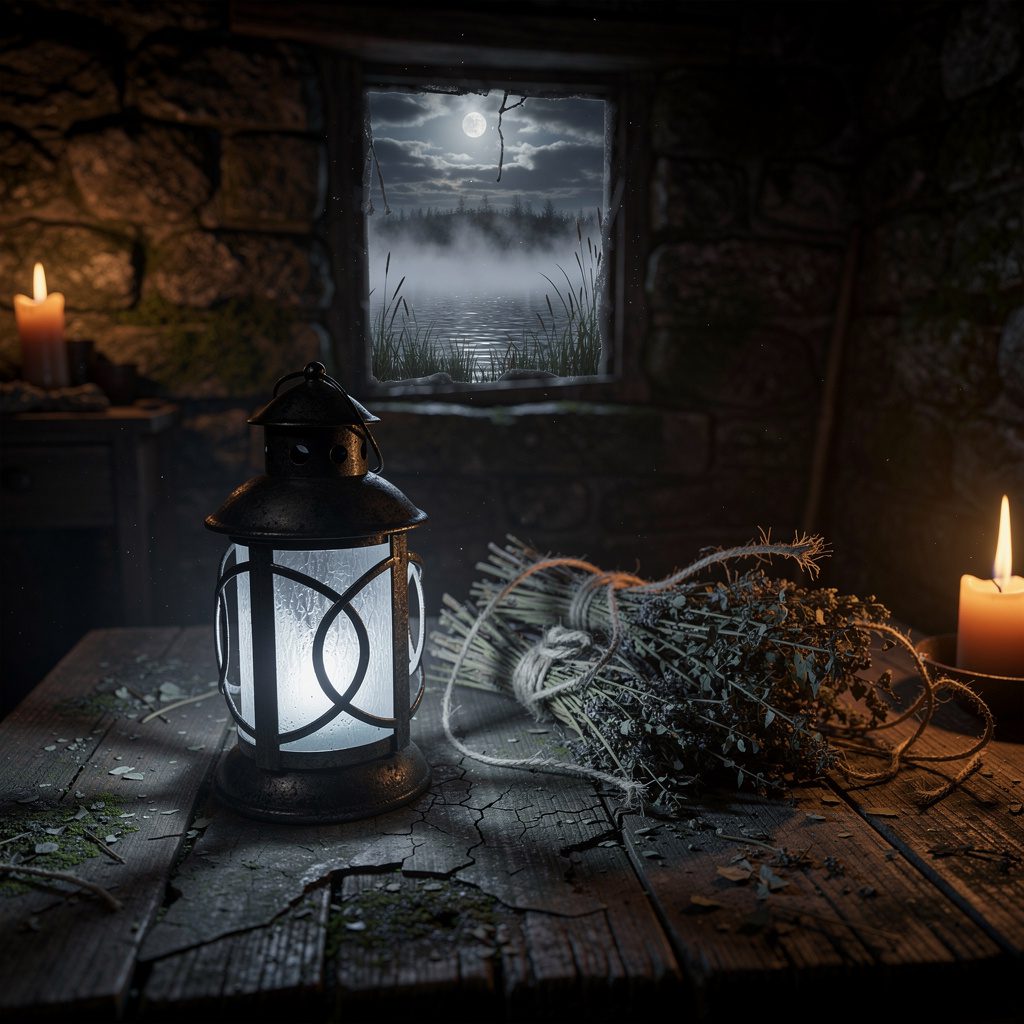
She had seen the signs herself. The way the root cellars had begun to flood in dry months. The way old Ferrante’s tannery, which sat at the marsh’s edge, had needed its threshold raised twice in two years. The way the road east had developed a soft, spongy stretch near the second bridge that no amount of packed gravel seemed to fix. She had noticed each of these things separately. She had not put them together. No one had.
“The village needs to move,” she said.
Rodrigo was quiet.
“Not all at once. Not in a panic. But the marsh is going to take the lower quarter before the next winter thaw, and if we don’t start moving what matters now, we’ll lose it.” She turned from the window. “That’s what it came for. Not for something dramatic. For this.”
“Usually is,” Rodrigo said quietly.
She spent the next six days doing what she had always, in fact, been suited to do: she talked to people. She showed them the root cellars. She walked them to old Ferrante’s threshold and made them look at the waterline on the stone. She brought three of the older farmers to the second bridge and made them stand on the spongy ground until they felt it give beneath their feet. She did not invoke the lantern. She did not speak of chosen bearers or relics or keepers. She simply showed people what was already there, and she said: look.
Most of them looked.
The lower quarter began to move its stores in the second week. By the end of the month, four families had relocated their households to the higher ground east of the square. Old Ferrante grumbled and stayed, but he moved his curing vats.
On the morning of the thirty-eighth day since the lantern had appeared on her table, Mira woke to find it gone.
No note. No explanation. The linen cloth it had sat on was still there, slightly compressed in the shape of its base.
She stood at the table for a long moment. Then she put the kettle on.
Rodrigo had left two days earlier, as quietly as he had arrived, with only a brief word at her gate in the early morning. “You’ll want to know what happened to the other eleven,” he had said.
“Did they survive?”
“All of them.” He had adjusted his satchel. “That’s the part I didn’t mention at first. The lantern doesn’t just choose a bearer. It chooses a bearer who is already doing the thing. Already seeing it. Already almost there.” He had looked at her steadily. “It didn’t come to give you the sight, Mira. You already had it. It came because you were the one person who had been watching the marsh every morning for years and was finally, almost, ready to say what you saw out loud.”
She had thought about that for the two days since he left. She thought about it now, standing at her kitchen table with the kettle beginning to whistle.
Three weeks. The lantern had been on her table for three weeks. And for three weeks, every morning, she had walked to the marsh’s edge to throw it in and come home without doing it. Not because of the lantern. Because of what she could see from that edge. Because she had been standing there, looking at the waterline, feeling something she could not yet name press against the inside of her ribs.
The lantern had not given her the answer.
She had been carrying the answer the whole time.
Outside, the marsh sat grey and patient in the early light, its edge a little closer than yesterday, a little farther from where it would be in a year. The village above it was already, quietly, beginning to shift.

 WhatsApp
 Telegram
 Email







Categories
- AI & Technology
- Contemporary
- Corporate Control
- Creepypasta
- Crime Thriller
- Cyberpunk
- Dark Fantasy
- Enemies to Lovers
- Fairy Tale Retelling
- Fantasy
- First Contact
- Forbidden
- Genetic/Body Horror
- High Fantasy
- Monster Hunter
- Mythic/Folklore
- Paranormal
- Portal/Otherworld
- Post-Apo
- Post-Collapse Society
- Psychological Thriller
- Romances
- SCI-FI
- Second Chance
- Slow Burn
- Space Combat
- Spacepunk
- Surveillance State
- Survival Thriller
- Thrillers
- Time Travel
- Treasure Hunter
- Urban Fantasy
- Witchcraft/Curses
Tags
10min stories atmospheric atmospheric fantasy atmospheric fiction contemporary romance Creepy creepypasta crime thriller dark fantasy debt dystopia emotional fiction enemies to lovers ensemble cast epistolary fantasy female protagonist first person forbidden romance framed narrative high fantasy love story magic Memory mystery Paranormal psychological horror psychological thriller romance sci-fi second chance second chance romance short fiction short story slow burn space station speculative fiction supernatural Survival survival thriller suspense thriller travel romance witchcraft workplace romance
Leave a Reply