I should tell you how it ended before I explain how it began. That way, nothing I say can be mistaken for suspense. There is no mystery left — not for me. Only the particular weight of understanding something too late, and the stranger weight of understanding it too early.
But I am getting ahead of myself. Or perhaps behind. With this, it is hard to say.
—
The retreat center sat at the edge of a pine forest outside Asheville, North Carolina, the kind of place that smelled of cedar resin and old ambition. It had once been a seminary, and before that, something older — a private estate whose owner had left no descendants, only a deed and a reputation for eccentricity that the locals had long since folded into local legend. The main building was three stories of pale stone, its corridors lit by fixtures that buzzed faintly, like something alive and annoyed. The kind of hum you stopped noticing on the first day and then could not unhear by the third.
Mervin Belgrave had organized the weekend. He was a therapist in his professional life and a fixer in every other capacity — the person who booked the venue, drafted the agenda, reminded everyone to bring layers. The group was his idea: five colleagues from the same behavioral research institute in Charlotte, people who had spent years studying collective trauma and individual breakdown, who had published papers on the psychology of panic and the architecture of denial, and who had never once, in all that study, thought to apply their findings to themselves.
Belen Zapata arrived first, which surprised no one. She had the energy of someone who had been awake since four in the morning and had decided to be cheerful about it. She was a cognitive psychologist who specialized in false memory — in the gap between what happened and what the mind insisted had happened. She dragged two bags from her car and stood in the gravel lot, looking at the building with an expression that was not quite unease and not quite admiration.
Emilio Barrera arrived with Wenjie Nakamura, the two of them sharing a rental because neither had thought to arrange their own. They were both researchers in the institute’s trauma response unit, and they had the particular ease of people who had spent too many hours in the same fluorescent-lit conference room to bother with formality. Wenjie was quieter. She had a habit of watching a room before she entered it.
The fifth member of the group was Petra Sundqvist, a Swedish neurologist who had joined the institute the previous year on an exchange fellowship. She spoke four languages, all of them precisely, and she had a way of asking questions that made you feel the question had already answered itself.
The first evening was ordinary. They ate together in the dining room, drank wine that was slightly too warm, argued pleasantly about methodology and funding cycles. Mervin had arranged a loose schedule — morning walks, afternoon sessions, a Saturday evening where they would sit together without agenda, which he called “open processing” and which Emilio privately called “talking until someone cries.”
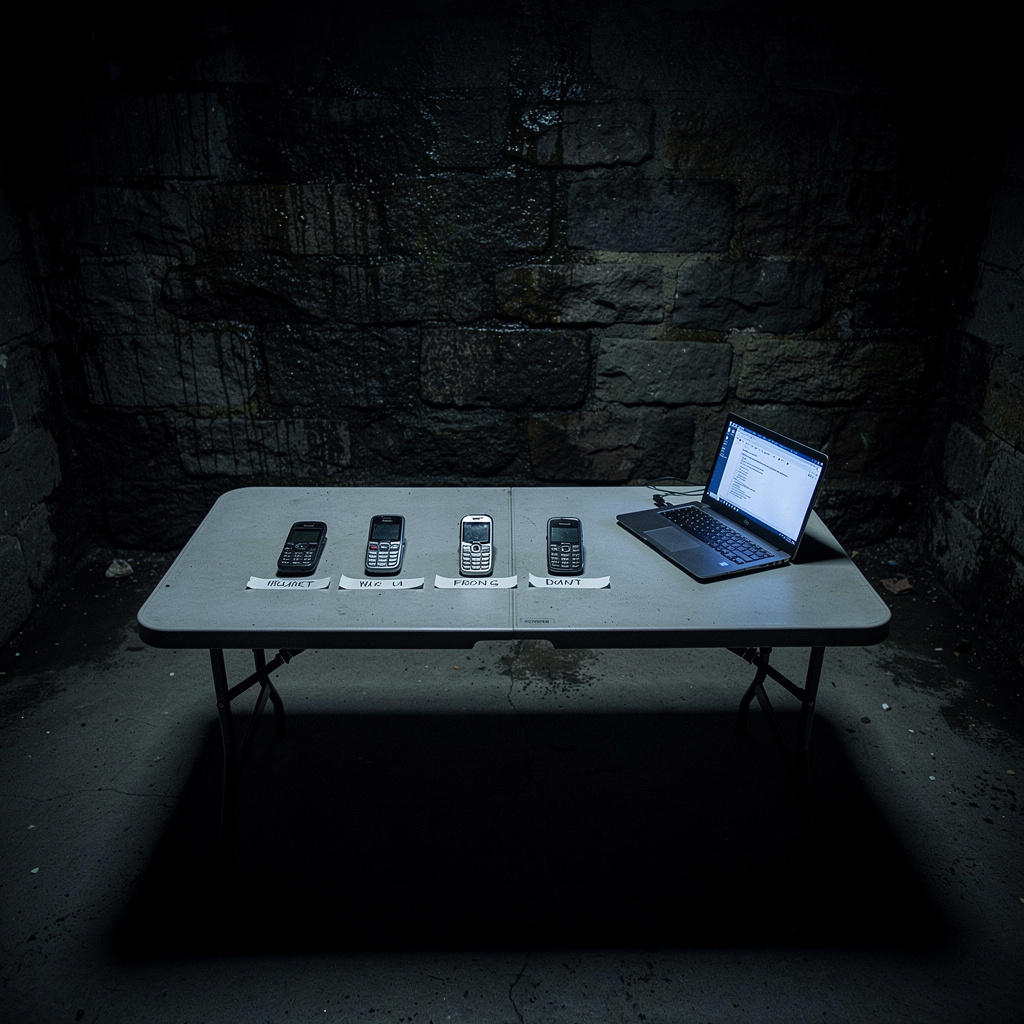
At 11:47 that night, Belen’s phone rang.
She was alone in her room on the second floor, not yet asleep, reading on her side with the lamp on. The number on the screen was her own. Not a contact labeled with her name — the actual numerical string of her own mobile number, displayed as the caller.
She stared at it for two full rings.
Then she answered.
The voice on the other end was hers. Not a recording. Not a distortion. Her voice, speaking at a normal conversational pace, saying: “You need to leave the building. Not in the morning. Now. Wenjie already knows. Ask her.”
Then the line dropped.
Belen sat up slowly. She checked the call log. The number was there — incoming, duration nine seconds. She called it back immediately. The automated message told her the number she had dialed was her own number and could not be reached.
She sat with that for a moment.
Then she went down the hall and knocked on Wenjie’s door.
—
I did not sleep that first night. I want to say that now, because it matters later.

 WhatsApp
 Telegram
 Email







Categories
- AI & Technology
- Contemporary
- Corporate Control
- Creepypasta
- Crime Thriller
- Cyberpunk
- Dark Fantasy
- Enemies to Lovers
- Fairy Tale Retelling
- Fantasy
- First Contact
- Forbidden
- Genetic/Body Horror
- High Fantasy
- Monster Hunter
- Mythic/Folklore
- Paranormal
- Portal/Otherworld
- Post-Apo
- Post-Collapse Society
- Psychological Thriller
- Romances
- SCI-FI
- Second Chance
- Slow Burn
- Space Combat
- Spacepunk
- Surveillance State
- Survival Thriller
- Thrillers
- Time Travel
- Treasure Hunter
- Urban Fantasy
- Witchcraft/Curses
Tags
10min stories atmospheric atmospheric fantasy atmospheric fiction contemporary romance Creepy creepypasta crime thriller dark fantasy debt dystopia emotional fiction enemies to lovers ensemble cast epistolary fantasy first contact first person forbidden romance framed narrative high fantasy love story magic Memory mystery Paranormal psychological horror psychological thriller romance sci-fi second chance second chance romance short fiction short story slow burn space station speculative fiction supernatural Survival survival thriller suspense thriller travel romance witchcraft workplace romance
Leave a Reply