I remember thinking, on the morning it all came apart, that the city had never looked more beautiful.
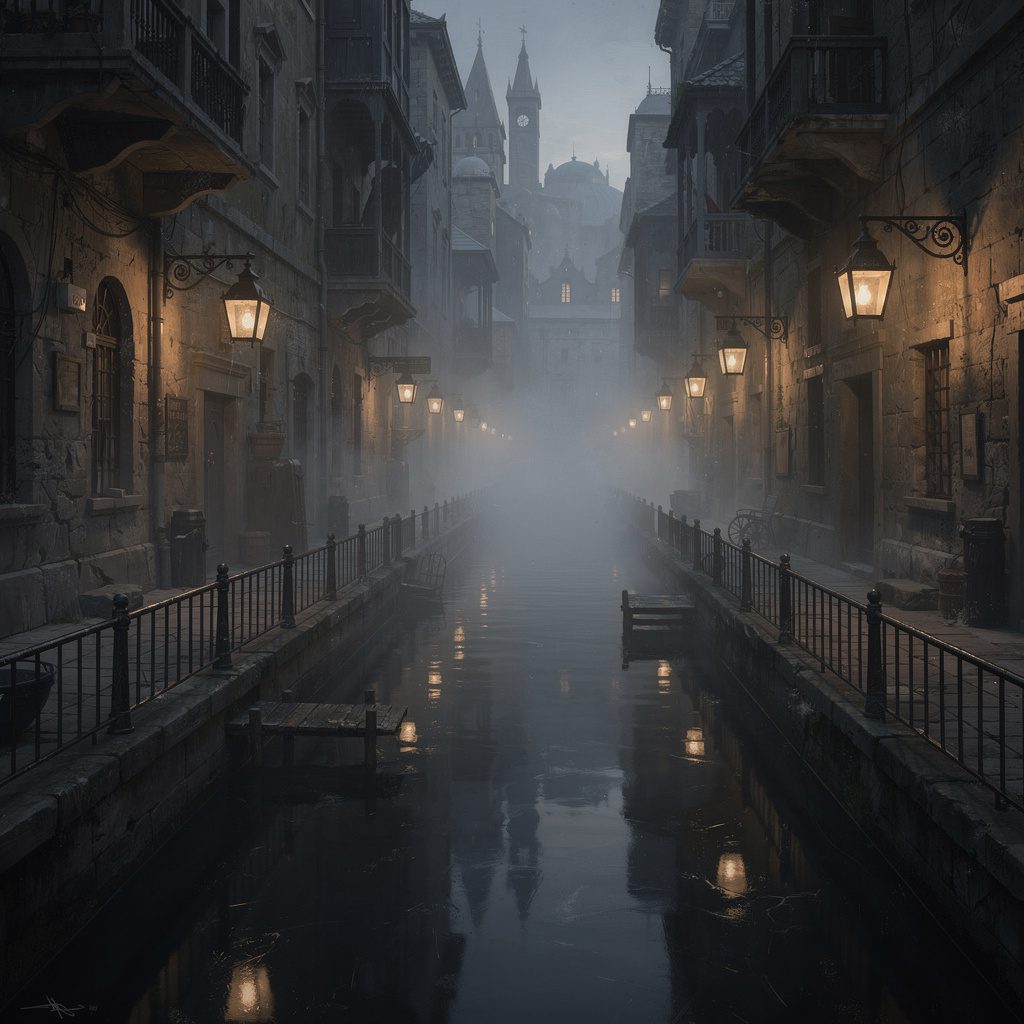
The lanterns along the Vethara canal were lit at dawn the way they always were — the old custom, the Kindling, performed by the ward-keepers every sunrise without fail. Each lantern was a small iron cage fitted with a wick soaked in rendered tallow and a single drop of binding-oil, the kind pressed from seeds grown in the Archon’s sanctioned groves. The flames that rose from them were not ordinary flames. They burned a particular shade of amber that sat somewhere between gold and copper, and they did not flicker in the wind the way a candle does. They held. That steadiness was the whole point. The lanterns were proof that the city’s weave was intact, that the old agreements between the Archon’s line and the deep earth were holding, that Vethara was protected and blessed and continuous. I had walked past them every morning for eleven years as a record-keeper in the Hall of Measures, and I had never once thought to question the color of the flame.
That morning, I noticed one of them was burning slightly wrong.
I almost kept walking. It was a small thing — the flame was the right amber, the right height, there was nothing visibly broken about the iron cage or the wick. But the quality of the light was off. Where the other lanterns cast a warm, slightly diffuse glow onto the canal’s stone lip, this one cast a light that was somehow too precise, too thin, like a line drawn rather than a warmth spread. I stood in front of it for a long moment, my satchel of ledgers hanging from my shoulder, the morning cold pressing against the back of my neck. A barge moved slowly through the canal behind me. A woman on the far bank was shaking a rug from her window. Everything was normal. I told myself it was a bad batch of binding-oil and walked on.
The Hall of Measures was a long building set into the inner wall of the city, its stone floors always slightly cold no matter the season, its corridors smelling of ink and old wax and the particular dry dustiness of ledgers that had not been opened in decades. I had a small room near the back where I catalogued the city’s resource records — grain tallies, timber yields, the quarterly census of registered magical practitioners. It was not glamorous work. But it was precise, and I was good at it, and it had always seemed to me that precision was a kind of loyalty to the truth. You counted what was there. You wrote down what you found. You did not round up or soften or omit.
The ledger I opened that morning was the one I had been working through for three weeks: the archive of the Archon’s binding-oil production, going back forty years. I was cross-referencing it against the quarterly lantern maintenance logs to produce a consumption report for the Hall’s senior administrator, a man named Folake who had the patience of carved stone and the emotional expressiveness of one. He had asked for the report by the end of the month. I had been meticulous, working backward from the most recent years, and I had noticed certain discrepancies — small ones, easily attributable to record-keeping error, the kind of thing a less careful person might not flag. But I was careful. I had been flagging them in the margin in red ink, intending to ask Folake about them before I finalized the report.

 WhatsApp
 Telegram
 Email






Categories
- AI & Technology
- Contemporary
- Corporate Control
- Creepypasta
- Crime Thriller
- Cyberpunk
- Dark Fantasy
- Enemies to Lovers
- Fairy Tale Retelling
- Fantasy
- First Contact
- Forbidden
- Genetic/Body Horror
- High Fantasy
- Monster Hunter
- Mythic/Folklore
- Paranormal
- Portal/Otherworld
- Post-Apo
- Post-Collapse Society
- Psychological Thriller
- Romances
- SCI-FI
- Second Chance
- Slow Burn
- Space Combat
- Spacepunk
- Surveillance State
- Survival Thriller
- Thrillers
- Time Travel
- Treasure Hunter
- Urban Fantasy
- Witchcraft/Curses
Tags
10min stories atmospheric atmospheric fantasy atmospheric fiction contemporary romance Creepy creepypasta crime thriller dark fantasy debt dystopia emotional fiction enemies to lovers ensemble cast epistolary fantasy female protagonist first person forbidden romance framed narrative high fantasy love story magic Memory mystery Paranormal psychological horror psychological thriller romance sci-fi second chance second chance romance short fiction short story slow burn space station speculative fiction supernatural Survival survival thriller suspense thriller travel romance witchcraft workplace romance
Leave a Reply