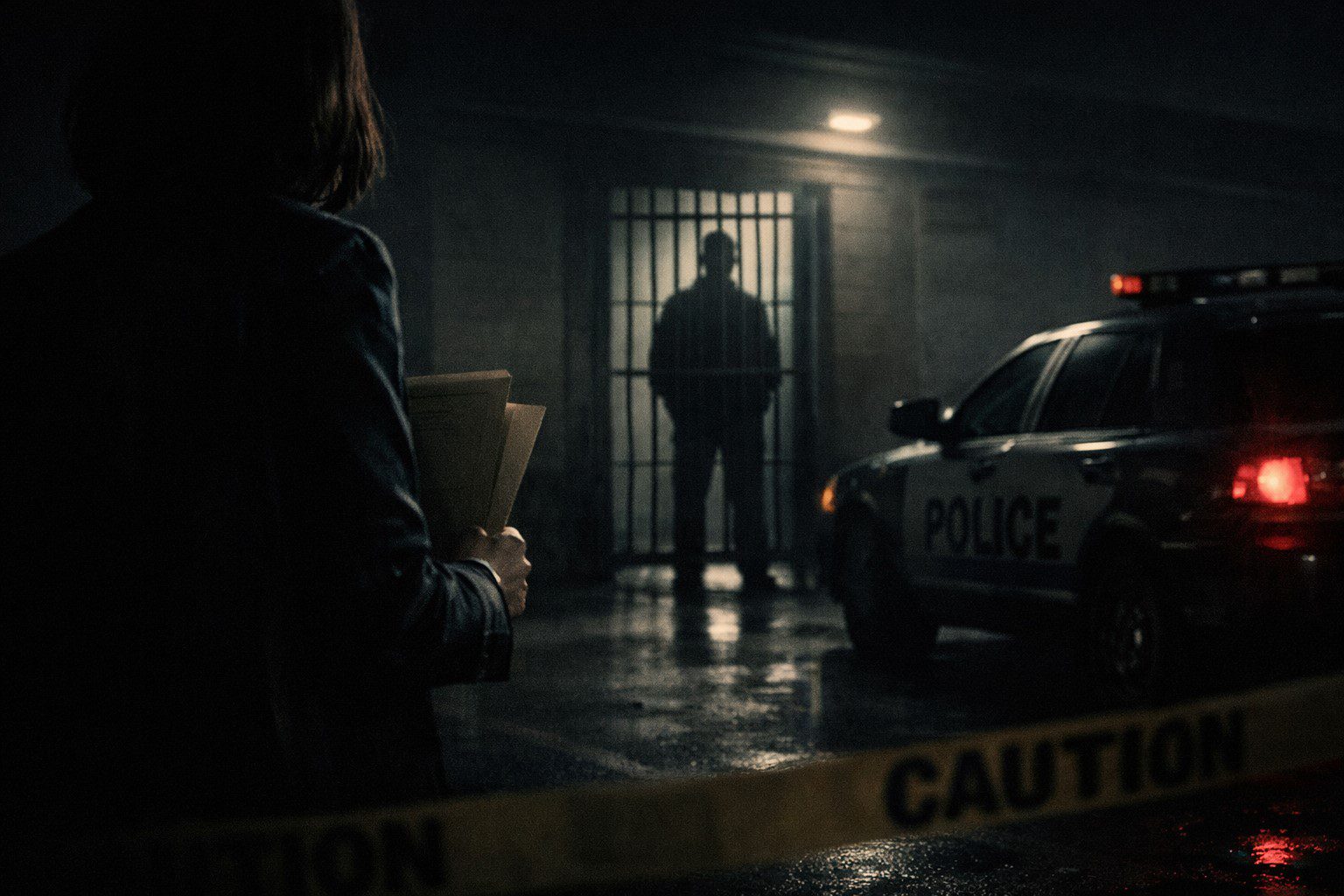
She had seen the man’s face clearly, in good light, from twelve feet away, for nearly forty seconds. She had reported it within the hour. She had never wavered in her account. In three years of reviewing wrongful conviction cases, prosecutor turned innocence advocate Nora Vane had learned that eyewitness certainty was the most dangerous kind — and she had never expected to become one herself.
The man she identified was convicted and sentenced to nine years. She had attended every day of the trial. She had been certain.
She had been wrong.
My name is Nora Vane. I spent eleven years as a Crown prosecutor before I left to join the Caldwell Innocence Project, a small charitable organisation that reviewed cases where there were credible grounds to suspect wrongful conviction. I had left the CPS because I had read too much research on cognitive bias, cross-racial identification errors, and the suggestibility of memory under stress. I had prosecuted witnesses like myself. I knew their limitations from the outside.
I had never expected to experience them from the inside.
The incident was in September, three years before the appeal. I was walking home late on a Thursday evening when I witnessed what I understood to be an assault in progress. I called the police. I stayed. I gave a statement within two hours, while the detail was still clear. I attended an identification procedure and picked out a face with what I can only describe as complete conviction. I had seen him. I was certain.
Damien Cole was charged, tried, and convicted primarily on my evidence. The case had supporting elements — circumstantial, none of them strong alone — but my identification was the spine of it. The jury believed me because I was credible and precise and certain. I believed me for the same reasons.
The appeal came from a junior researcher at Caldwell named Priya, who had been reviewing the Cole case as part of a batch assignment and had brought it to me with the particular look she used when she had found something she wished she hadn’t. I had not known the case was in our batch. I had not flagged my involvement when it was assigned because I had not known it had been assigned.
The first thing Priya showed me was an affidavit from a man named Robert Haswell, who stated that he had been in a nearby pub at the time of the incident and had seen the whole thing from a window. His account of what happened was consistent with mine. His identification of the person involved was not.
He described a man who was approximately ten years older than Damien Cole, heavier, and wearing a jacket that Haswell described in enough detail — dark red, distinctive collar, a tear in the left sleeve — that you could construct from it something more than a general impression.
Damien Cole had been twenty-four at the time. He did not own a dark red jacket. His wardrobe had been documented at arrest.
I read Haswell’s affidavit three times. Then I looked at Priya and said: “When did he come forward?”
“Six weeks after the conviction,” she said. “He went to the police. They declined to reopen the case on the basis of a single new witness account that conflicted with the primary identification evidence.” She paused. “You were the primary identification evidence.”
I asked to see the full file. Everything: the original police report, the identification procedure documentation, the trial transcript, the jury notes where available, the supporting circumstantial evidence, and the complete Haswell file including why the police had declined to act.

 WhatsApp
 Telegram
 Email






Leave a Reply