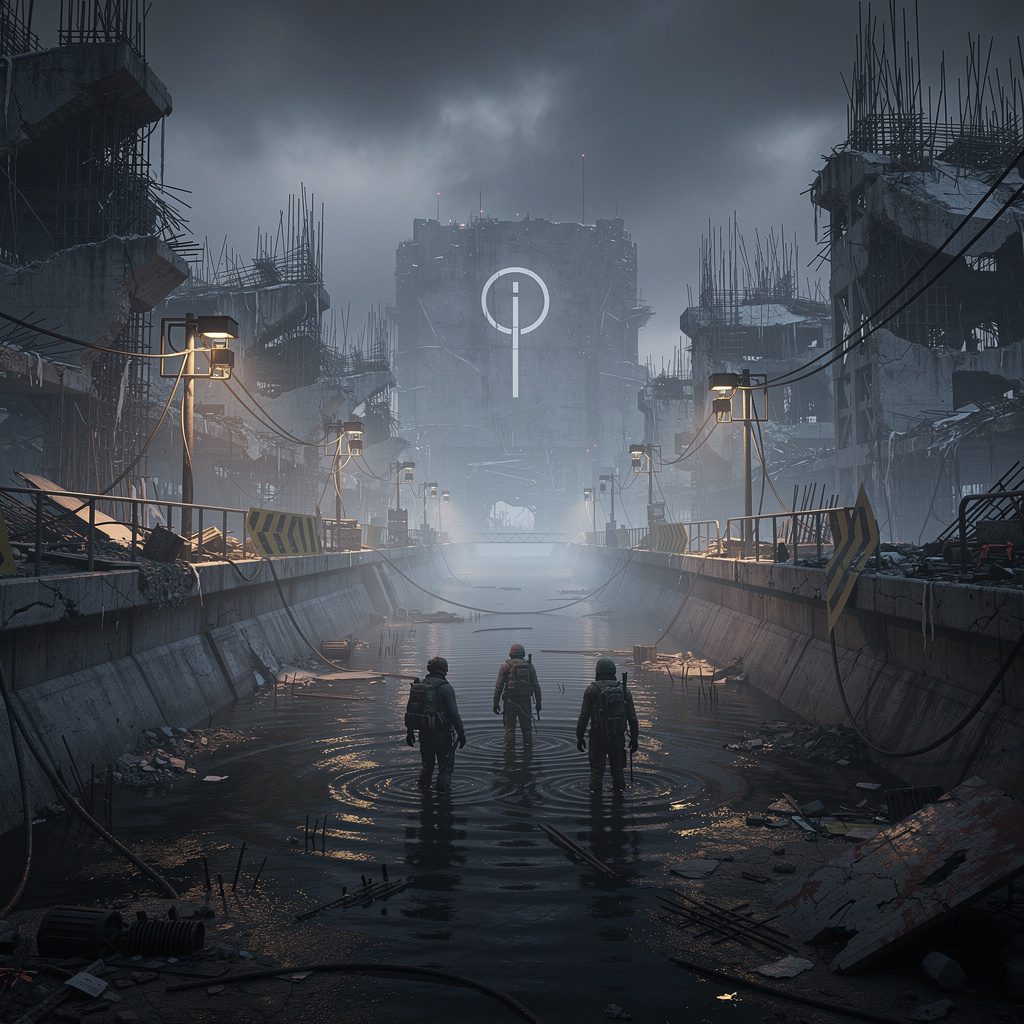
PRECOGNITION ENFORCEMENT NETWORK — SECTOR 7 ARCHIVE
Node: Voss-Relay-4
Date-stamp: Cycle 1147, Day 83
Classification: RECOVERED / CORRUPTED
[FRAGMENT — PARTIAL TRANSMISSION, SOURCE UNKNOWN]
…the PANOPTICON-1 system does not predict intent. It predicts probability cascades derived from biometric baselines, environmental stress markers, resource scarcity indices, and social graph proximity to prior offenders. In plain language: it watches how hungry you are, how desperate your neighbors have become, and it decides what you will do before you have thought of doing it. The Compact calls this justice. We call it something else…
[TRANSMISSION ENDS — REMAINING DATA CORRUPTED]
—
We find the fragment on a salvaged relay board pulled from the rubble of what used to be a courthouse. Milan is the one who cleans the corrosion off the contact pins with a strip of his own shirt, pressing the board to our portable reader with both hands as if it might vanish. The text scrolls across the cracked screen in flickering green, and none of us speak for a long moment after it finishes. The wind outside the bunker moves through the collapsed ceiling in long, low moans, and somewhere in the dark above us, dust falls in a thin curtain.
There are four of us in what remains of Sector 7’s lower district: Milan Kovac, who was a network technician before the Compact’s water-rationing wars broke the city into zones; Weronika Sorokin, who walks with a permanent lean from a healed fracture that was never properly set, and who carries a satchel of handwritten maps she has been drawing for three years; Dinesh Chandra, the youngest among us, with close-cropped hair going grey at the temples despite his age, who insists he remembers the city before PANOPTICON-1 was installed; and me. I am the one keeping this record, which is its own kind of risk.
The PANOPTICON-1 system — Optimized Risk Assessment and Coordinated Law Enforcement — was installed across the surviving city sectors two years after the Collapse. The Compact, which is what the governing coalition calls itself, sold it as stabilization. Predictive justice, they said. No more waiting for harm to occur. The system ingests data from sensor arrays embedded in every water distribution point, every food allocation kiosk, every salvage-permit checkpoint. It cross-references biometric readings — body temperature, pupil dilation, cortisol proxies estimated through skin-conductance sensors built into the ID collar every registered citizen wears. It builds a score. A number between zero and one hundred. Cross a threshold, and Compact enforcement units arrive before you have done anything at all.
We have all crossed thresholds at some point. That is why we are here, in a building with no registered address, wearing collars we have partially disabled using a method Weronika reverse-engineered from a Compact technical manual she found in a flooded archive.
Partially disabled. That is the problem.
Milan sets the relay board down carefully. “If this transmission existed, there were others,” he says. “Someone was broadcasting a counter-signal. Before the relay network was hardened.”
Weronika unfolds one of her maps across the floor. It is a dense, meticulous thing — hand-drawn in three colors of ink, annotated in her small precise script, showing the sensor array positions she has catalogued over months of careful observation from safe distances. The map covers the entire surviving city grid: the Compact’s administrative core at the center, the rationing zones radiating outward, and at the edges, the dead zones where the collapse was total and the sensors were never installed because there was nothing left worth monitoring. Her work is extraordinary. The lines are steady and accurate even where the ink has bled from moisture, and looking at it feels like looking at an X-ray of a living thing — you can see exactly where the pressure is, where the system breathes, where it is blind.
“The relay nodes,” she says, tapping three points on the map with one finger. “Voss-Relay-4 was one of them. There are two others still standing. If we can access one of them and push a counter-signal through the PANOPTICON-1 input layer — not destroy it, not shut it down — just introduce a systematic error into its probability calculations…”
“It flags everyone,” Dinesh says, and his voice is flat, not enthusiastic. “Or no one. The enforcement units can’t respond to a hundred thousand alerts simultaneously.”
“They’ll recalibrate,” I say. Because I have to say it. Because it’s true.

 WhatsApp
 Telegram
 Email







Categories
- AI & Technology
- Contemporary
- Corporate Control
- Creepypasta
- Crime Thriller
- Cyberpunk
- Dark Fantasy
- Enemies to Lovers
- Fairy Tale Retelling
- Fantasy
- First Contact
- Forbidden
- Genetic/Body Horror
- High Fantasy
- Monster Hunter
- Mythic/Folklore
- Paranormal
- Portal/Otherworld
- Post-Apo
- Post-Collapse Society
- Psychological Thriller
- Romances
- SCI-FI
- Second Chance
- Slow Burn
- Space Combat
- Spacepunk
- Surveillance State
- Survival Thriller
- Thrillers
- Time Travel
- Treasure Hunter
- Urban Fantasy
- Witchcraft/Curses
Tags
10min stories atmospheric atmospheric fantasy atmospheric fiction contemporary romance Creepy creepypasta crime thriller dark fantasy debt dystopia emotional fiction enemies to lovers ensemble cast epistolary fantasy female protagonist first person forbidden romance framed narrative high fantasy love story magic Memory mystery Paranormal psychological horror psychological thriller romance sci-fi second chance second chance romance short fiction short story slow burn space station speculative fiction supernatural Survival survival thriller suspense thriller travel romance witchcraft workplace romance
Leave a Reply