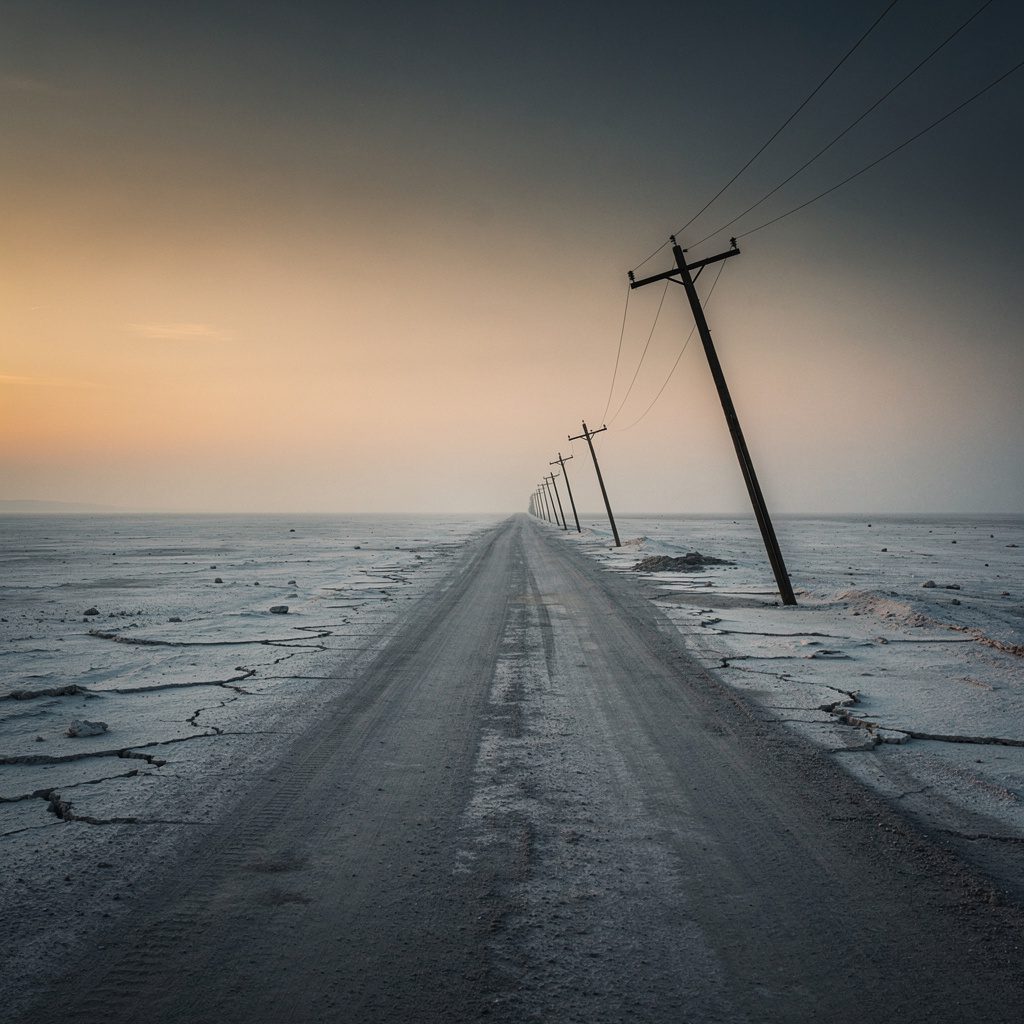
The search party found Paloma Mercado on the morning of the third day, sitting in a highway ditch twelve miles east of Reno, Nevada, her boots gone, her jacket soaked through despite no rain in the forecast. She was facing east, very still, watching the desert horizon with the focused patience of someone waiting for a bus they knew would come. She did not respond to her name. She did not respond to the flashlight beam. When the paramedic crouched beside her and took her wrist to check her pulse, she turned and looked at him with an expression that was not relief and was not fear. It was recognition — as though she had been expecting him specifically, as though she had seen his face before in some other context she could not yet place.
They would not find Gideon Eastwood at all.
Three weeks earlier.
Paloma had been driving the route she always drove in October — a loop through eastern Nevada that she had inherited from her grandmother, who had been a field geologist for a mining company in the 1970s and had left behind a collection of hand-drawn maps so detailed they constituted a kind of love letter to the landscape. The maps were Paloma’s most treasured possession. She was a cartographer by training and a romantic by temperament, which meant she regarded discrepancy as a personal affront. So when the state highway she was following bent south through a stretch of alkali flat and she noticed a dirt road branching west that did not appear on any of her grandmother’s maps, or on the digital overlay she ran on her laptop, or on the laminated BLM survey she kept in the glovebox for exactly these situations, she pulled over.
She sat with the engine running for a long moment.
The road was real. It was graded, not merely rutted by tires — someone had dragged a blade across it deliberately. There were utility poles running alongside it, old wooden ones, leaning at the angles that old wooden poles lean at when the ground beneath them has been shifting for decades. The wires between them were intact. Somewhere down that road, those wires went somewhere.
She turned onto it.
Gideon Eastwood had found it differently — not by map but by accident, which was appropriate because Gideon had been living accidentally for the better part of two years. After the collapse of the architecture firm he had co-founded in Portland, he had sold almost everything and bought a secondhand camper van with the specific intention of having no plan. He drove where the road suggested. He stopped when something caught his eye. He had been doing this long enough that the freedom had stopped feeling like freedom and started feeling like a different kind of discipline, which he found oddly comforting.
He found the road on a Tuesday. He remembered it was Tuesday because he had been listening to a podcast that aired on Tuesdays. The podcast cut to static about forty seconds after he turned onto the dirt road, and he did not notice immediately because he was watching the utility poles. There was something wrong with the spacing of them — they were too close together, as though whoever had strung the line had miscalculated and run short of distance before running short of wire. Or as though the road had been compressed somehow, the way a road looks in heat shimmer, except the air was cool and clear.
He drove in.
The town appeared to both of them in the same way, which neither of them could have known because they arrived three days apart. It appeared not gradually but completely — one moment the road was empty alkali flat, the next there were buildings. Low, flat-roofed structures in the style of the 1950s, the kind of architecture that had been optimistic once. A gas station with the pump handles still in place. A diner with a hand-lettered sign above the door. A post office, a hardware store, a barbershop with a striped pole that was not moving.
No cars. No people.
But lights on inside the diner.

 WhatsApp
 Telegram
 Email







Categories
- AI & Technology
- Contemporary
- Corporate Control
- Creepypasta
- Crime Thriller
- Cyberpunk
- Dark Fantasy
- Enemies to Lovers
- Fairy Tale Retelling
- Fantasy
- First Contact
- Forbidden
- Genetic/Body Horror
- High Fantasy
- Monster Hunter
- Mythic/Folklore
- Paranormal
- Portal/Otherworld
- Post-Apo
- Post-Collapse Society
- Psychological Thriller
- Romances
- SCI-FI
- Second Chance
- Slow Burn
- Space Combat
- Spacepunk
- Surveillance State
- Survival Thriller
- Thrillers
- Time Travel
- Treasure Hunter
- Urban Fantasy
- Witchcraft/Curses
Tags
10min stories atmospheric atmospheric fantasy atmospheric fiction contemporary romance Creepy creepypasta crime thriller dark fantasy debt dystopia emotional fiction enemies to lovers ensemble cast epistolary fantasy female protagonist first person forbidden romance framed narrative high fantasy love story magic Memory mystery Paranormal psychological horror psychological thriller romance sci-fi second chance second chance romance short fiction short story slow burn space station speculative fiction supernatural Survival survival thriller suspense thriller travel romance witchcraft workplace romance
Leave a Reply