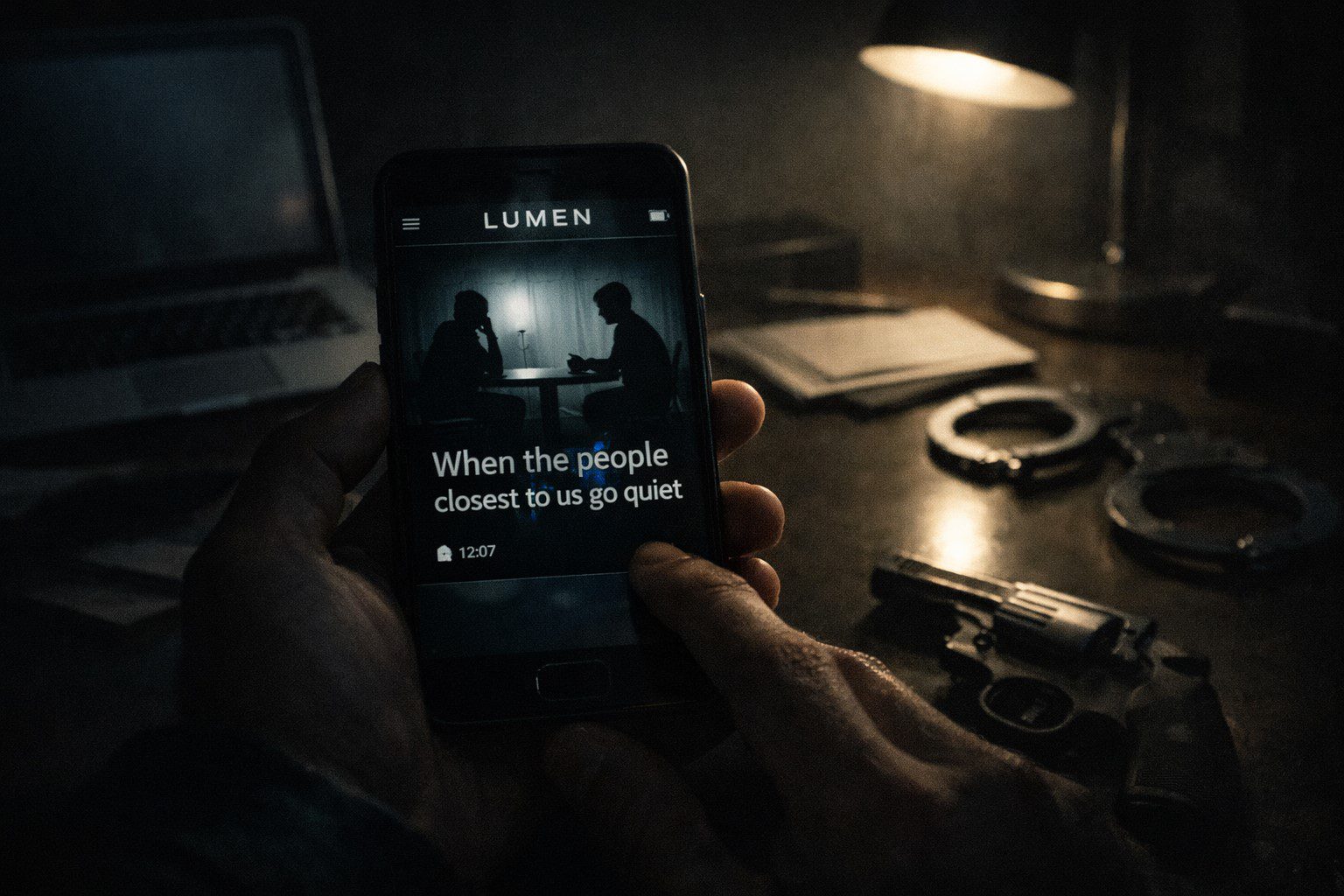
Every morning I scrolled through the same app, and every morning it knew exactly what I needed to see. Not wanted — needed. The difference, I came to understand, was the point.
The app was called Lumen. I had downloaded it on a Thursday in February because a colleague mentioned it in passing and I had nothing better to do on my lunch break. It looked like any other content feed — short videos, articles, photographs, the usual algorithm-shaped river of things designed to keep you looking. I used it the way I used everything: casually, compulsively, without much thought.
It took eleven days for me to realise it was watching back.
The first sign was small enough to dismiss. I had been having a difficult week — a disagreement with my sister that had gone unresolved, the kind that sits at the back of everything else like a low-grade headache. I hadn’t posted about it anywhere. I hadn’t searched anything related to it. And yet on day four of that week, Lumen served me a twelve-minute video titled When the people closest to us go quiet. Not a general think-piece about loneliness. Specific. About the particular silence that falls between two people who know each other well and have said something they can’t take back.
I watched all twelve minutes. I closed the app and sat at my desk and told myself it was a coincidence. Algorithms were sophisticated. I probably carried some digital residue of my mood — the articles I’d half-read, the searches I’d made and deleted, the invisible trail of a person who is upset and doesn’t want to admit it.
I believed that for about a week.
Then it knew about my father.
He called me on a Sunday and told me the results of his cardiology appointment, and the results were not as straightforward as we had hoped. It was not a crisis — his words, and he used them in the calm voice he kept for things he didn’t want me to worry about, which always made me worry more. I stayed on the phone for an hour. I did not cry until after I hung up, and I cried alone in my kitchen with the window over the sink and the Sunday street outside going about its ordinary business.
I did not open Lumen that evening. I couldn’t face anything, even a screen.
Monday morning I opened it on the bus to work, the way I always did. The first thing it showed me was a photograph — not a video, not an article. Just a photograph. A man’s hands, older, holding a mug of tea. The caption was a single line: Some things we’re not ready to lose.
I stared at that image for the entire bus journey. When I got to work I went straight to the bathroom and stood at the sink and breathed until my face was something I could show people.
I had not searched anything about my father. I had not spoken about the call to anyone except my sister, in a brief text. I had told no app, no device, no platform anything about what had happened on Sunday evening.
I started testing it. Not scientifically — I wasn’t sure I wanted a scientific answer yet — but deliberately. I would have a thought, a specific and private thought, and then I would open Lumen and watch what it showed me in the first three items.

 WhatsApp
 Telegram
 Email







Leave a Reply