He shakes his head. Not evasion — something closer to genuine bewilderment, the look of a man who has asked himself the same question for months and arrived nowhere.
Filipa pulls on her own gloves and reaches for the acrylic case. Harish makes a small sound — not quite a protest. She undoes the latch anyway.
The smell intensifies when the seal breaks. That mineral cold, that well-water depth.
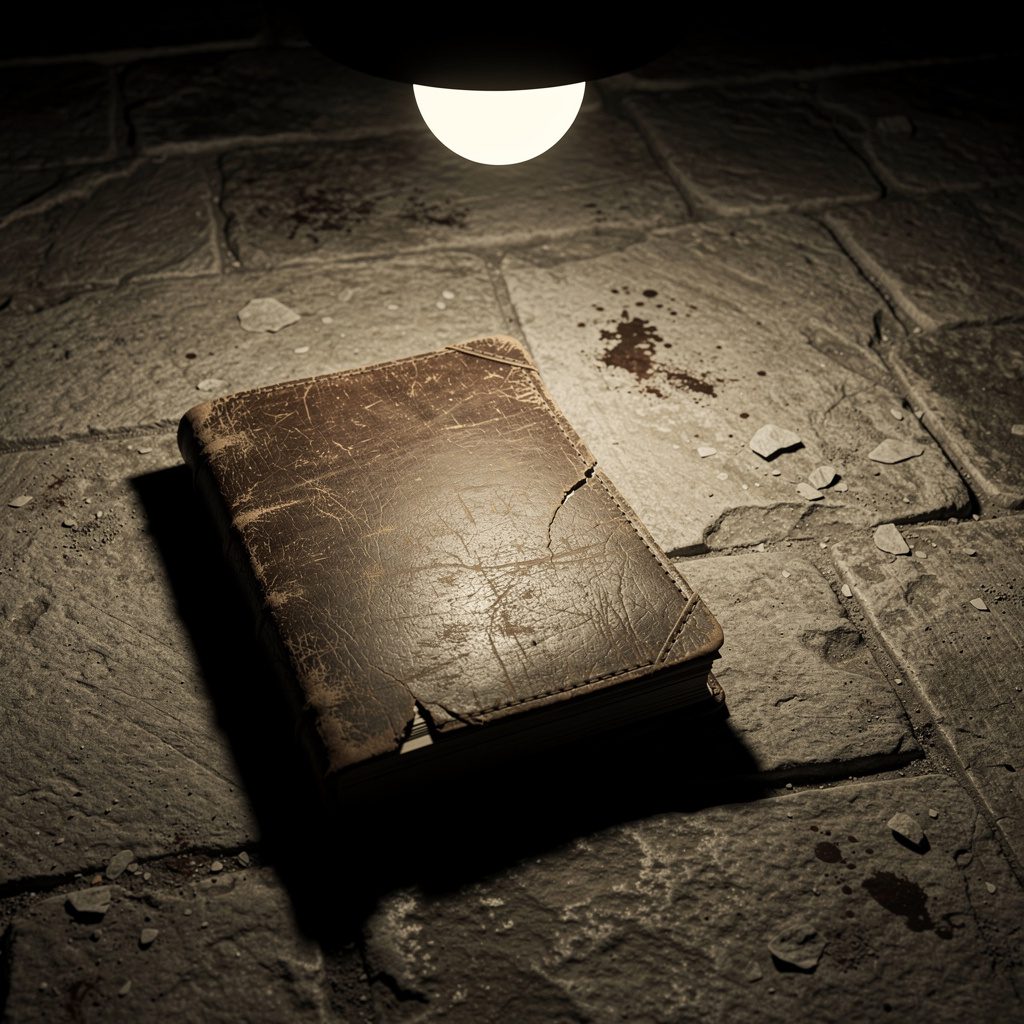
She opens the cover.
The inside page is handwritten in dense, neat columns. The script is the same cipher the consultant identified before — entries, dates, figures, names in a phonetic rendering that approximates French and English and something older than both. The original investigators in 2016 had managed to parse roughly a third of it before the case went cold. They found records of transactions: goods, locations, sums of money. Nothing obviously criminal until you understood the context — until you understood what the trading company had actually been trading, in the 1890s, through the ports of New Orleans and Port-au-Prince and Providence itself.
That part of the case file was sealed.
Nasser is looking at the wall rather than the ledger. “The last time I was in a room with that thing,” he says, “one of the investigators on the original case had a breakdown two days later. Not stress. Not overwork. He said he kept seeing the same address written everywhere he looked. On receipts. On license plates. On the back of his eyelids when he tried to sleep.” He pauses. “He retired to Vermont. Doesn’t answer calls.”
“That’s not evidence of anything,” Harish says, but his voice has gone careful in a way that suggests he is reminding himself more than he is arguing with Nasser.
Filipa turns a page.
The entries continue — and then, roughly two-thirds of the way through, they change. The cipher gives way to plain English. Recent dates. Names she recognizes: a city councilman, a harbor authority official, a contractor who was investigated last year for bid-rigging on a waterfront development project. Below each name, a figure. Below each figure, a small symbol — the same symbol, repeated, inked in a rust-brown that Harish will later confirm is not ink at all.
She stops on the last entry.
The date is four days ago. The name is her own.
She closes the ledger.
The watcher in the corridor does not move. He has what he came for — not information, not evidence, but confirmation. He has watched this moment happen before, in different rooms, with different people. The ledger has a way of finding its way back. It has a way of updating itself, which is the part he has never been able to explain to anyone, including himself.
He was the fire investigator. The one who logged it as destroyed.
He did not destroy it. He told himself he would come back for it. Then the years passed the way years do — sideways, faster than you expect — and he had almost convinced himself that leaving it in the archive was a kind of solution. That the fire had finished what he couldn’t.
He does not know how it got back into the evidence locker. He does not know who took the photographs that were sent to Nasser. He does not know how his own name came to be crossed out on the last page — crossed out, not erased — with a thin, deliberate line.
Filipa’s name is below his, uncrossed.
Inside the room, she is on the phone, voice low and controlled, calling her supervisor. Harish is photographing the pages with his department camera. Nasser has sat down in one of the old clerk’s chairs and is staring at his hands.
None of them look at the door.
The watcher steps back from the corridor. The marble floors do not betray him — he learned long ago how to move without sound in buildings like this. He takes the stairwell down, pushes through the side exit into the gray Providence morning, and stands on the pavement while the city slowly wakes around him.
He does not know what the ledger is.
He knows what it does.
He knows that Filipa Vitale will not find the answer in the document — that the document is not the source of anything, only the record of it, the way a shadow is not the thing that blocks the light. He knows that the trading company dissolved in 1923 and that its principals died within a decade of each other and that the goods they moved through those ports were never recovered and never named in any public filing.
He walks north along the waterfront. The bay is flat and silver under low clouds. Somewhere behind him, in a room that smells like a well, three people are trying to understand something that has already decided what it thinks of them.
He does not go back.
He is not sure it would matter if he did.

 WhatsApp
 Telegram
 Email







Categories
- AI & Technology
- Contemporary
- Corporate Control
- Creepypasta
- Crime Thriller
- Cyberpunk
- Dark Fantasy
- Enemies to Lovers
- Fairy Tale Retelling
- Fantasy
- First Contact
- Forbidden
- Genetic/Body Horror
- High Fantasy
- Monster Hunter
- Mythic/Folklore
- Paranormal
- Portal/Otherworld
- Post-Apo
- Post-Collapse Society
- Psychological Thriller
- Romances
- SCI-FI
- Second Chance
- Slow Burn
- Space Combat
- Spacepunk
- Surveillance State
- Survival Thriller
- Thrillers
- Time Travel
- Treasure Hunter
- Urban Fantasy
- Witchcraft/Curses
Tags
10min stories atmospheric atmospheric fantasy atmospheric fiction contemporary romance Creepy creepypasta crime thriller dark fantasy debt dystopia emotional fiction enemies to lovers ensemble cast epistolary fantasy female protagonist first person forbidden romance framed narrative high fantasy love story magic Memory mystery Paranormal psychological horror psychological thriller romance sci-fi second chance second chance romance short fiction short story slow burn space station speculative fiction supernatural Survival survival thriller suspense thriller travel romance witchcraft workplace romance
Leave a Reply