Twelve minutes.
That is how long I have before the shift supervisor does his rounds and finds me in this room. Twelve minutes before he sees what I have found. Twelve minutes before everything I know about this place becomes something I cannot unknow.
I need you to understand what I walked into before you judge what I am about to do.
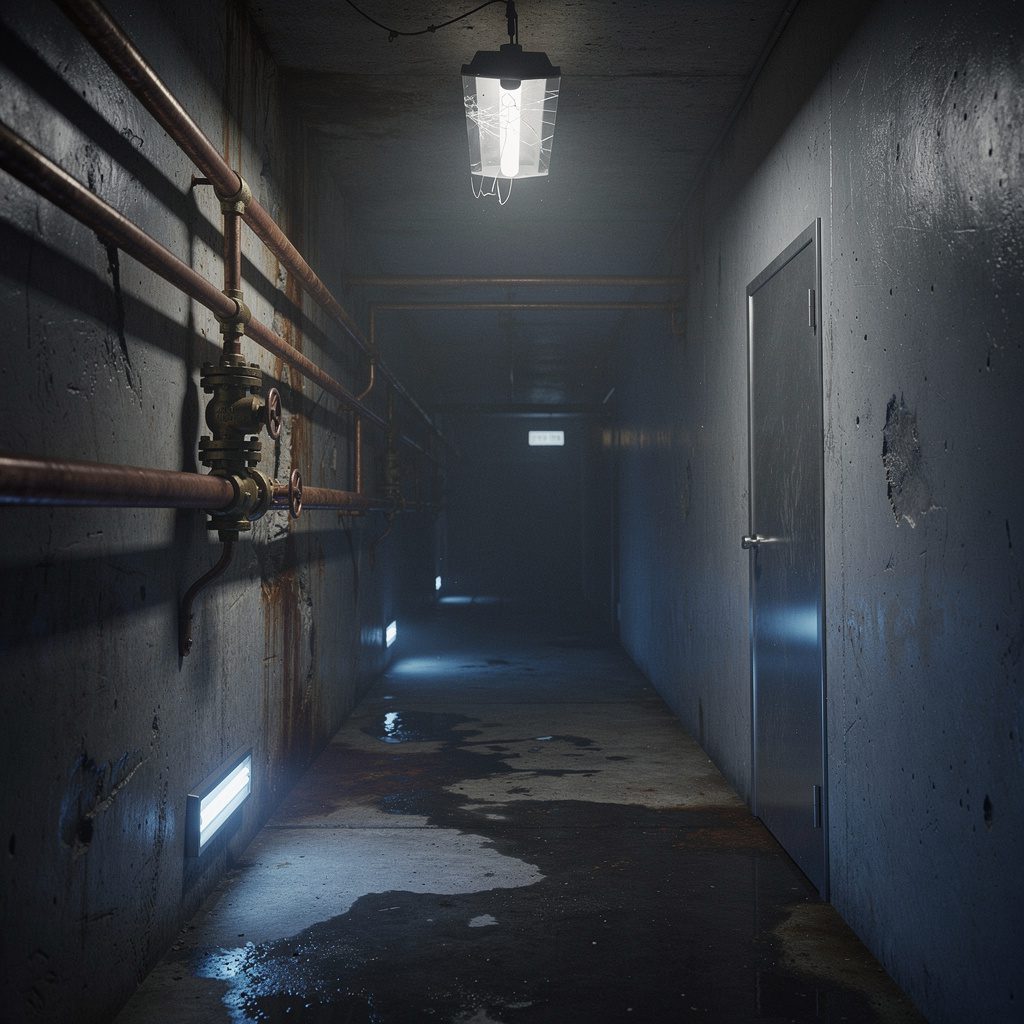
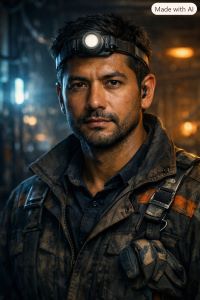
My name is Han Yoon. I am a maintenance technician at the Varreck Chemical Processing Plant, a sprawling industrial compound on the southern edge of Lake Charles, Louisiana. Concrete corridors. Pipe runs thick as tree trunks. The smell of sulfur and hydraulic fluid baked into every surface. I have worked the overnight shift here for four years. I know every valve, every junction box, every echo.
I do not scare easily.
But I am scared now.
Let me go back. Let me explain how I ended up standing in the restricted section of Building D with a flashlight in one hand and a maintenance log in the other, reading dates that should not exist.
Two weeks ago, the ventilation system in the east wing began behaving strangely.
Not broken. Not malfunctioning in any way I could diagnose. Just… strange. Dampers opening and closing on schedules that did not match any programmed cycle. Pressure readings spiking in sealed sections. And a sound — low, rhythmic, almost like breathing — that I first heard on a Tuesday at 2:14 in the morning.
I logged it. Filed the report. Waited for engineering to respond.
They did not.
I filed again. Then a third time. The plant manager, a man named Osterberg who smells of instant coffee and impatience, told me I was misreading the gauges. Told me old buildings settle. Told me the sound was probably a loose baffle plate.
I know what a loose baffle plate sounds like. I have replaced dozens of them.
This was not that.
So last Thursday I started keeping my own log. Handwritten. Times, readings, locations. I began mapping the anomalies the way I once mapped gas pocket formations back when I worked a stint at a natural gas depot outside Beaumont — slowly, methodically, trusting the data over the explanation.
The pattern that emerged stopped me cold.
The damper movements were not random. They were sequential. Opening and closing in a specific order, in a specific corridor, at specific intervals. Corridor 4-East. Section 12 through Section 17. Every night, between 2 a.m. and 3 a.m.
I recognized the sequence.
It matched the emergency evacuation route.
Not the current one. The old one. The one that was decommissioned after the 2019 incident that Varreck’s legal team spent two years making sure nobody talked about in specific terms.
I know about the 2019 incident only in outlines. Three workers. A pressure failure in the sealed processing room at the end of Corridor 4-East, the room now designated “inactive” on every schematic I have ever been handed. The workers were evacuated. The official record says they were treated and released.
But I have never met anyone who worked here before 2020 who will say their names out loud.
Ten minutes now.
I found the room on my own two nights ago. The door is not locked — it is simply unmarked, painted the same dull grey as the surrounding wall, the handle recessed flush with the frame so you would walk past it a hundred times without knowing it was there. I found it because the ventilation sequence always ends at the same point: a damper at the base of the wall, seven feet from the east exit stairwell.
Behind the door is a small anteroom. Maybe four meters by four meters. Concrete floor. A single overhead fixture, dead. A workbench along the far wall.
And on the workbench, the maintenance log.
Not a digital record. A paper log, bound in that familiar red cardstock Varreck used before they switched to digital in 2020. Entries going back to 2017. Technician names, dates, equipment checks.
I read the last three pages by flashlight.
The handwriting changes partway through. The earlier entries are clean, professional, the kind of shorthand I use myself. But from early September 2019 onward, the entries become something else.
They are no longer equipment checks.

 WhatsApp
 Telegram
 Email






Categories
- AI & Technology
- Contemporary
- Corporate Control
- Creepypasta
- Crime Thriller
- Cyberpunk
- Dark Fantasy
- Enemies to Lovers
- Fairy Tale Retelling
- Fantasy
- First Contact
- Forbidden
- Genetic/Body Horror
- High Fantasy
- Monster Hunter
- Mythic/Folklore
- Paranormal
- Portal/Otherworld
- Post-Apo
- Post-Collapse Society
- Psychological Thriller
- Romances
- SCI-FI
- Second Chance
- Slow Burn
- Space Combat
- Spacepunk
- Surveillance State
- Survival Thriller
- Thrillers
- Time Travel
- Treasure Hunter
- Urban Fantasy
- Witchcraft/Curses
Tags
10min stories atmospheric atmospheric fantasy atmospheric fiction contemporary romance Creepy creepypasta crime thriller dark fantasy debt dystopia emotional fiction enemies to lovers ensemble cast epistolary fantasy first person forbidden romance found text framed narrative high fantasy love story magic Memory mystery Paranormal psychological horror psychological thriller romance sci-fi second chance second chance romance short fiction short story slow burn space station speculative fiction supernatural Survival survival thriller suspense thriller travel romance witchcraft workplace romance
Leave a Reply