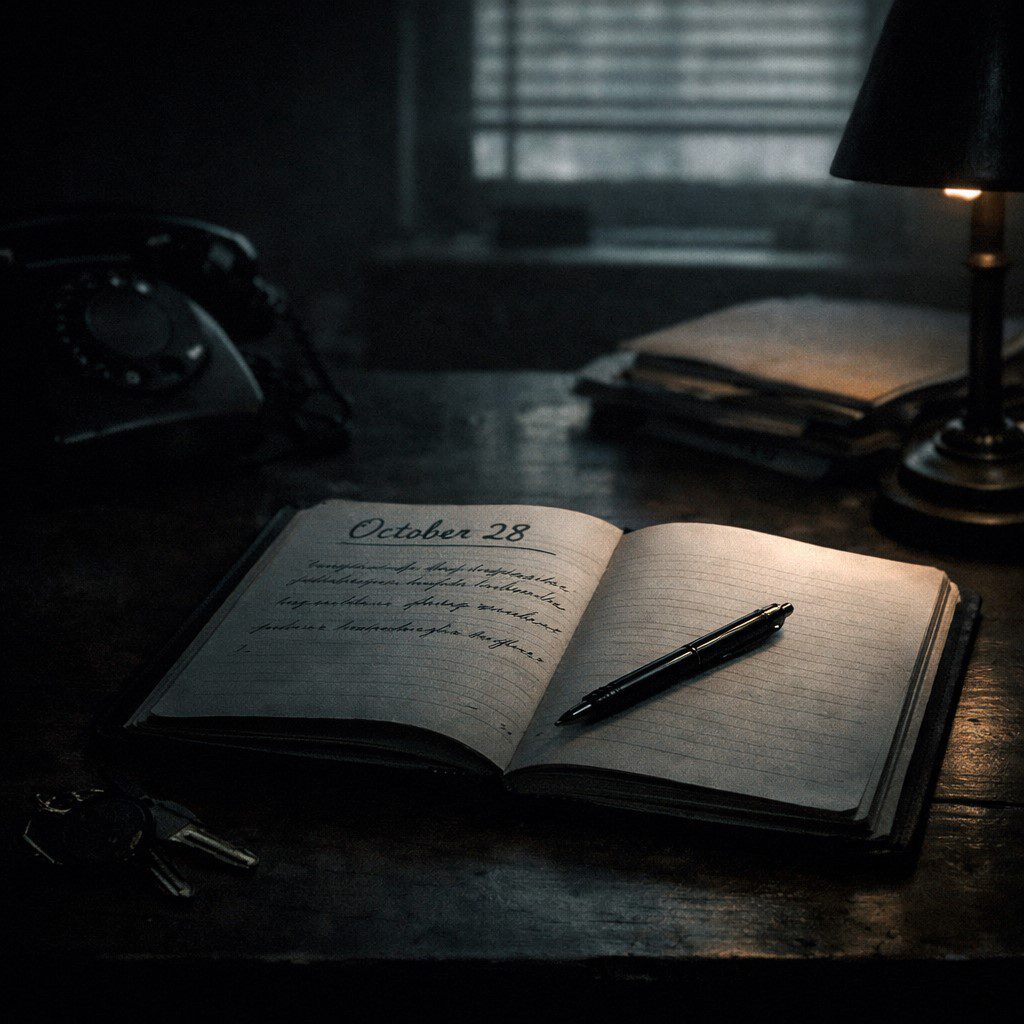
The next morning I made a decision. I would go through each day exactly as normal, checking the journal only after the day was finished — to verify, not to anticipate. That felt important. Whatever was happening, reading ahead seemed like a rule I wasn’t supposed to break, and I had learned from enough strange situations in my life that unknown rules are often the ones that matter most.
I followed that practice for eight days.
Every single entry was accurate. Not approximately, not in a general way — precisely, specifically accurate. Conversations I had word for word. A coffee cup I knocked off my desk. A text from a number I didn’t recognise that turned out to be a delivery notification. A dream I had on Thursday night described in the entry for Thursday, in more detail than I could have recalled myself.
Something was watching my days more closely than I was.
On October 16th, following the rule I had set for myself, I read the entry for the previous day. It ended with a sentence that the others hadn’t: You’re going to want to check under the bathroom sink tomorrow.
I told myself I wouldn’t. I lasted until the following morning. Under the sink, behind the cleaning supplies I rarely moved, was another journal. Same black cover. Same soft spine. No dent in the corner — this one was unmarked, new.
I opened it and found it full of entries. Same handwriting. Dated from October 31st through to December 15th.
I called my therapist. Not in session — I called her direct line, which she had given me for genuine emergencies, and I told her what was happening. I kept my voice level and laid out the facts chronologically because that is how I process things and she knows that about me. She listened without interrupting, which meant she was either worried or thinking hard.
She asked if anyone else had access to my apartment. I said no — I lived alone, single key, no spare. She asked if the handwriting had been verified by anyone other than me. I said no. She said gently that the brain under extreme stress could create and then forget things, and that what I was describing — journaling I had no conscious memory of — was worth discussing in our next session, which was in four days.
I thanked her. I put the phone down. I opened the new journal to October 31st and read the entry for a day that hadn’t happened yet, which I had promised myself I wouldn’t do.
The entry began: She won’t believe you. That’s all right. You don’t need her to believe you. You need to understand that I am not you — I am what you become — and there are things I know now that I need you to know before you get here.
I read that sentence four times. Then I read the rest of the entry.
It is difficult to describe what it is like to be advised by yourself. To receive instructions from a version of your own mind that has, apparently, already lived through the weeks ahead of you. The writing had the same habits as mine but a different quality — more patient, less anxious. Less like the person I was and more like the person I had always meant to be.

 WhatsApp
 Telegram
 Email







Leave a Reply