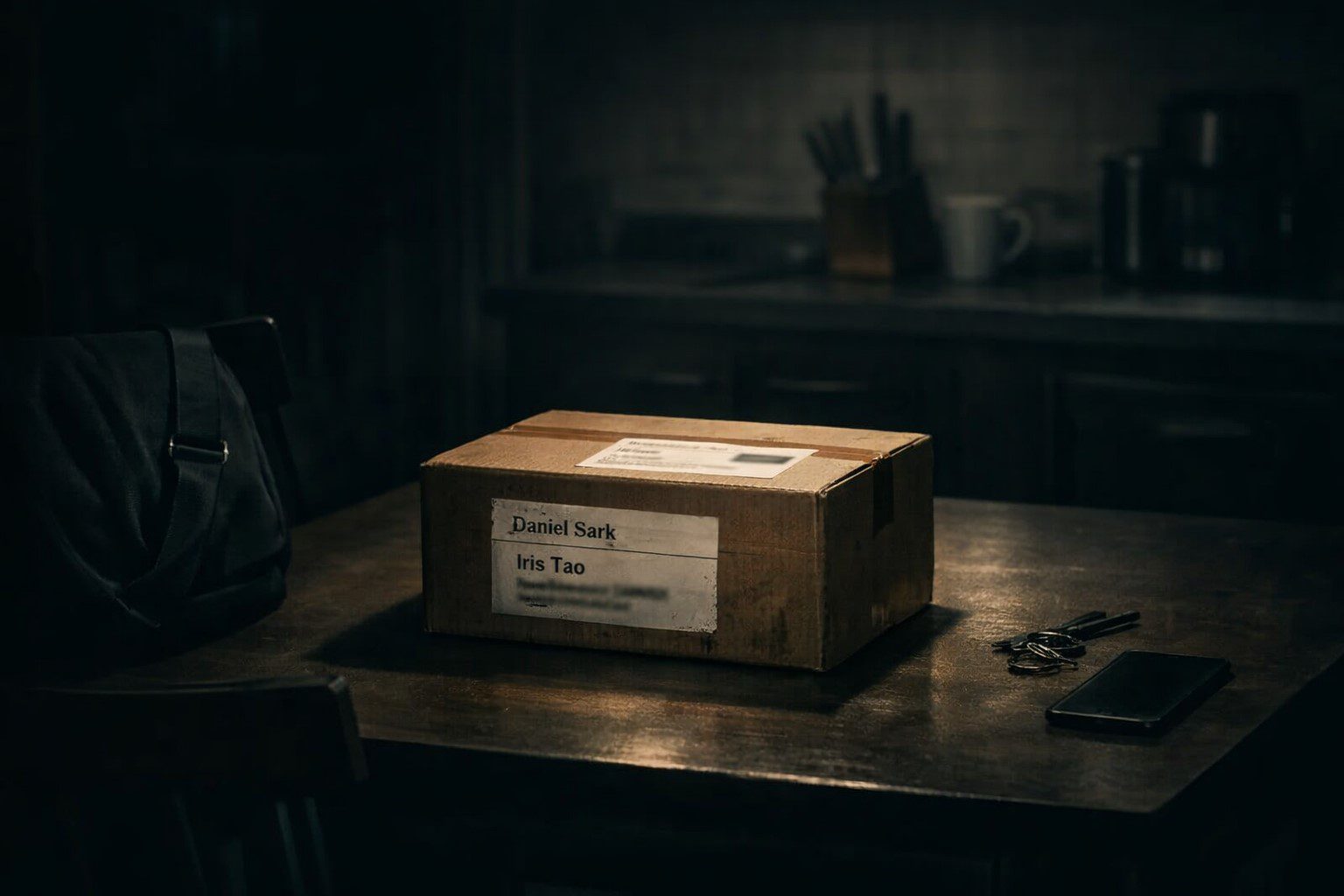
The pages were dense with handwriting. The same neat, controlled print as the label. Dates in the upper right corner of each page, running chronologically from eight months ago to six weeks before Daniel Sark was reported missing. I did not read it fully — not then — but I scanned enough to understand its shape.
It was a log. Entries averaging half a page each, recording meetings, names, locations, and numbers that might have been financial figures or might have been something else entirely. The language was careful and indirect, the way language became when a person was writing about something they wanted to record but not state plainly.
Three pages from the end, a name appeared that was not indirect at all. A name I recognised from eleven years of insurance fraud work — a name attached to a series of claims investigations that had never fully resolved, involving a property development company on the south side of the city that had twice been the subject of inquiries that had twice been quietly discontinued.
Marcus Hale. I had investigated claims connected to his company three years ago and had been told, by my then-director, that the file had been referred upward and was no longer my concern. I had accepted that because that was what you did, and because I valued my job, and because I was not, at that point, the kind of person who pulled at threads that the people above her had decided to leave alone.
I was no longer employed by that firm. I had left six months ago to set up independently. The thread was still there.
I photographed every page of the notebook with my phone before I did anything else. Forty-seven pages, front and back. I sent the photographs to an encrypted cloud account I used for sensitive case materials and then I sat back and thought about what I was holding.
Daniel Sark had sent a notebook — or someone using his identity had sent it — to the neighbour two floors below him. Not to the police. Not to a journalist. To me, specifically. Which meant Daniel Sark knew what I did, or had known, and had chosen me for a reason.
I went back through the photographs on my phone and looked at the final entry, three pages from the end, more carefully. The name Marcus Hale appeared in the context of a meeting — a location I recognised as a private members’ club on the west side — and a phrase that the writer had underlined once: documentation already transferred.
Below that, a single line that had not been there in any of the earlier entries. Different pen, slightly different pressure, as though it had been added later.
If you’re reading this, it didn’t work.
I called the police at eight forty-seven that evening. I told them a package had arrived from a missing person’s address and I had a notebook I believed was relevant to his disappearance. I did not mention Marcus Hale. I did not mention my photographs. I did not mention the final line.
The detective who came was thorough and polite and took the notebook in an evidence bag and asked me several careful questions that told me, by what they avoided, that Daniel Sark’s case was not a simple missing persons file. I answered what I was asked and volunteered nothing. Old professional habit.
After she left I sat at the kitchen table in the quiet of the flat and looked at the empty space where the package had been.
If you’re reading this, it didn’t work.

 WhatsApp
 Telegram
 Email







Leave a Reply