The security camera footage showed someone walking out of the Portland Art Museum wearing her face — and Nora had been home asleep when it happened.
She watched the clip three times on her laptop, each replay tightening something cold around her chest. The timestamp read 11:47 PM. She had the alarm logs, the deadbolt, the dog that never stopped barking at strangers — all of it proving she had not left her apartment. And yet there she was on the screen, dressed in a charcoal coat she did not own, moving through the museum’s glass lobby with the easy confidence of someone who had done it a hundred times.
Nora worked for the museum as a conservation specialist. She had access codes, key cards, and a reputation so clean it bordered on boring. When Detective Arroyo called her at 7 AM and asked her to come in, she thought it was about a damaged exhibit. It was not.
The museum had been robbed. A small Flemish oil painting — insured for four hundred thousand dollars — was gone. And the only person the cameras had captured entering after closing was someone who looked exactly like Nora Vance.
She sat across from Arroyo in a gray interview room that smelled like burnt coffee. He slid the printed still across the table. The figure’s face was turned slightly toward the camera, as if it knew where every lens was positioned. The cheekbones were hers. The jaw was hers. Even the small scar above the left eyebrow — a childhood fall off a bicycle in Eugene — was there.
“That isn’t me,” she said.
Arroyo nodded slowly, the way people nod when they have already decided what they believe. “Your card was used to disable the east corridor alarm at 11:44 PM.”
Nora felt the floor tilt slightly beneath her. Her card had been in her jacket pocket all night. She had checked. She checked things obsessively — doors, locks, card slots, gas burners. It was a habit her therapist called “vigilance.” She called it survival.
They let her go with a warning not to leave the city. She drove home along the Willamette, the river flat and silver under the morning clouds, and tried to build a rational explanation. A mask. Deepfake compositing on the footage. A twin she had never been told about. Each theory collapsed under its own weight before she reached the Morrison Bridge.
Back in her apartment, she pulled up every photo of herself she could find online. Professional headshots on the museum website. A conference panel from two years ago. A tagged photo from a colleague’s retirement party. She studied her own face the way she studied brushwork — looking for the seams, the places where the imitation broke down.
She found nothing wrong with the photos. But she noticed something she had never paid attention to before. In every image, her reflection in nearby glass or mirrors was slightly delayed. A fraction of a second behind. She had always assumed it was camera lag or compression artifacts.
Now she was not sure.
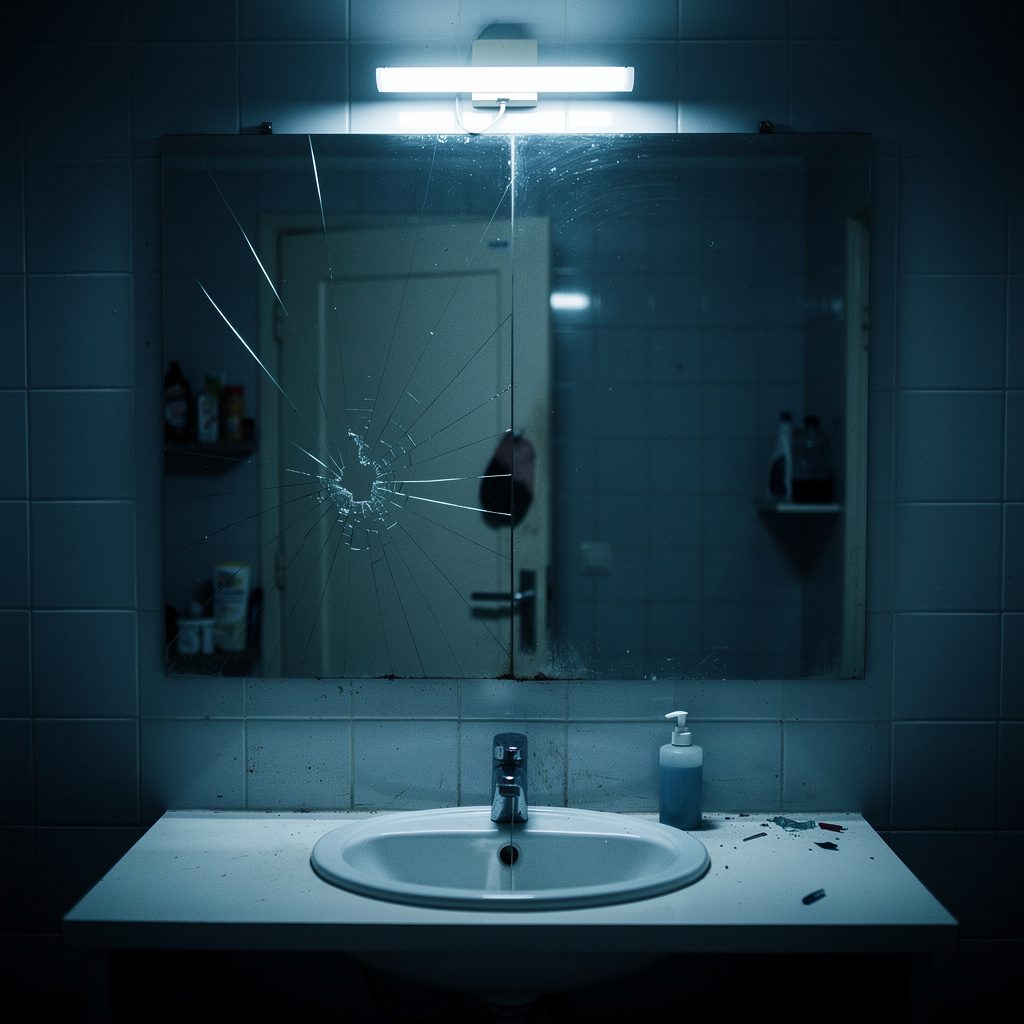
She went to the bathroom and stood in front of the mirror. She raised her right hand. The reflection raised its left, as it should. She lowered it. The reflection lowered its. She stared for a long moment, then mouthed the word “hello.”
The reflection mouthed it back.
Then, two full seconds later, it mouthed it again.
Nora stepped back so fast she hit the towel rack. The reflection did not step back. It stood at the glass, watching her, one hand still partially raised, head tilted at an angle Nora had not moved into.
She turned off the bathroom light and stood in the dark hallway, breathing through her nose, counting to ten the way her therapist had taught her. Panic distorts perception. That was the lesson. But she had seen what she had seen.
She called her colleague Marcus, who had worked in the museum’s digital imaging lab for eleven years. She described what she had seen on the security footage without mentioning the mirror. He listened without interrupting, which was unusual for him.
“Nora,” he said finally, “I need to tell you something I probably should have told you six months ago.”

 WhatsApp
 Telegram
 Email







Categories
- AI & Technology
- Contemporary
- Corporate Control
- Creepypasta
- Crime Thriller
- Cyberpunk
- Dark Fantasy
- Enemies to Lovers
- Fairy Tale Retelling
- Fantasy
- First Contact
- Forbidden
- Genetic/Body Horror
- High Fantasy
- Monster Hunter
- Mythic/Folklore
- Paranormal
- Portal/Otherworld
- Post-Apo
- Post-Collapse Society
- Psychological Thriller
- Romances
- SCI-FI
- Second Chance
- Slow Burn
- Space Combat
- Spacepunk
- Surveillance State
- Survival Thriller
- Thrillers
- Time Travel
- Treasure Hunter
- Urban Fantasy
- Witchcraft/Curses
Tags
10min stories atmospheric atmospheric fantasy atmospheric fiction contemporary romance Creepy creepypasta crime thriller dark fantasy debt dystopia emotional fiction enemies to lovers ensemble cast epistolary fantasy female protagonist first person forbidden romance framed narrative high fantasy love story magic Memory mystery Paranormal psychological horror psychological thriller romance sci-fi second chance second chance romance short fiction short story slow burn space station speculative fiction supernatural Survival survival thriller suspense thriller travel romance witchcraft workplace romance
Leave a Reply