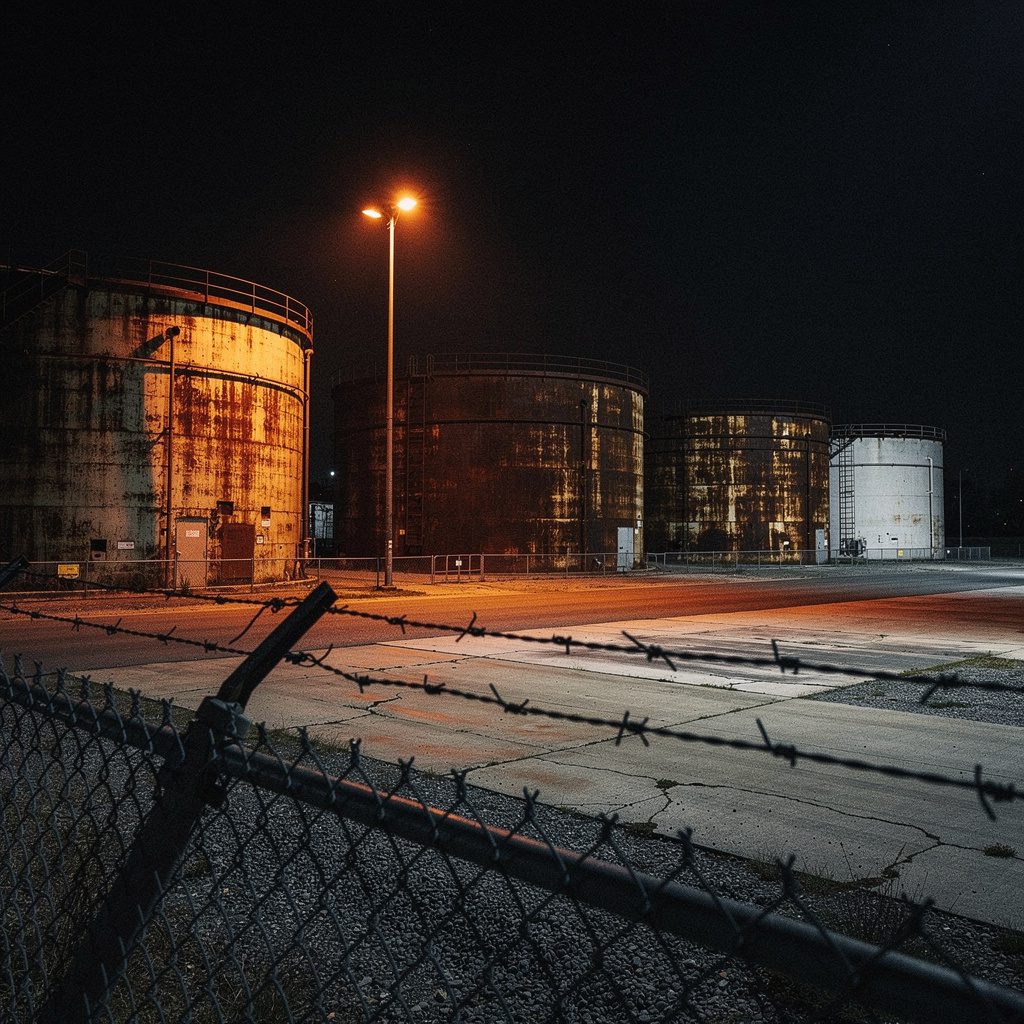
The watcher had seen the van turn around. He had seen it drive north. He had kept his eyes on its taillights until they disappeared over the slight rise in the road.
He had then watched those same taillights reappear from the south two minutes later, the van completing a loop that — by every physical measurement the watcher understood from his years of surveying this terrain — was geometrically impossible. There was no loop. There was no connecting road south of the depot for seven kilometers.
He had seen this before.
Not the same, exactly. But the shape of it was the same.
He reached for his door handle. He stopped himself. He had made the mistake of intervening once before, ten years ago, when a woman in a sedan had stopped in front of the gate and gotten out and started walking toward the fence. He had called to her. She had turned around. And in the fraction of a second before her face resolved into normalcy, it had seemed to him — and he had spent a decade arguing himself out of this — that it had been blank. Not frightened, not confused. Blank. Like a face waiting to be filled in.
She had thanked him. Gotten back in her car. Driven away fine.
He had told himself it was the light.
But he had not gotten out of his car again since.
—
Viktor’s hands were tight on the wheel.
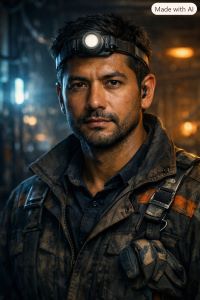
He was not a man who panicked. He had worked gas depots in Fresno and oil transfer stations in the Central Valley for nine years. He had crawled into confined spaces with faulty oxygen readings. He had walked catwalks over open separator tanks in wind. He understood industrial hazard. He understood the body’s response to it.
This felt different.
This felt like the road itself was working against him.
He pulled over again, this time on the opposite shoulder from the depot, and he got out his paper map — he kept one in the door pocket, old habit from a supervisor who had told him electronics fail, paper doesn’t — and he spread it across the steering wheel.
Highway 9 ran straight on the paper. No loop. No anomaly.
He looked up from the map.
A man was standing by the fence.
Viktor had not seen him before. The man was older, heavyset, wearing a work jacket with reflective strips. He was standing just outside the depot gate, not moving, looking at Viktor’s van.
Viktor lowered the window.
“Hey,” he called. “Hey — can you tell me how to get to the interchange from here?”
The man walked toward him slowly. He stopped about six meters from the van.
“You’ve been going around,” the man said. It was not a question.
“My GPS is broken or the road is — I don’t know what’s happening.”
The man looked at him for a long moment. Then he looked at the depot. Then back at Viktor.
“Don’t stop the engine,” the man said. “Don’t get out again. Drive north and don’t look at the gate. Don’t look at the tanks. Eyes on the road, just the road.”
“What’s going on with this road?”
The man shook his head slowly. “I’ve been trying to work that out for ten years.”
—
Viktor drove north.
He did not look at the gate. He fixed his eyes on the centerline and on the dark stretch of road ahead and on nothing else. The depot was on his left and he could feel it in the way you feel a large thing in the dark — a pressure, a weight in the corner of perception — and he drove through it and past it and the feeling faded like static when you change the frequency.
The interchange appeared.
The GPS recalculated. The blue line snapped back into sense.
He pulled into the overnight yard at 3:41 a.m., sat in the van for a full two minutes, then walked to the dispatch office and told the night supervisor his GPS had malfunctioned on Highway 9. The supervisor noted it in the log. Standard entry. Equipment failure.
Viktor signed off and walked to his car.

 WhatsApp
 Telegram
 Email






Categories
- AI & Technology
- Contemporary
- Corporate Control
- Creepypasta
- Crime Thriller
- Cyberpunk
- Dark Fantasy
- Enemies to Lovers
- Fairy Tale Retelling
- Fantasy
- First Contact
- Forbidden
- Genetic/Body Horror
- High Fantasy
- Monster Hunter
- Mythic/Folklore
- Paranormal
- Portal/Otherworld
- Post-Apo
- Post-Collapse Society
- Psychological Thriller
- Romances
- SCI-FI
- Second Chance
- Slow Burn
- Space Combat
- Spacepunk
- Surveillance State
- Survival Thriller
- Thrillers
- Time Travel
- Treasure Hunter
- Urban Fantasy
- Witchcraft/Curses
Tags
10min stories atmospheric atmospheric fantasy atmospheric fiction contemporary romance Creepy creepypasta crime thriller dark fantasy debt dystopia emotional fiction enemies to lovers ensemble cast epistolary fantasy female protagonist first person forbidden romance framed narrative high fantasy love story magic Memory mystery Paranormal psychological horror psychological thriller romance sci-fi second chance second chance romance short fiction short story slow burn space station speculative fiction supernatural Survival survival thriller suspense thriller travel romance witchcraft workplace romance
Leave a Reply