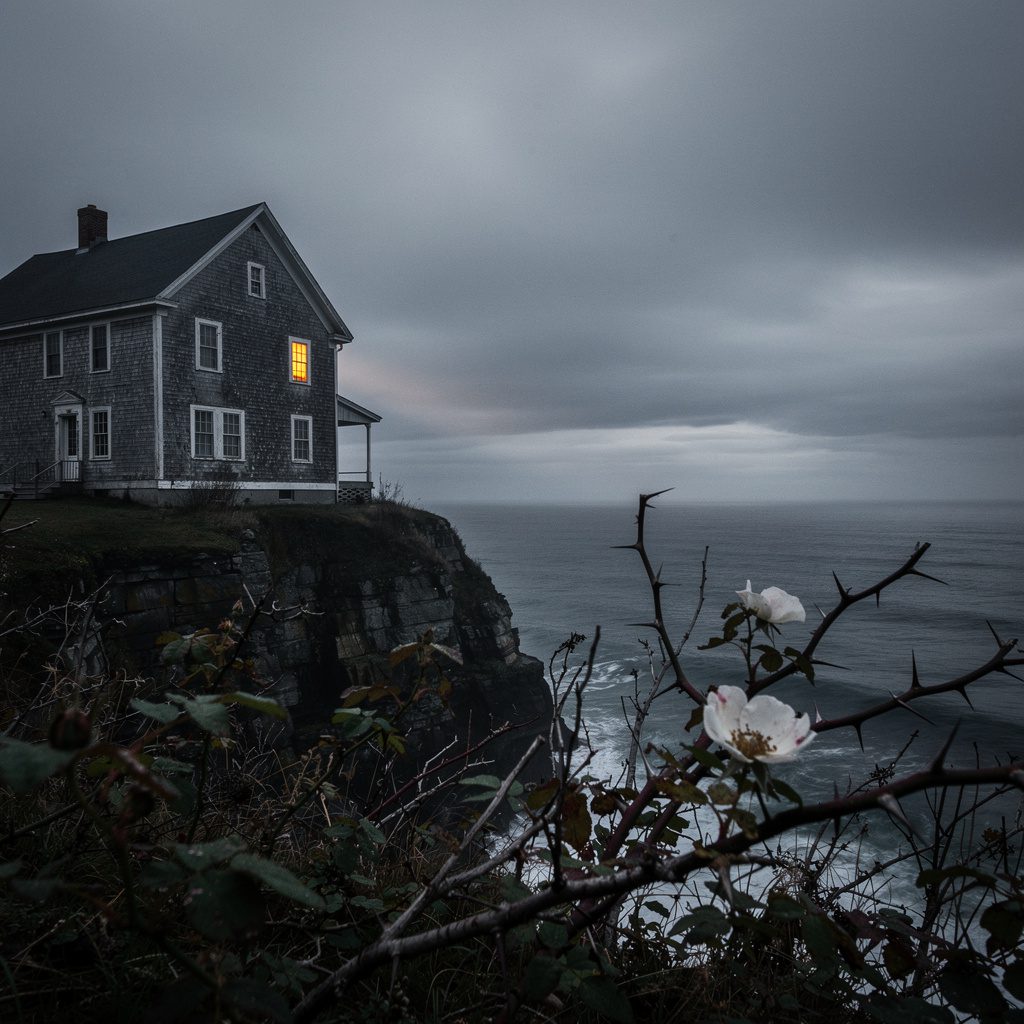
“The house is not haunted,” Margaret wrote in her final entry. “It is not haunted by the dead. It is haunted by everything that ever happened here. Every argument. Every meal. Every moment of love and cruelty and ordinary Tuesday. It remembers all of it. And if you stay long enough, it will start to show you.”
Cara set the journal down.
The kitchen light flickered. In the sudden dimness she saw something on the wall she hadn’t noticed before — a faint rectangle pressed into the old plaster, the ghost-shape of a door frame. She crossed the room and touched it. The wall was solid. But the shape was unmistakable. There had once been a door here, long since plastered over.
She pressed her ear against the wall.
She heard breathing.
She stepped back, heart slamming. Then — a voice. Muffled, like sound heard through water. A woman’s voice, low and urgent. And then a child’s voice answering. And then silence.
Cara stood there for a long time.
In the morning she drove to the county records office in Rockland. She was an archivist. She knew how to dig. It took her four hours, but she found what she was looking for: the original floor plan of the house, filed in 1887. There had been a room behind the kitchen wall — a small room, barely eight feet square, listed in the original plans as a “keeping room.” It had been sealed off sometime in the 1940s. The records didn’t say why.
She also found a death record she hadn’t been looking for.
Edith — her great-aunt, the woman who had left her the house — had died six months ago. That wasn’t the surprise. The surprise was the second name on the same record, filed the same day, same address: a child, age seven, listed only as “Jane Doe, unidentified.”
Cara sat very still in the records office, the document in her hands.
Edith had lived alone. Everyone said so. The realtor had said so. The neighbors had said so. There had been no child in that house.
But the house remembered.
She drove back as the sun dropped behind the tree line, the bay turning the color of pewter below the bluff. She sat in her car in the driveway for a long time, looking up at the house. The upstairs window — the room with the rocking chair — glowed faintly in the dusk. She hadn’t left a light on.
She thought about Edith’s note. “Don’t ask the house questions you aren’t ready to answer.”
She thought about the death record. The unnamed child. The sealed room.
She thought about the warmth she had felt in the rocking chair.
And then — slowly, with the particular dread of someone who already knows the answer — she realized why Edith had left the house to her. Not because they were family. Because Cara was an archivist. Because Edith had needed someone who would dig, who would find the records, who would ask the right questions.
Edith hadn’t left her the house as a gift.
She had left it as a confession.
Cara got out of the car. She walked to the front door. She put her hand on the knob.
Inside, faint and clear as a bell, a child laughed.
She opened the door and went in.

 WhatsApp
 Telegram
 Email







Categories
- AI & Technology
- Contemporary
- Corporate Control
- Creepypasta
- Crime Thriller
- Cyberpunk
- Dark Fantasy
- Enemies to Lovers
- Fairy Tale Retelling
- Fantasy
- First Contact
- Forbidden
- Genetic/Body Horror
- High Fantasy
- Monster Hunter
- Mythic/Folklore
- Paranormal
- Portal/Otherworld
- Post-Apo
- Post-Collapse Society
- Psychological Thriller
- Romances
- SCI-FI
- Second Chance
- Slow Burn
- Space Combat
- Spacepunk
- Surveillance State
- Survival Thriller
- Thrillers
- Time Travel
- Treasure Hunter
- Urban Fantasy
- Witchcraft/Curses
Tags
10min stories atmospheric atmospheric fantasy atmospheric fiction contemporary romance Creepy creepypasta crime thriller dark fantasy debt dystopia emotional fiction enemies to lovers ensemble cast epistolary fantasy female protagonist first person forbidden romance framed narrative high fantasy love story magic Memory mystery Paranormal psychological horror psychological thriller romance sci-fi second chance second chance romance short fiction short story slow burn space station speculative fiction supernatural Survival survival thriller suspense thriller travel romance witchcraft workplace romance
Leave a Reply