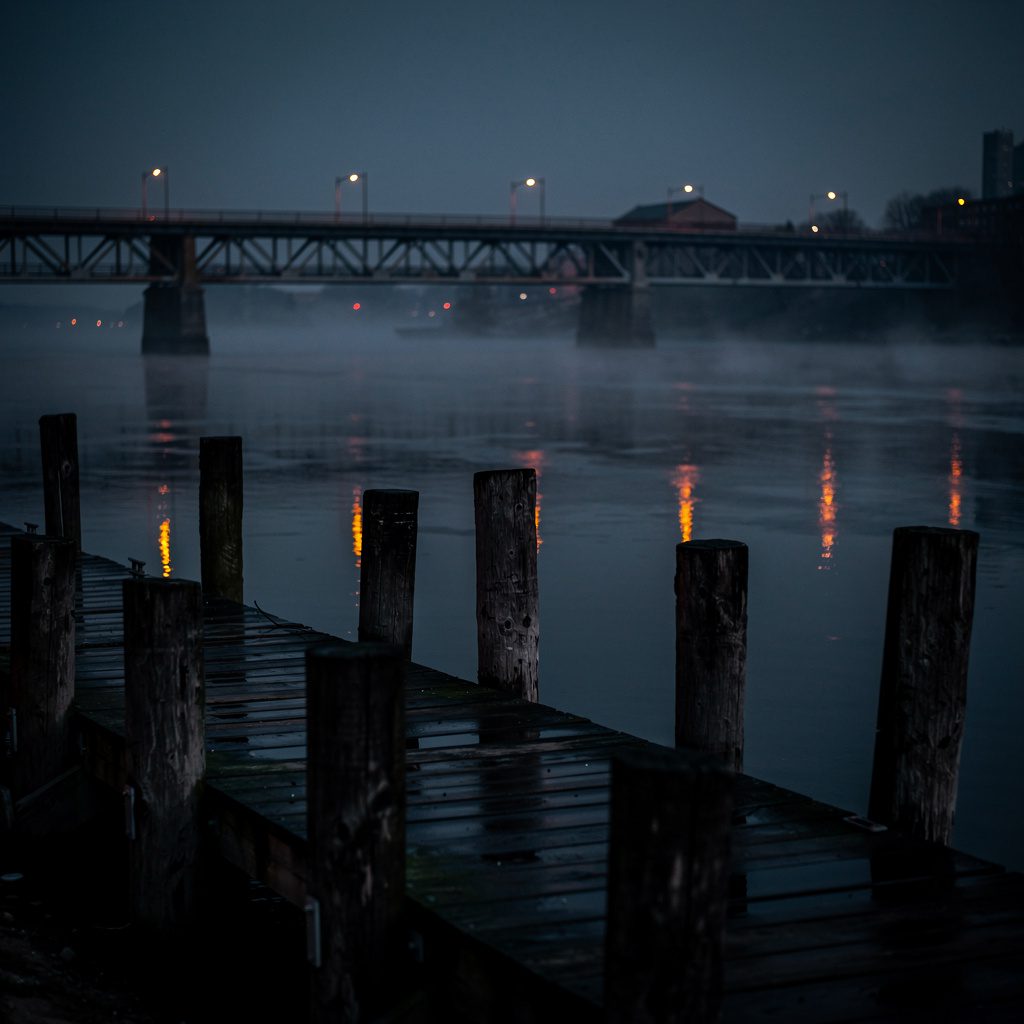
Now on the Esplanade the wind came off the river in cold, flat gusts, and Elin stopped running. She stopped because her body made the decision before her mind did, the way bodies sometimes understand things first. She was standing near one of the old dock pilings, the wood black and soft with river-age, and the lights of the Hawthorne Bridge threw pale orange columns across the water below her. She looked at her phone. The message that had arrived seventeen minutes ago was still on the screen. It was an entry in the app, time-stamped 4:02 a.m. She had woken at 4:19 a.m. from a dream she couldn’t name. She had lain in her dark apartment for eleven minutes, listening. She had risen at 4:30 and come here, to the water, because that was what she did when she could not sleep and could not think — she came to the water and she walked until the thinking sorted itself. The entry time-stamped 4:02 a.m. read, in her own voice, in the flat plain prose she always used in the app: I’m going to the Esplanade tonight. I need to understand what this is before it goes any further.
She had not written that. She had not been awake at 4:02 a.m. She had written nothing tonight.
The second message had arrived seven minutes ago, while she was already on the Esplanade, already walking, already moving toward the particular unease that had no shape yet. It was time-stamped eleven minutes from now. 4:58 a.m. It read: you won’t delete me this time either.
The observer watched her stop. Watched her stand at the piling with the orange bridge-light on her face and the phone in her hand. From the bench, the observer could not hear her breathing, but could see the rise and fall of her shoulders — shallow, controlled, the breathing of a person who is choosing, very deliberately, not to panic. There was something in this that the observer recognized without being able to name. The quality of a person at the edge of something they have been approaching for a long time without knowing it.
A stranger came from the north end of the path.
He was an older man, thick-coated, walking a dog that moved slowly on short legs, and he might have been entirely unremarkable except that he stopped when he reached Elin and said, without preamble and without the usual social scaffolding of a stranger addressing a stranger at five in the morning: “You look like you’ve just read your own will.” His voice was unhurried, faintly amused, not unkind. Elin looked up at him. The dog sat down on the boards and appeared to fall asleep immediately. “Something like that,” she said. The man looked at the river for a moment, as though he were checking it for something. “I used to be afraid of things that knew me better than I knew myself,” he said. “Took me a long time to understand that the fear wasn’t about the thing. It was about what the thing was reflecting back.” He said nothing else. He made a small sound to the dog, and the dog woke and they walked on, south, past the bench where the observer sat, and the observer watched them pass and then looked north again toward Elin.
She was staring at her phone.

 WhatsApp
 Telegram
 Email







Categories
- AI & Technology
- Contemporary
- Corporate Control
- Creepypasta
- Crime Thriller
- Cyberpunk
- Dark Fantasy
- Enemies to Lovers
- Fairy Tale Retelling
- Fantasy
- First Contact
- Forbidden
- Genetic/Body Horror
- High Fantasy
- Monster Hunter
- Mythic/Folklore
- Paranormal
- Portal/Otherworld
- Post-Apo
- Post-Collapse Society
- Psychological Thriller
- Romances
- SCI-FI
- Second Chance
- Slow Burn
- Space Combat
- Spacepunk
- Surveillance State
- Survival Thriller
- Thrillers
- Time Travel
- Treasure Hunter
- Urban Fantasy
- Witchcraft/Curses
Tags
10min stories atmospheric atmospheric fantasy atmospheric fiction contemporary romance Creepy creepypasta crime thriller dark fantasy debt dystopia emotional fiction enemies to lovers ensemble cast epistolary fantasy female protagonist first person forbidden romance framed narrative high fantasy love story magic Memory mystery Paranormal psychological horror psychological thriller romance sci-fi second chance second chance romance short fiction short story slow burn space station speculative fiction supernatural Survival survival thriller suspense thriller travel romance witchcraft workplace romance
Leave a Reply