That landed somewhere tender. Because it was true. He’d picked up the phone, he’d composed the message, he’d drafted and deleted and redrafted. The fault at cluster 7 was not something he could prove with the data available to him — the sensors were lying, or they were failing, or someone had adjusted their calibration in a way that made the numbers look right when they weren’t. He’d noticed it the way you notice something out of alignment in a room you know well. Not a measurement. An instinct.
And he’d been afraid that instinct wasn’t enough. That they’d look at the green numbers and look at him and he’d be the person who cried wolf on the basis of a feeling.
“How do you know what I’ve done for the last three weeks?”
A pause. The fluorescent strip above him flickered twice, held, flickered again.
“Because I’m the version of you that already did it,” the voice said.
—
I want to be precise here, because precision matters in a story like this one. I am not telling you the voice was supernatural. I am not telling you Naveen was hallucinating. I am telling you what he heard, and what he did with it, and I am letting you sit with the fact that some explanations are less important than their consequences.
He stood up.
The chair rolled back and scraped the concrete floor and the sound of it was enormous in the empty room. Outside, through the narrow reinforced window above workstation two, he could see the depot yard: gravel, halogen floodlights, the cylindrical bulk of the storage tanks to the east, and the pipeline cluster housings arranged in a row to the north like enormous grey filing cabinets. Cluster 7 was the farthest one. A four-minute walk in the cold.
He picked up his phone. The sent folder still showed the message. The timestamp now read 00:18 — two minutes away.
He called the duty supervisor’s cell.
It rang eight times and went to voicemail. He left a message, speaking quietly and carefully, saying there was a possible fault at cluster 7, that the sensor calibration may have been compromised, that he was going out to do a manual inspection and he wanted it on record that he’d called in first.
When he hung up, the voice said, “Good. That’s what I did too.”
“Stop,” he said. Not loudly. He said it the way you say stop to something you’re not sure can hear you.
He put on his jacket, clipped his radio to his chest strap, took his flashlight from the charging dock, and walked out of the monitoring room into the corridor.
—
The corridor between the monitoring room and the yard exit was sixty metres of bare concrete wall and overhead pipe runs, lit by cage-protected bulbs every twelve metres. Naveen’s boots on the floor made a sound like slow applause. The pipe runs above him knocked and ticked, cooling in the night air. There was no wind outside but the depot always generated its own internal weather — pressure variances that moved through the buildings as a kind of breath.
He kept the headset on. He didn’t know why. Later he would tell himself it was because he wanted to be able to say he’d kept an open channel, that he’d been safety-compliant. But that wasn’t the real reason.
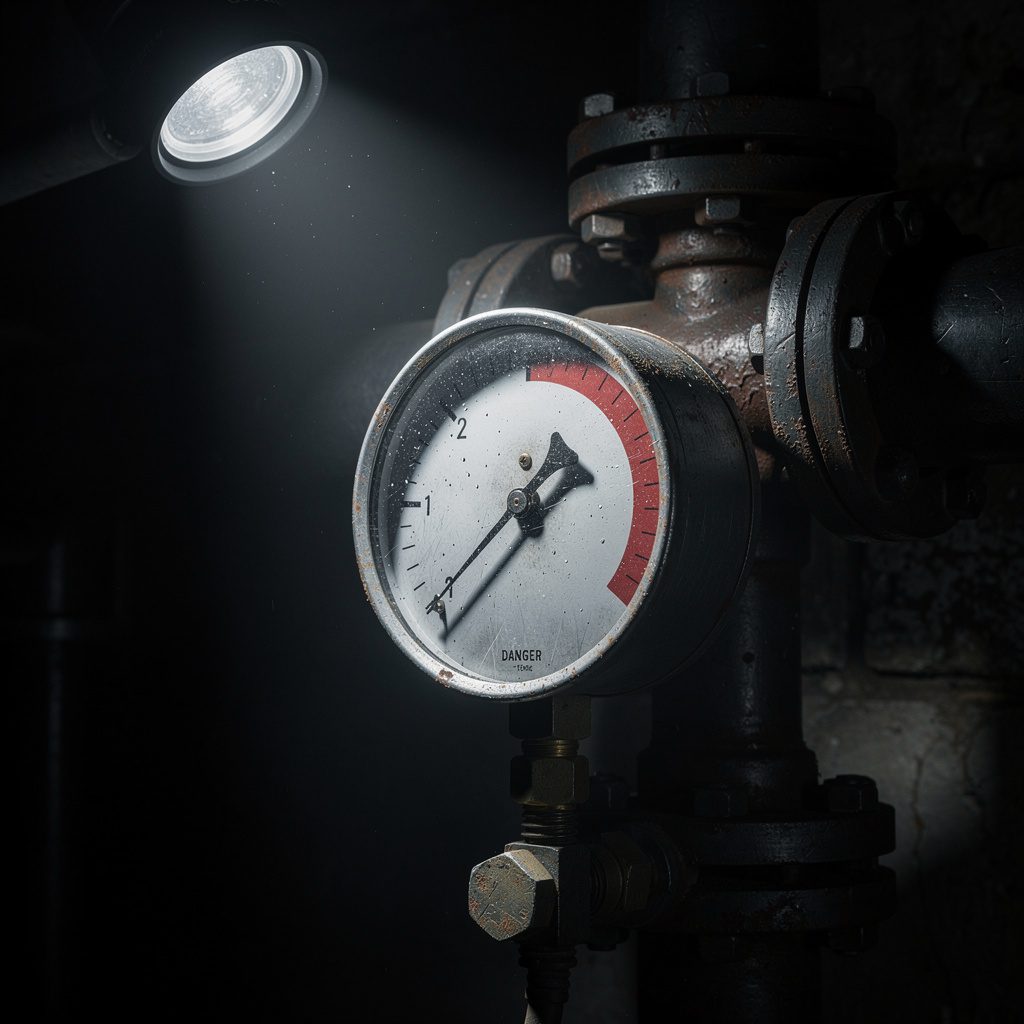
“When you get to cluster 7,” the voice said, “look at the manual gauge on the secondary input line. Not the digital readout. The manual gauge.”
“I know how to do a manual inspection.”
“I know you do. I’m just — I know how easy it is to look at the digital first because it’s at eye level. That’s all.”
Naveen pushed through the yard door into the cold. The Edmonton night in November was a physical thing, a weight that pressed against the face and hands. The halogen floodlights turned the gravel blue-white, and his shadow stretched out long and thin in front of him, pointing north toward the cluster housings.
He walked.
The voice was quiet while he walked, which he found, paradoxically, more unsettling than when it was speaking. At least speech was something he could argue with.

 WhatsApp
 Telegram
 Email






Categories
- AI & Technology
- Contemporary
- Corporate Control
- Creepypasta
- Crime Thriller
- Cyberpunk
- Dark Fantasy
- Enemies to Lovers
- Fairy Tale Retelling
- Fantasy
- First Contact
- Forbidden
- Genetic/Body Horror
- High Fantasy
- Monster Hunter
- Mythic/Folklore
- Paranormal
- Portal/Otherworld
- Post-Apo
- Post-Collapse Society
- Psychological Thriller
- Romances
- SCI-FI
- Second Chance
- Slow Burn
- Space Combat
- Spacepunk
- Surveillance State
- Survival Thriller
- Thrillers
- Time Travel
- Treasure Hunter
- Urban Fantasy
- Witchcraft/Curses
Tags
10min stories atmospheric atmospheric fantasy atmospheric fiction contemporary romance Creepy creepypasta crime thriller dark fantasy debt dystopia emotional fiction enemies to lovers ensemble cast epistolary fantasy female protagonist first person forbidden romance framed narrative high fantasy love story magic Memory mystery Paranormal psychological horror psychological thriller romance sci-fi second chance second chance romance short fiction short story slow burn space station speculative fiction supernatural Survival survival thriller suspense thriller travel romance witchcraft workplace romance
Leave a Reply