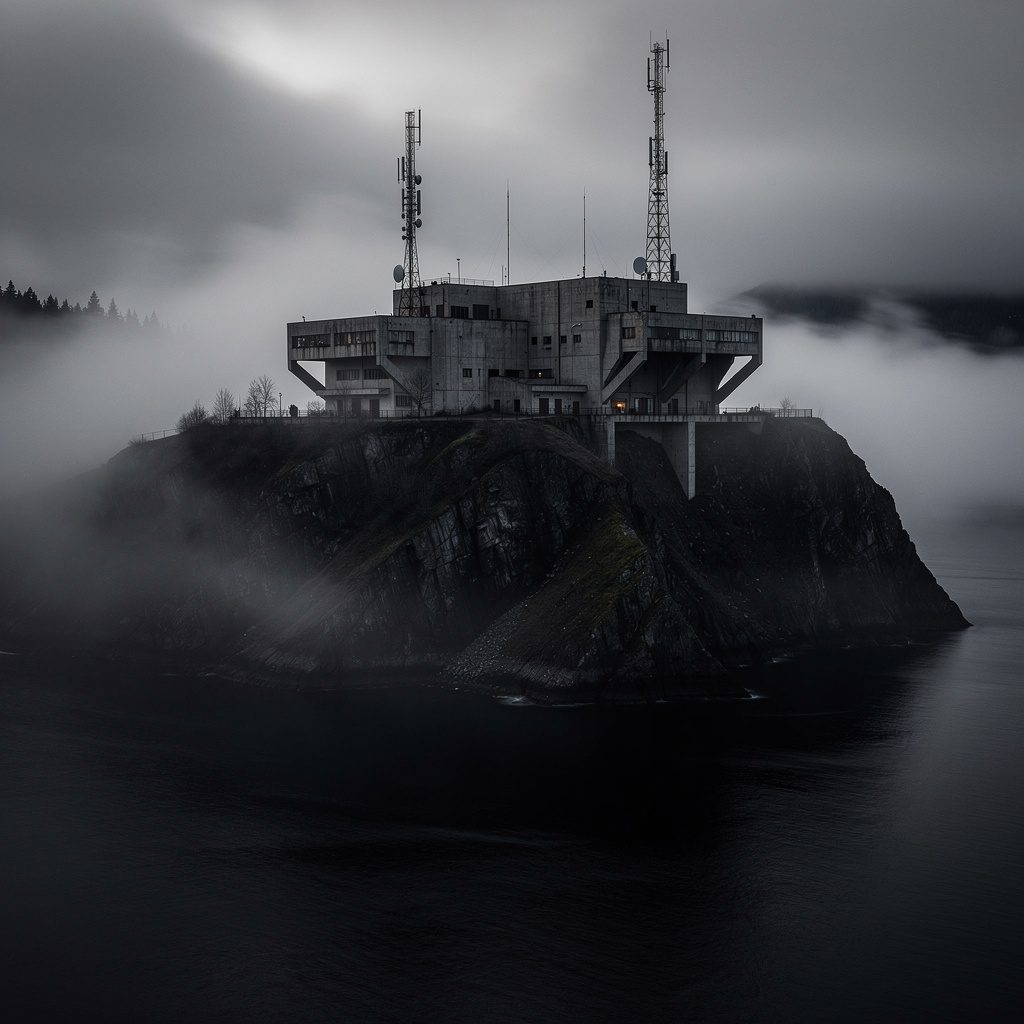
Oskar had moved to the far end of the corridor without either of them noticing, and he was standing in front of a door that should have been locked. The padlock hung open on its hasp, the metal bright and unchipped, recently cut or recently replaced. He looked at it for a long moment without touching it, then looked back at them, and his face in the flashlight’s backscatter was unreadable in the way that only genuinely frightened people manage to be unreadable — all the expression pressed flat by the effort of keeping it contained.
“This room was a resonance chamber,” he said. “For testing extremely low frequency transmission. ELF. The Navy used ELF to communicate with submarines. The signals penetrate seawater. They penetrate almost everything.” He paused. “They also penetrate the human nervous system at certain amplitudes. That was part of what they tested here.”
Neither Josette nor Barrington spoke. The signal analyzer beeped again, steadier now.
Oskar pushed the door open.
The chamber beyond was a large concrete room, and it was not empty, and it was not dark. There were no lights in the conventional sense — no bulbs, no screens, no emergency strips along the baseboards. But the air itself had a quality that was not quite luminescence and not quite shadow, a kind of visibility that did not come from any identifiable source, the way a room sometimes holds the last of the daylight long after the windows go dark. In the center of the room, the original transmission equipment stood exactly as it had been decommissioned: consoles covered, cables coiled, everything still. But the needles on the analog meters — the old ones, the ones hardwired, the ones that ran on no external power at all — were moving. Not wildly. Slowly, precisely, tracing the same rhythm the file had carried, the same rhythm the signal analyzer was now screaming about in thin continuous pulses.
Barrington took a step into the room and then stopped. Later, he would not be able to say why he stopped — only that something in the rhythm of the needles had reached him at a frequency below hearing, below thought, somewhere older than either.
Josette pressed record.
Oskar stood in the doorway and did not go in at all. He had known, she realized. Not what they would find, but that finding it would not resolve anything. That was what his expression had been hiding in the corridor — not fear of the unknown but fear of the confirmed.
They stood there for a long time, the three of them arranged at the threshold of that quiet, impossibly active room, listening to a signal that had no source transmit itself into the dark.
When they finally left, they drove back toward the ferry in silence. The fog had thickened over the water. Josette’s recorder sat on the seat beside her, its small red light still on, and none of them noticed until they were on the ferry deck, standing at the railing with the black water moving beneath them, that the recorder had not stopped. It was still recording. And from its tiny speaker, barely audible under the sound of the engine and the Sound, came the rhythm.
Same interval.
Same pulse.
The red light blinked, steady as a heartbeat, all the way across the water.

 WhatsApp
 Telegram
 Email







Categories
- AI & Technology
- Contemporary
- Corporate Control
- Creepypasta
- Crime Thriller
- Cyberpunk
- Dark Fantasy
- Enemies to Lovers
- Fairy Tale Retelling
- Fantasy
- First Contact
- Forbidden
- Genetic/Body Horror
- High Fantasy
- Monster Hunter
- Mythic/Folklore
- Paranormal
- Portal/Otherworld
- Post-Apo
- Post-Collapse Society
- Psychological Thriller
- Romances
- SCI-FI
- Second Chance
- Slow Burn
- Space Combat
- Spacepunk
- Surveillance State
- Survival Thriller
- Thrillers
- Time Travel
- Treasure Hunter
- Urban Fantasy
- Witchcraft/Curses
Tags
10min stories atmospheric atmospheric fantasy atmospheric fiction contemporary romance Creepy creepypasta crime thriller dark fantasy debt dystopia emotional fiction enemies to lovers ensemble cast epistolary fantasy female protagonist first person forbidden romance framed narrative high fantasy love story magic Memory mystery Paranormal psychological horror psychological thriller romance sci-fi second chance second chance romance short fiction short story slow burn space station speculative fiction supernatural Survival survival thriller suspense thriller travel romance witchcraft workplace romance
Leave a Reply