Ngozi Diallo told the story the same way every time, starting from the end.
She would say: four of us went into that archive vault in the basement of the old federal building on the edge of Pittsburgh’s North Side, and only three of us came out understanding what had actually happened. The fourth one already knew.
She never said which one she meant. Not at first.
—
It began as a routine job, the kind that sounds almost boring until it isn’t.
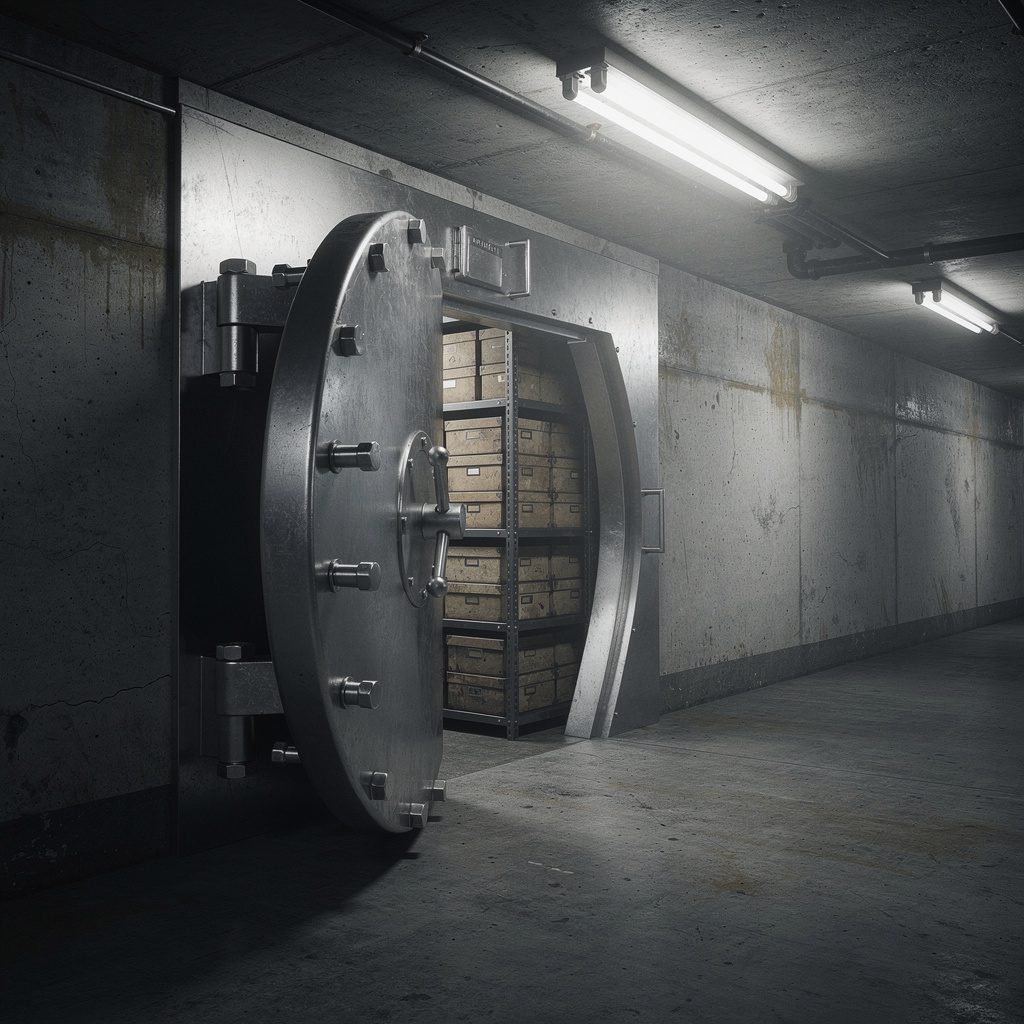
The Federal Records Preservation Office had contracted a small private firm — Halina Vaclavik’s firm, technically, though Halina herself rarely handled field work anymore — to catalog and digitize a cache of mid-century criminal court documents found in a sealed archive room during building renovations. The room had been behind a false wall. No one had entered it in an estimated forty years. The building manager, a compact and careful man named Renato Seve, led them down two flights of stairs and unlocked the vault door with a key that looked like it belonged to a different century.
The fourth member of the group was a records analyst named Dov Marchetti, whom Halina had brought in specifically because he could read degraded legal documents faster than anyone she’d ever hired. He was quiet, precise, and had a habit of standing slightly too close when he was looking at something that interested him.
The four of them stepped inside.
Renato shut the door behind them. It was heavy — reinforced steel, originally designed to be fireproof — and it made a sound like a held breath releasing.
“Light switch is on the left,” Renato said, feeling along the wall.
The lights came on, industrial strips, the kind that hum at a frequency you don’t notice until you’ve been under them for an hour.
The room was larger than any of them had expected. Metal shelving units stretched back thirty feet, stacked floor to ceiling with banker’s boxes, ledgers, accordion folders swollen with paper. The air was cold and dry and tasted faintly of something chemical — preservation treatment, Dov said, though no one had treated this room in decades.
Ngozi set up her laptop near the door. Halina began at the far end with a handheld scanner. Renato stayed near the entrance, cataloging box labels on a clipboard. Dov moved through the shelves slowly, methodically, pulling folders and holding pages up to the light.
For two hours, nothing happened. That was the calm. Long, ordinary, almost tedious.
Then Dov said, very quietly, “Halina. Come look at this.”
—
He had found a series of files bound together with deteriorated rubber bands that crumbled when he touched them. The documents inside were court records — but not ordinary ones. They were internal communications from a 1961 grand jury investigation, stamped SEALED on every page, and they referenced a name that appeared, in abbreviated form, on the outside of the building they were currently standing in.
Halina read the first page. Then the second. Her face did not change, which Ngozi, watching from across the room, found more alarming than if it had.
“Renato,” Halina said. Her voice was even. “Who else knows we’re down here today?”
Renato looked up from his clipboard. “The building coordinator. Why?”
“Anyone else?”
A pause. “No. It’s Saturday. The building’s mostly empty.”
Ngozi closed her laptop. She didn’t know why yet. Some signal in Halina’s stillness.
Dov had moved on to the second bundle of files. He was reading quickly now, pulling pages out and setting them in a careful sequence on the shelf beside him, like he was assembling something. “These aren’t just sealed,” he said. “They were deliberately misfiled. Look at the catalog numbers — these should have been in a federal courthouse archive in Harrisburg. Someone moved them here.” He straightened up. “Someone hid them here.”
The hum of the lights seemed louder.
“We should photograph everything and leave,” Ngozi said.
That was when they tried the door.
—
It did not open.
Not jammed, not stiff — it simply did not open. Renato tried the interior handle, a heavy lever mechanism, and it moved freely but nothing happened. The door stayed shut. He tried again. Ngozi pushed past him and tried herself, both hands, her shoulder against the steel. The door was immovable in the way that only locked things are.

 WhatsApp
 Telegram
 Email







Categories
- AI & Technology
- Contemporary
- Corporate Control
- Creepypasta
- Crime Thriller
- Cyberpunk
- Dark Fantasy
- Enemies to Lovers
- Fairy Tale Retelling
- Fantasy
- First Contact
- Forbidden
- Genetic/Body Horror
- High Fantasy
- Monster Hunter
- Mythic/Folklore
- Paranormal
- Portal/Otherworld
- Post-Apo
- Post-Collapse Society
- Psychological Thriller
- Romances
- SCI-FI
- Second Chance
- Slow Burn
- Space Combat
- Spacepunk
- Surveillance State
- Survival Thriller
- Thrillers
- Time Travel
- Treasure Hunter
- Urban Fantasy
- Witchcraft/Curses
Tags
10min stories atmospheric atmospheric fantasy atmospheric fiction contemporary romance Creepy creepypasta crime thriller dark fantasy debt dystopia emotional fiction enemies to lovers ensemble cast epistolary fantasy female protagonist first person forbidden romance framed narrative high fantasy love story magic Memory mystery Paranormal psychological horror psychological thriller romance sci-fi second chance second chance romance short fiction short story slow burn space station speculative fiction supernatural Survival survival thriller suspense thriller travel romance witchcraft workplace romance
Leave a Reply