The message arrived at 11:47 PM, and Mara had not sent it yet.
She was still staring at the screen, fingers hovering over the keyboard, the words half-formed in her head. But there it was — sitting in her own outbox, timestamped, delivered, read.
Mara set her coffee mug down slowly. The ceramic clicked against the desk like a small gunshot in the silence of her apartment near the waterfront in Portland, Oregon. Outside, November rain dragged itself across the window in long grey streaks.
She opened the thread again. The message was to her sister, Dani. It said: “I already know what you’re going to tell me. Don’t come over tonight.”
Mara had not typed that. She had not even opened the app until thirty seconds ago.
Her first instinct was a glitch. She worked in software. She knew glitches. She closed the app, cleared the cache, reopened it. The message was still there. Delivered at 11:47. It was now 11:49. Dani had not replied.
Mara called her. Four rings. Voicemail.
She told herself it was a sync error — some ghost data from a draft she didn’t remember writing. She had been exhausted lately. The kind of tired that makes a person doubt their own memory. She put the phone face-down on the desk and tried to breathe.
Then, at 11:53, a second message appeared in the outbox.
This one said: “The door is already unlocked. I left it that way for you.”
Mara stood up so fast her chair rolled back and hit the wall. She crossed the room in three steps and checked the front door. The deadbolt was turned horizontal. Open. She always locked it before sitting down to work. Always. It was a ritual, like brushing teeth.
She locked it now. Both locks. Then she stood in the hallway with her back against the door, heart loud in her ears, and stared at the dark mouth of the hallway leading to her bedroom.
Nothing moved.
She picked up her phone again. Dani still hadn’t read the messages. That was unusual. Dani was a night owl, always online until past midnight. Mara typed a real message this time, manually, watching every letter appear under her own thumb: “Call me. Something is wrong with my phone.”
She watched it send. It landed in the thread below the two phantom messages, timestamped 11:56 PM.
At 11:57, a third message appeared — above hers, inserted between the first two, as if the timeline itself had shifted. It said: “She can’t call you back. Not from where she is right now.”
Mara’s hands went cold.
She tried Dani again. This time it rang once and went to a flat, mechanical silence — not voicemail, just dead air. She hung up and called their mother. No answer. She called Dani’s husband, Joel. He picked up on the second ring, groggy and confused.
“Mara? It’s almost midnight.”
“Where is Dani?”
A pause. “She left around eleven. Said she was going to your place. She was upset about something, I don’t know what. She didn’t want to talk about it.”
Mara pressed the phone hard against her ear. “She never arrived.”
Another pause, longer this time. She could hear Joel sitting up in bed. “What do you mean she never—”
“Call the police. Right now. I’m going to look for her.”
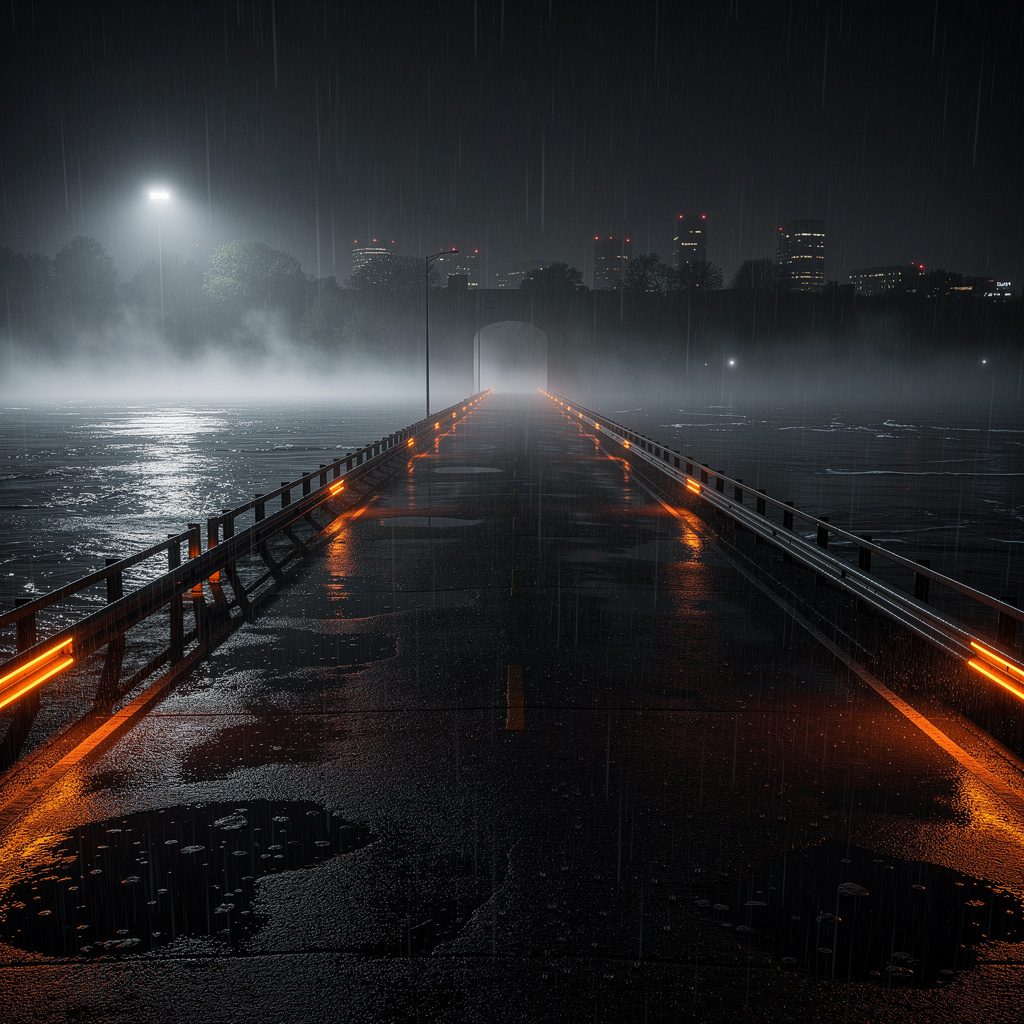
She grabbed her coat and keys. The rain outside had thickened into something almost solid. She pulled up Dani’s last known location on a shared family app — a feature they’d set up as a joke two years ago and never deleted. The blue dot was stationary, sitting on the Burnside Bridge, right above the Willamette River. It had not moved in forty minutes.
Mara ran.
The bridge was six blocks away. She covered them at a pace somewhere between a jog and a sprint, rain soaking through her coat, her breath making small white ghosts in the cold air. The city at midnight was mostly quiet — a few cars, a distant siren, the river smell rising from below like something old and patient.
She found Dani’s car parked at an angle near the east railing, hazard lights blinking orange into the rain. The driver’s door was open. No one inside.
Mara grabbed the railing and looked over. The river below was black and fast. “Dani!” Her voice came back to her off the water, distorted.

 WhatsApp
 Telegram
 Email







Categories
- AI & Technology
- Contemporary
- Corporate Control
- Creepypasta
- Crime Thriller
- Cyberpunk
- Dark Fantasy
- Enemies to Lovers
- Fairy Tale Retelling
- Fantasy
- First Contact
- Forbidden
- Genetic/Body Horror
- High Fantasy
- Monster Hunter
- Mythic/Folklore
- Paranormal
- Portal/Otherworld
- Post-Apo
- Post-Collapse Society
- Psychological Thriller
- Romances
- SCI-FI
- Second Chance
- Slow Burn
- Space Combat
- Spacepunk
- Surveillance State
- Survival Thriller
- Thrillers
- Time Travel
- Treasure Hunter
- Urban Fantasy
- Witchcraft/Curses
Tags
10min stories atmospheric atmospheric fantasy atmospheric fiction contemporary romance Creepy creepypasta crime thriller dark fantasy debt dystopia emotional fiction enemies to lovers ensemble cast epistolary fantasy female protagonist first person forbidden romance framed narrative high fantasy love story magic Memory mystery Paranormal psychological horror psychological thriller romance sci-fi second chance second chance romance short fiction short story slow burn space station speculative fiction supernatural Survival survival thriller suspense thriller travel romance witchcraft workplace romance
Leave a Reply