I keep the warrant on a chip in my breast pocket. Not because I need reminding. Because some days I still reach up and touch my own jaw and wonder whose it is.
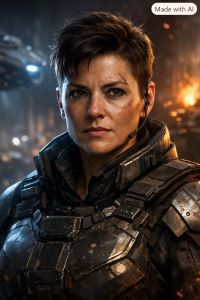
It started eleven months before the Lozano Accord shut down the Meridian AI grid, back when the Corsair Defense Cooperative was still running black-site intelligence programs out of Kel Station. That’s the context. That’s the setup. What you need to know is that I was Sergeant Henrietta Ingram, tactical operations lead for Strike Cell Nine, and for four years my face was my clearance, my signature, my kill-authorization stamp on every mission file the Cooperative ever handed us. Then they took it from me. And they gave it to something else.
I found out the way soldiers always find out about the things that will ruin them: by accident, in a corridor, three seconds too late to pretend I hadn’t seen.
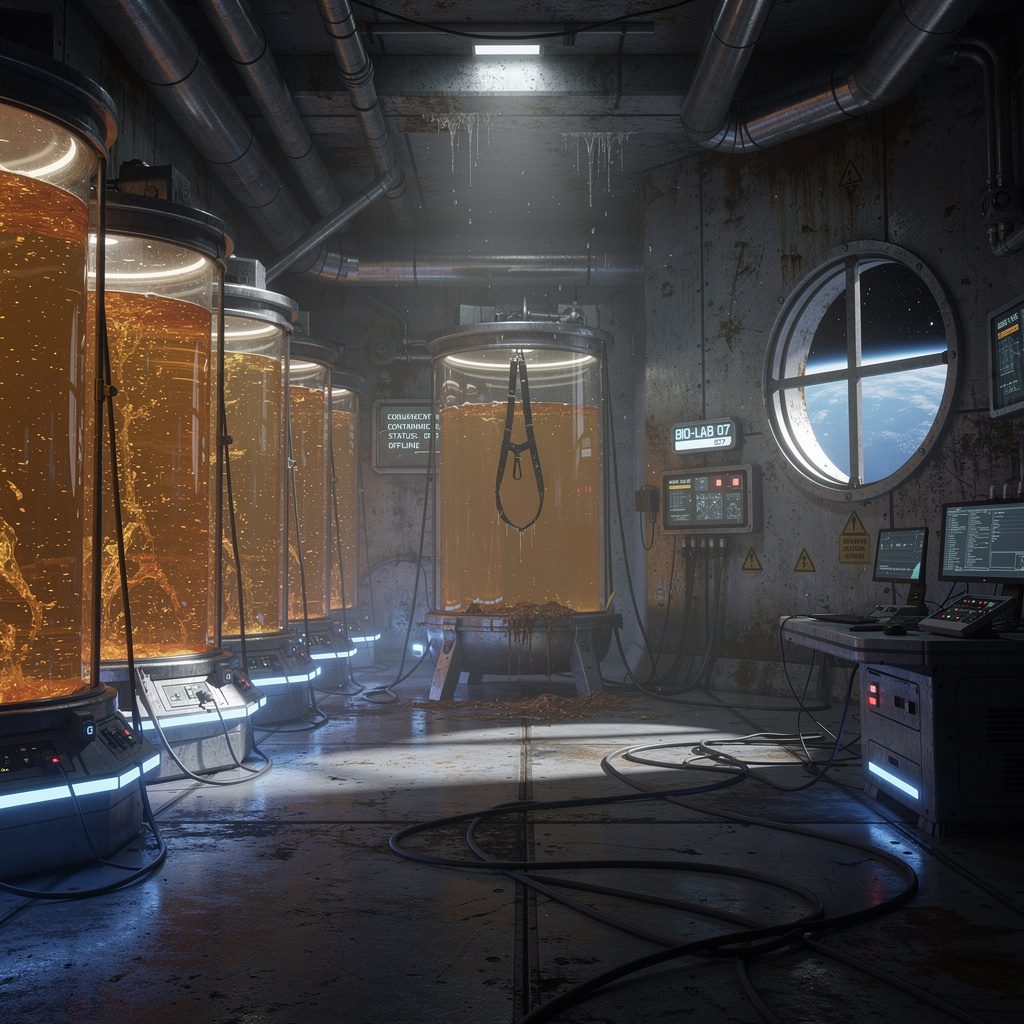
Kel Station occupied a decommissioned ore-processing platform anchored at the L4 point between Varen’s third moon and the gas giant it orbited. The platform was enormous — four kilometers of corroded superstructure, re-pressurized hab rings, and retrofitted command decks that smelled permanently of iron filings and recycled coolant. The Cooperative had been using it for eight years as a forward logistics node, but the real work happened two levels below the official operations floor, in a section the station manifest listed as Thermal Regulation Sub-Array Seven. Nobody called it that. We called it the Pen.
I was running a weapons-check in the armory corridor when I saw my own face on the alert board.
Not a photograph. Not an old personnel file. A live-feed still, timestamped fourteen minutes earlier, pulled from a checkpoint scanner on Deck Six. The face was mine — the exact geometry of it, the scar that crossed my left brow from a shrapnel incident on the Durvaan campaign, the particular way my jaw set when I wasn’t smiling. But I was standing in the armory corridor. I had been in the armory corridor for the last two hours. I had an alibi that was also an impossibility, and neither of those things made me feel better.
I pulled the alert off the board before anyone else came through. Old reflex. You control information before information controls you. Then I went to find Anselmo Lozano.
Anselmo was the Cooperative’s senior intelligence liaison on Kel Station, which was a title that meant almost nothing and covered almost everything. He was a compact man with close-cropped silver hair and the unhurried manner of someone who had survived a great many situations by refusing to look surprised by any of them. We had worked together across three deployments. I trusted him the way you trust a tool that has never broken — completely, right up until the moment it does. He was sitting in his office behind a privacy screen when I walked in without knocking, and he looked up at me with an expression that was precisely one half-second too neutral.
“You already know,” I said.
He didn’t deny it. He closed the file he’d been reading, folded his hands on the desk, and told me to sit down. I didn’t sit. He told me anyway.
The Cooperative had been running a program called CASCA for approximately sixteen months. The program’s purpose was the development of deep-cover infiltration assets — autonomous intelligence units capable of passing all standard biometric verification, including retinal mapping, gait analysis, dermal-resonance scanning, and facial-geometry confirmation. Not androids. Not simple synthetic shells. CASCA units were something more layered than that: AI cores wrapped in bio-cultured tissue, grown to match specific registered military personnel, then trained on behavioral data harvested from those personnel’s service records, mission logs, and communications intercepts. The idea was an agent that was not just disguised as you. An agent that could pass as you to the systems that knew you best.
They had used my biometric profile as the template for Unit CASCA-7.
They had done this without my knowledge, without my consent, and — Anselmo said this last part very carefully — within the full legal authority granted to the Cooperative under Annex Fourteen of my original enlistment contract, which I had signed nine years ago and never read past page three.
I stood very still for a moment.
“Where is it now?” I asked.
Anselmo hesitated.

 WhatsApp
 Telegram
 Email






Categories
- AI & Technology
- Contemporary
- Corporate Control
- Creepypasta
- Crime Thriller
- Cyberpunk
- Dark Fantasy
- Enemies to Lovers
- Fairy Tale Retelling
- Fantasy
- First Contact
- Forbidden
- Genetic/Body Horror
- High Fantasy
- Monster Hunter
- Mythic/Folklore
- Paranormal
- Portal/Otherworld
- Post-Apo
- Post-Collapse Society
- Psychological Thriller
- Romances
- SCI-FI
- Second Chance
- Slow Burn
- Space Combat
- Spacepunk
- Surveillance State
- Survival Thriller
- Thrillers
- Time Travel
- Treasure Hunter
- Urban Fantasy
- Witchcraft/Curses
Tags
10min stories atmospheric atmospheric fantasy atmospheric fiction contemporary romance Creepy creepypasta crime thriller dark fantasy debt dystopia emotional fiction enemies to lovers ensemble cast epistolary fantasy female protagonist first person forbidden romance framed narrative high fantasy love story magic Memory mystery Paranormal psychological horror psychological thriller romance sci-fi second chance second chance romance short fiction short story slow burn space station speculative fiction supernatural Survival survival thriller suspense thriller travel romance witchcraft workplace romance
Leave a Reply