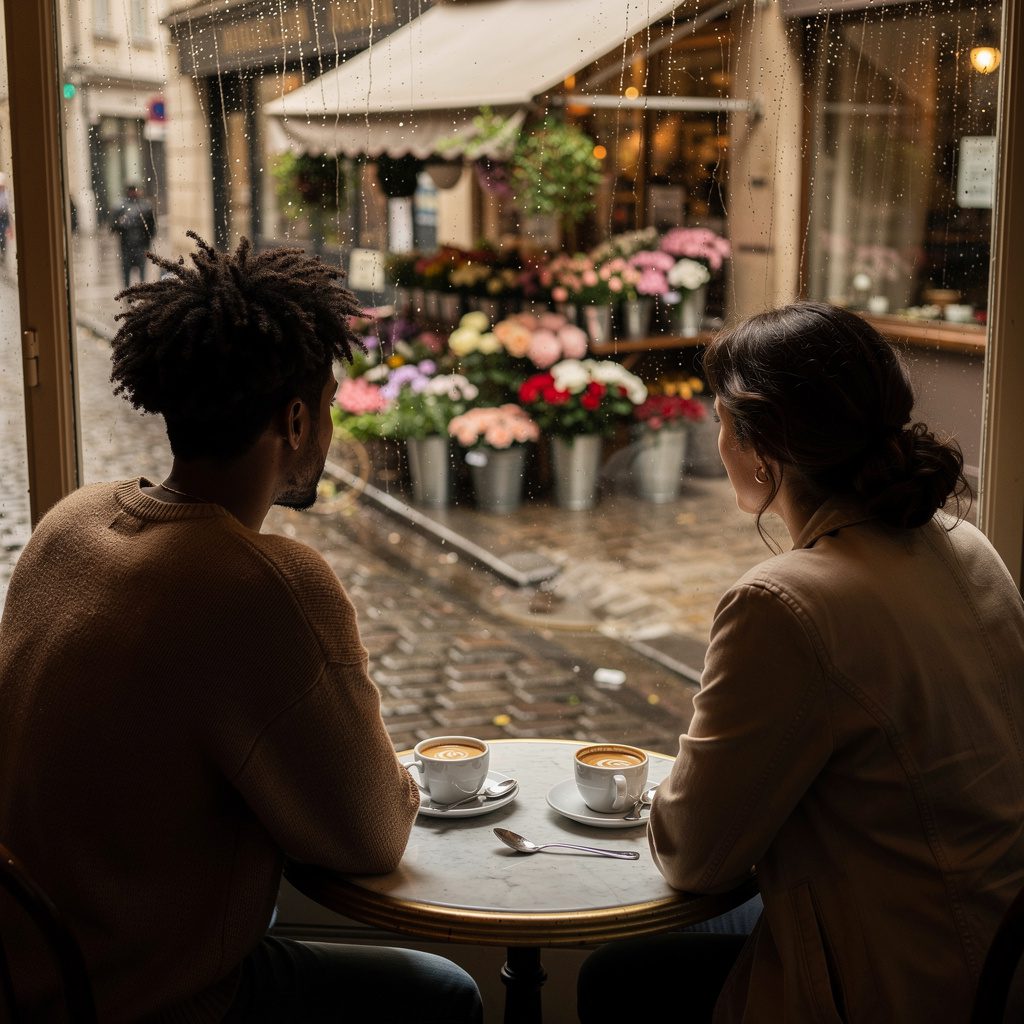
Kadeem was not a bad man. That was the part that made everything harder. He was steady, reliable, the kind of person who remembered her mother’s birthday and kept the apartment stocked with the particular tea she liked. They had built a life that looked, from the outside, exactly like what a life was supposed to look like. But somewhere in the last two years, they had stopped being curious about each other. They had stopped asking the questions that had no practical purpose — the kind Massimo asked her, casually, between pages of his book, like what she thought about cities that were built to be looked at versus cities that were built to be lived in, or whether she translated the meaning of words or the feeling of them.
She had told Kadeem about those conversations once, in passing, and he had said: “That sounds like a lot of philosophy for a Tuesday morning.”
He hadn’t meant it unkindly. He just hadn’t understood why it mattered.
November came, and the flower stall across the lane switched from dahlias to chrysanthemums, and Shanice found herself thinking about Massimo on the days she didn’t see him. Not in a way she could call longing, exactly. More like the way you think about a song that’s been playing in another room — aware of it, oriented toward it, without quite being able to hear it clearly.
She knew it was becoming something. She knew it the Thursday he arrived before her and had already ordered her double espresso, sliding it across the table without ceremony when she sat down, and she had felt a warmth move through her that had nothing to do with the coffee.
She also knew that knowing it was becoming something was not the same as being able to do anything about it.
Kadeem came to the café for the first time on a Saturday in December, which was not a day Massimo came. He had suggested it himself — “That place you’re always going to, let’s try it” — and Shanice had felt a complicated relief at the timing. They sat at the window table, because it was available, and Kadeem said the espresso was good and the croissants were overrated, and she had laughed and agreed about the croissants, and it had felt, for a moment, like something warming back to life.
But then he’d reached across the table and covered her hand with his, and she’d looked at him and thought: I don’t know how to fix us. And she’d thought: I’m not sure you know either. And she’d thought, with a guilt that sat low and heavy: I have been coming here and feeling more like myself than I have in two years, and I don’t know what to do with that.
She held his hand anyway. She was not ready to stop trying.
January arrived with rain and a gray light that turned the Marais’s pale stone buildings the color of old letters. On a Tuesday morning, Shanice came in to find Massimo already at the window table, and she stopped in the doorway for just a moment before walking to the counter.
When she sat down across from him, he looked at her and said: “You’re quieter than usual.”
“I’ve been thinking.”
“About?”
She wrapped her hands around her cup. Outside, the flower seller was arranging white tulips in the gray morning light. “About the fact that I look forward to Tuesdays and Thursdays more than any other day of the week. And about what that means.”
Massimo was quiet for a moment. When he spoke, his voice was careful and unhurried. “What do you think it means?”
“I think,” she said slowly, “that I’ve been using this table as a place to be a version of myself that I’d forgotten about. And I think that’s not entirely fair. To you. Or to him.”
He looked at her for a long moment. Not with hurt, not with disappointment — with something more honest than either of those things.
“Have you told him that? That version of yourself?”
She hadn’t. She had been so busy mourning the distance between them that she hadn’t considered she might be one of the people who’d been standing back from the edge.
“No,” she said.
“Then maybe that’s the thing,” Massimo said. “Before anything else.”

 WhatsApp
 Telegram
 Email







Categories
- AI & Technology
- Contemporary
- Corporate Control
- Creepypasta
- Crime Thriller
- Cyberpunk
- Dark Fantasy
- Enemies to Lovers
- Fairy Tale Retelling
- Fantasy
- First Contact
- Forbidden
- Genetic/Body Horror
- High Fantasy
- Monster Hunter
- Mythic/Folklore
- Paranormal
- Portal/Otherworld
- Post-Apo
- Post-Collapse Society
- Psychological Thriller
- Romances
- SCI-FI
- Second Chance
- Slow Burn
- Space Combat
- Spacepunk
- Surveillance State
- Survival Thriller
- Thrillers
- Time Travel
- Treasure Hunter
- Urban Fantasy
- Witchcraft/Curses
Tags
10min stories atmospheric atmospheric fantasy atmospheric fiction contemporary romance Creepy creepypasta crime thriller dark fantasy debt dystopia emotional fiction enemies to lovers ensemble cast epistolary fantasy first person forbidden romance found text framed narrative high fantasy love story magic Memory mystery Paranormal psychological horror psychological thriller romance sci-fi second chance second chance romance short fiction short story slow burn space station speculative fiction supernatural Survival survival thriller suspense thriller travel romance witchcraft workplace romance
Leave a Reply