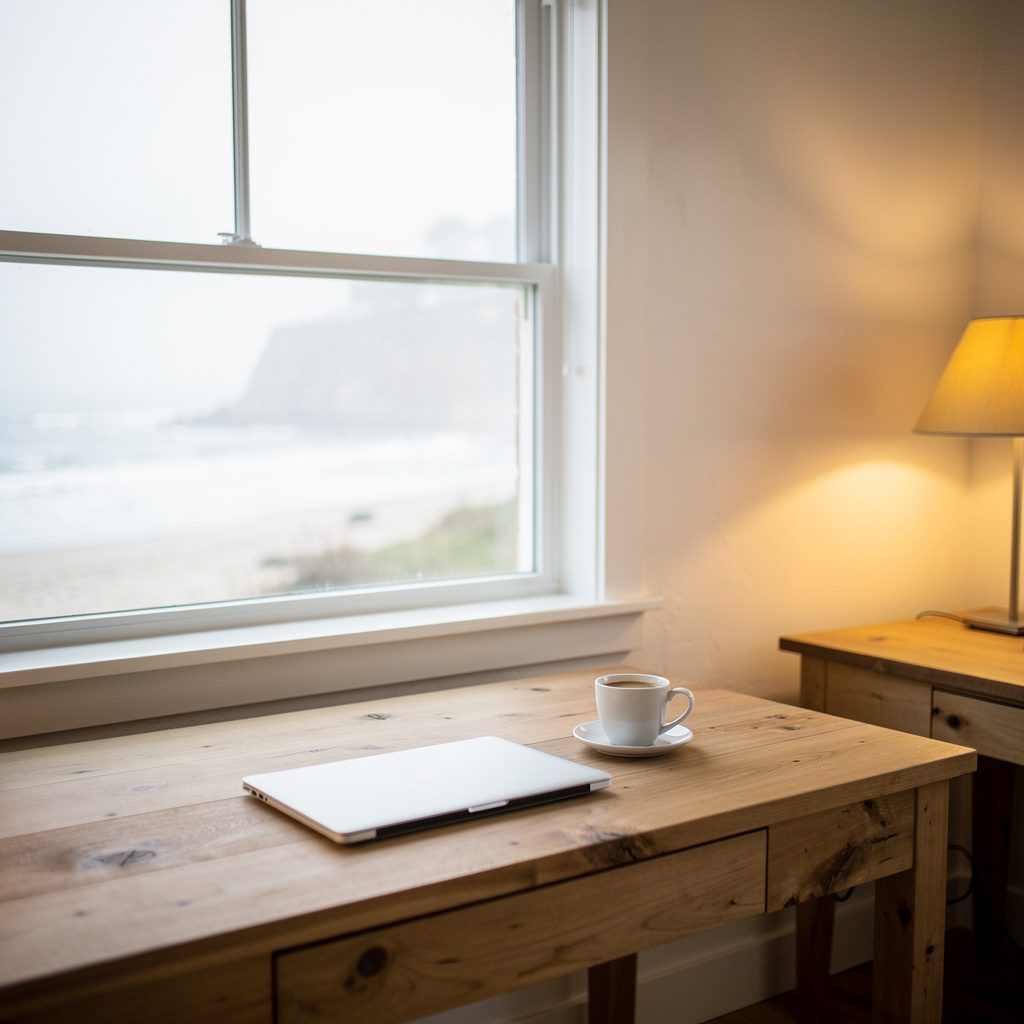
There was a sound Ronja had never been able to name — the particular way the old ceiling fan in the Santa Barbara beach house stirred the salt air every morning, not quite a hum and not quite a sigh, something in between that she had always associated with being alone and at peace. She had worked here for two summers running, the only remote consultant her firm trusted with the Castellan account, and the fan’s almost-sound had become part of her rhythm. She noticed it most in the early hours before anyone else woke, when she could spread her research across the wide oak desk by the window and watch the fog soften the Pacific into something watercolor and patient. She had not noticed it at all since Tomo Jang arrived.
He had come on a Tuesday, which felt like an insult. Tuesdays were sacred. Ronja had a system — espresso, one hour of silence, then calls — and Tomo had walked in with a canvas duffel bag, a separate monitor under one arm, and the particular ease of a man who had never once doubted whether there was room for him somewhere. He was the second consultant, the firm’s answer to a scope expansion that Ronja had argued against in three separate emails. He was also, as her colleague Kaja had cheerfully informed her over video call the evening before, “legendarily brilliant and reportedly insufferable, which, honestly, sounds familiar.” Ronja had ended the call two minutes early.
The beach house belonged to the Castellan family and sat on a low bluff above Hendry’s Beach, all whitewashed walls and wide-plank floors and windows that caught the afternoon light like a held breath. There were four people in residence: Ronja and Tomo, the Castellan’s eldest daughter Saoirse who managed the property and drifted through every room with a glass of iced tea and an opinion, and Saoirse’s husband Dev, who cooked enormous dinners and pretended not to notice the tension at the table. It was, Ronja thought, a very small stage for what was quickly becoming a very large problem.
The problem was the desk. There was a second desk in the main work room, pushed against the east wall, and on his first morning Tomo had moved it — quietly, efficiently, while Ronja was on a call — so that it sat perpendicular to hers, close enough that if either of them pushed their chairs back at the wrong moment, they would collide. She had stared at the new configuration for a full ten seconds when she returned, her coffee going warm in her hand, and said nothing. He had glanced up, read her expression with an accuracy that annoyed her, and said only, “Better light.” She had sat down and opened her laptop and decided that silence was the most professional response available to her.
The days arranged themselves into a cold, precise choreography. Ronja worked mornings; Tomo worked evenings. They divided the whiteboard without discussion, each respecting the other’s section with the deliberate care of two people who were very aware of each other and very unwilling to say so. Saoirse watched all of this with transparent delight. “You know,” she said one afternoon, appearing in the doorway with her iced tea and an expression of exaggerated innocence, “Dev and I used to argue about the thermostat for the first six months we lived together. That was basically foreplay.” Ronja did not look up from her screen. Tomo, across the room, pressed his lips together in what might have been a suppressed smile.

 WhatsApp
 Telegram
 Email







Categories
- AI & Technology
- Contemporary
- Corporate Control
- Creepypasta
- Crime Thriller
- Cyberpunk
- Dark Fantasy
- Enemies to Lovers
- Fairy Tale Retelling
- Fantasy
- First Contact
- Forbidden
- Genetic/Body Horror
- High Fantasy
- Monster Hunter
- Mythic/Folklore
- Paranormal
- Portal/Otherworld
- Post-Apo
- Post-Collapse Society
- Psychological Thriller
- Romances
- SCI-FI
- Second Chance
- Slow Burn
- Space Combat
- Spacepunk
- Surveillance State
- Survival Thriller
- Thrillers
- Time Travel
- Treasure Hunter
- Urban Fantasy
- Witchcraft/Curses
Tags
10min stories atmospheric atmospheric fantasy atmospheric fiction contemporary romance Creepy creepypasta crime thriller dark fantasy debt dystopia emotional fiction enemies to lovers ensemble cast epistolary fantasy female protagonist first person forbidden romance framed narrative high fantasy love story magic Memory mystery Paranormal psychological horror psychological thriller romance sci-fi second chance second chance romance short fiction short story slow burn space station speculative fiction supernatural Survival survival thriller suspense thriller travel romance witchcraft workplace romance
Leave a Reply