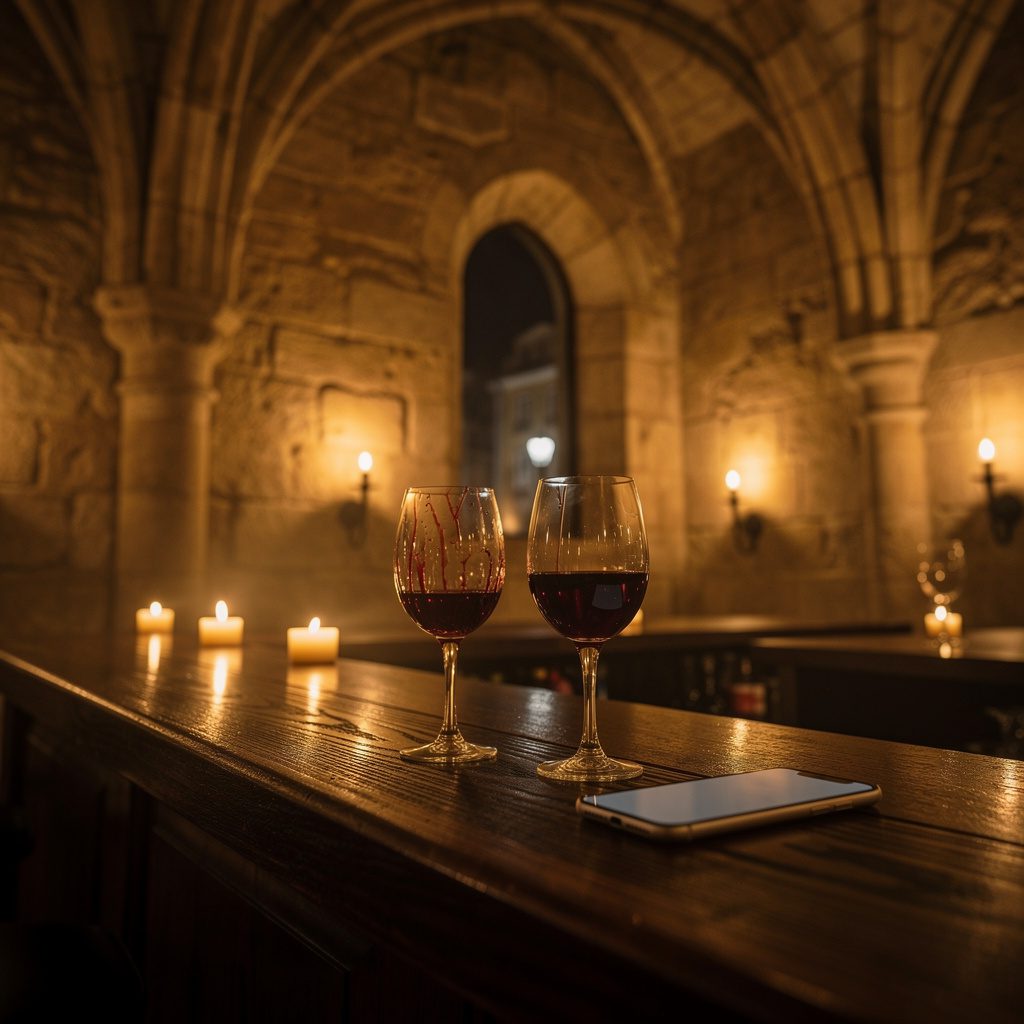
He had been brilliant and infuriating in equal measure. He had opinions about everything: light angles, framing, the emotional grammar of space. He had opinions about her opinions, which she had initially found intolerable and then, without quite meaning to, had found to be the most alive she had felt in years. They had argued over exposure settings and color temperature and whether a building could be lonely. They had argued over dinner, and then over breakfast, and then they had stopped arguing for a while, which had been better and worse simultaneously.
The problem was not that they were too different. The problem, she had eventually understood, was that they were too similar in the ways that mattered — both of them built for motion, for the next assignment, the next city, the next frame. Neither of them had known how to stay still long enough to let something take root.
She had left for a six-month commission in Southeast Asia. He had stayed. When she came back, something had shifted — not dramatically, not with a fight or a declaration, but the way a photograph shifts when you change the aperture by half a stop. Everything was slightly different. The warmth was still there, but the focus was off. And then she had taken another commission, and then he had relocated to Edinburgh for a project, and somewhere in all that movement, they had simply let each other go.
She had told herself it was mutual. She had told herself it was the right shape of ending for two people like them.
She had mostly believed it.
“You’re still shooting?” he asked.
“Always.” She turned her glass slowly. “I have a show in Lisbon next month. Coastal architecture, light studies. Three years of work.”
Something moved across his face — pride, she thought, or something adjacent to it. “That’s remarkable, Catarina.”
“Don’t sound surprised.”
“I’m not surprised. I never was.” He looked at her directly then, and she felt the full weight of it. “I always thought you were the best eye I’d ever seen. I just didn’t always say it.”
She looked away toward the arched window, where the city outside was a soft blur of lamplight and old stone. “You said it sometimes.”
“Not enough.”
The quiet between them changed texture. It was no longer the silence of two people being careful; it was the silence of two people who had run out of careful things to say.
Catarina checked her phone again. Thirty-one minutes.
“Why didn’t you call?” she asked. The question surprised her — she had not planned it, had not realized it was still living in her until it was already out. “After Edinburgh. You could have called.”
Sebastian set his glass down. He was quiet for a moment, and she knew him well enough to recognize that he was choosing his words, not stalling. “Because I didn’t know what I was calling to say. And I thought — I thought you needed the space. You always moved better without weight on you.”
“That’s not —” She stopped.
“I know.” He exhaled. “I know it wasn’t just that. I was afraid.”
She looked at him.
“I was afraid you’d say you were fine,” he said quietly. “And mean it. And then I’d have to figure out what to do with that.”
The candle between them guttered slightly in some invisible current of air, then steadied. The stone arches above them held the light the way old places hold everything — patiently, without judgment.
Catarina thought about the photographs she had taken over the past three years. Coastlines, doorways, harbors at dusk. She had told herself they were about architecture, about the relationship between built space and natural light. But looking at them now, in her mind, she could see what they were actually about. Every single one of them was a threshold. A place between one thing and another. She had spent three years photographing the moment just before you step through.
She had never quite stepped through.
“I wasn’t fine,” she said. “For what it’s worth. I was good. I was busy. But I wasn’t fine.”

 WhatsApp
 Telegram
 Email







Categories
- AI & Technology
- Contemporary
- Corporate Control
- Creepypasta
- Crime Thriller
- Cyberpunk
- Dark Fantasy
- Enemies to Lovers
- Fairy Tale Retelling
- Fantasy
- First Contact
- Forbidden
- Genetic/Body Horror
- High Fantasy
- Monster Hunter
- Mythic/Folklore
- Paranormal
- Portal/Otherworld
- Post-Apo
- Post-Collapse Society
- Psychological Thriller
- Romances
- SCI-FI
- Second Chance
- Slow Burn
- Space Combat
- Spacepunk
- Surveillance State
- Survival Thriller
- Thrillers
- Time Travel
- Treasure Hunter
- Urban Fantasy
- Witchcraft/Curses
Tags
10min stories atmospheric atmospheric fantasy atmospheric fiction contemporary romance Creepy creepypasta crime thriller dark fantasy debt dystopia emotional fiction enemies to lovers ensemble cast epistolary fantasy female protagonist first person forbidden romance framed narrative high fantasy love story magic Memory mystery Paranormal psychological horror psychological thriller romance sci-fi second chance second chance romance short fiction short story slow burn space station speculative fiction supernatural Survival survival thriller suspense thriller travel romance witchcraft workplace romance
Leave a Reply