“I didn’t know what to do with that text,” he says. “You said ‘no rush.’ I thought maybe you meant it.”
“I said it because I was scared,” I tell him. The honesty surprises me as it comes out, the way it always does when you’ve been holding something too long. “I didn’t want to ask for something you weren’t offering.”
He turns to face me fully now. The sun is on his shoulders, and the plantation is alive around us — the pickers moving through the upper rows, the smell of ripe cherries and turned earth, the hills falling away below us toward the city hidden in its valley of haze. This place I know better than anywhere. This person I have been learning, carefully, for months.
“I was offering it,” Gael says. “I just — I didn’t know if you wanted it.”
The sharpness of it catches me in the sternum.
We stand in the coffee rows and look at each other, and the eight months between July and now compress into something small enough to step over.
“I want it,” I say.
He exhales, and I realize he’s been holding his breath. He reaches out and straightens a cherry cluster on the branch beside me — a completely unnecessary agronomic intervention, an excuse to be closer — and then his hand stays near mine on the branch. Not touching. Almost.
“Okay,” he says. “Okay.”
—
I spend forty-five minutes with Daniel in the plantation house. He is charming and a little wistful and I feel almost nothing, which is how I know that chapter is genuinely closed. I give him a bag of our best washed lot to take back to Bogotá and I walk him to his car and I wish him well and mean it, completely this time, without the mostly.
When I come back down to the lower terrace, Keisha is there, ostensibly checking a picker’s tally sheet. She looks up.
“He gone?”
“He’s gone.”
She nods, satisfied. Then: “Gael’s at the east block.”
“I know.”
“He’s been there a while.”
“Keisha.”
“I’m just giving you information.” She turns back to her tally sheet, the picture of professional detachment. “I’m a very informative person.”
I find Gael at the east block, crouched between the rows, turning a ripe cherry over in his fingers. He hears me coming and stands, and when I reach him the afternoon light is going gold on the hillside and the city below is starting to blur into its own warm haze.
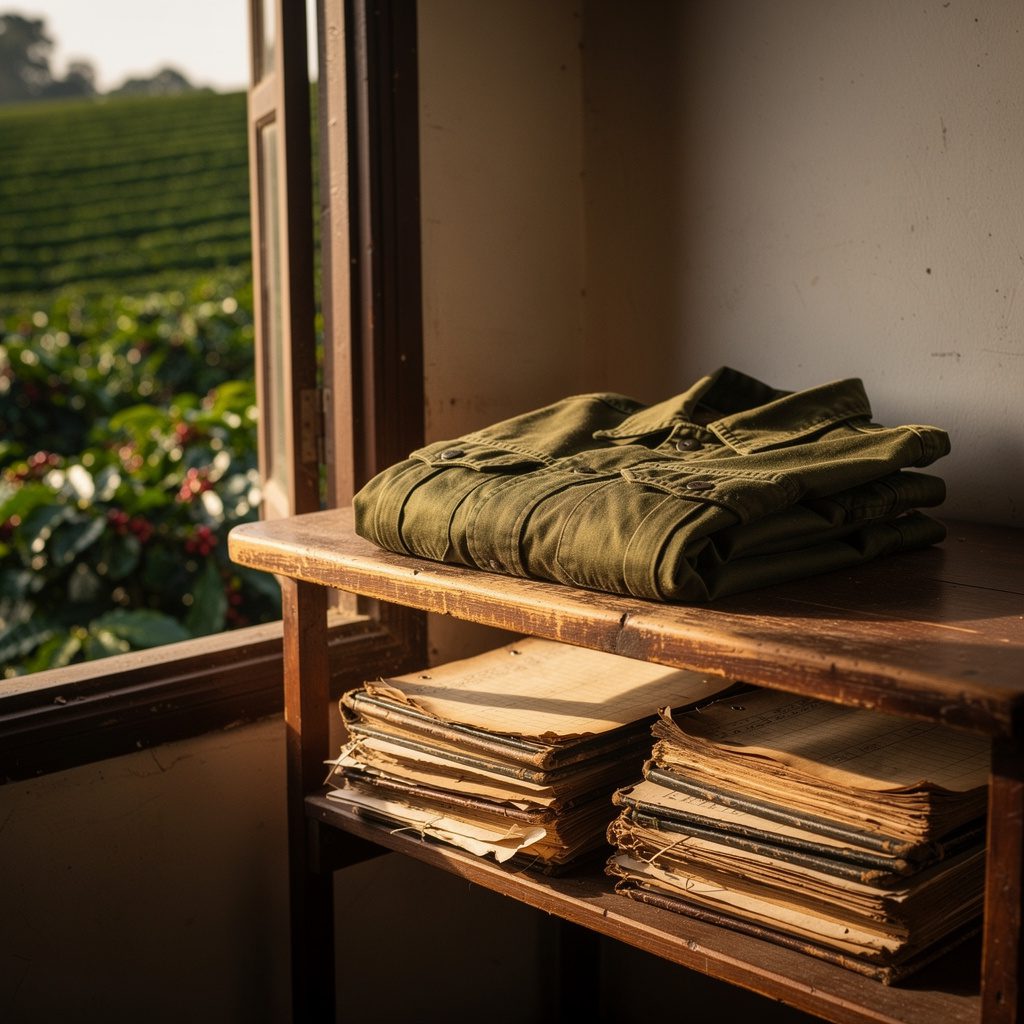
I hand him his jacket.
I’d gone back to the house for it without planning to. Just found myself at the shelf, moving the harvest logs, pulling it down.
He takes it slowly, looking at it, then at me.
“You kept it,” he says.
“I told you. No rush.” A beat. “I lied a little.”
The smile that crosses his face is slow and quiet and entirely real. He folds the jacket over his arm and we stand together in the east block as the light shifts, and below us the plantation moves through its evening rhythms — pickers heading in, the washing station beginning its night cycle, the hills going amber and then rose.
He doesn’t put the jacket on. He holds it, like he’s decided it means something worth keeping close.
We walk back toward the plantation house together, not quite touching but close enough that the distance between us has a different quality than it did this morning — chosen rather than cautious, deliberate rather than defended.
Tomorrow the harvest continues. There is still so much to say.
But the evening is warm, and we have time.

 WhatsApp
 Telegram
 Email







Categories
- AI & Technology
- Contemporary
- Corporate Control
- Creepypasta
- Crime Thriller
- Cyberpunk
- Dark Fantasy
- Enemies to Lovers
- Fairy Tale Retelling
- Fantasy
- First Contact
- Forbidden
- Genetic/Body Horror
- High Fantasy
- Monster Hunter
- Mythic/Folklore
- Paranormal
- Portal/Otherworld
- Post-Apo
- Post-Collapse Society
- Psychological Thriller
- Romances
- SCI-FI
- Second Chance
- Slow Burn
- Space Combat
- Spacepunk
- Surveillance State
- Survival Thriller
- Thrillers
- Time Travel
- Treasure Hunter
- Urban Fantasy
- Witchcraft/Curses
Tags
10min stories atmospheric atmospheric fantasy atmospheric fiction contemporary romance Creepy creepypasta crime thriller dark fantasy debt dystopia emotional fiction enemies to lovers ensemble cast epistolary fantasy female protagonist first person forbidden romance framed narrative high fantasy love story magic Memory mystery Paranormal psychological horror psychological thriller romance sci-fi second chance second chance romance short fiction short story slow burn space station speculative fiction supernatural Survival survival thriller suspense thriller travel romance witchcraft workplace romance
Leave a Reply