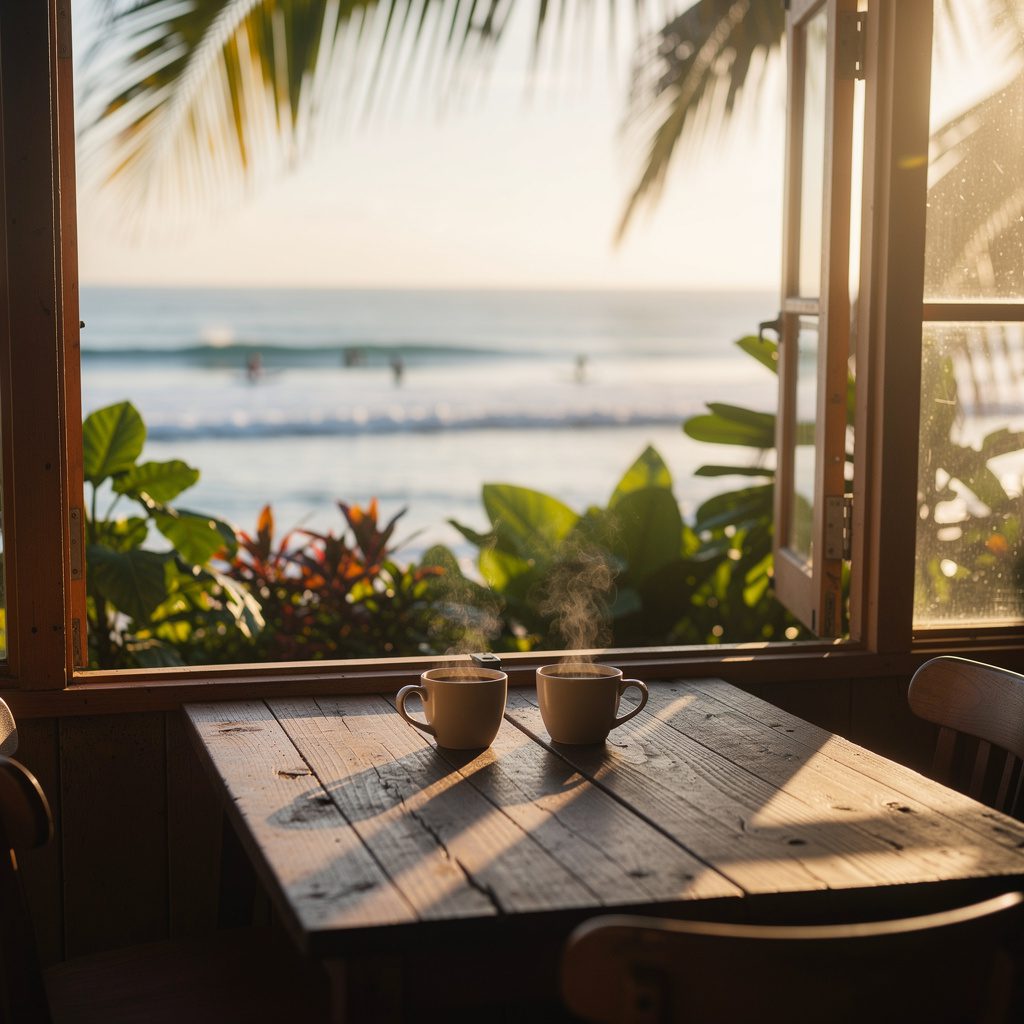
They talk for a while about nothing important—why he’s in Tamarindo (a friend’s surf school, a loose plan that has become a longer stay), why she came back (her mother’s house, a sabbatical, the need to be somewhere the pace of life is set by tides). The conversation is easy in the way that old fluency is easy, like muscle memory, and that frightens her more than awkwardness would have. Awkwardness would mean they’d become strangers. This means they haven’t.
Then he says, quietly: “Why didn’t you tell me you were here?”
The question lands without accusation. That’s almost worse.
“I didn’t know you were here,” she says.
“But you knew I might be. You knew I’d been coming back to Tamarindo.”
She had known that. A mutual contact, a photograph on a phone screen she’d looked at longer than she should have. The way information finds you when you’re not quite trying to avoid it.
“Sten.”
“I’m not angry,” he says. “I just want to understand.”
She looks at him across the table—at the patience in his face, the steadiness she had once found suffocating because she was twenty-eight and terrified of anything that felt permanent—and she thinks about how to say what is true. The window is open. Salt air moves through it. A pelican drops past in a long, lazy glide.
“I think I was afraid,” she says finally, “that if I told you I was here, you’d come find me. And I wasn’t sure yet whether I wanted you to.”
He is quiet for a moment.
“And now?”
The word sits between them, unhurried, the way he has always been—never pushing, never crowding, just making room and letting her decide what to do with it. It is one of the things she got wrong about him in Lisbon. She had called it patience and made it sound like passivity, when really it was just the rarest kind of respect.
“Now you’re already here,” she says. “So the question answers itself.”
It’s not a declaration. She is not built for declarations before nine in the morning. But something shifts in his expression—something that had been carefully held goes a little loose—and he exhales, slow, like a man setting down something heavy.
He picks up his cup. She picks up hers.
They sit with the ocean below them and the town waking up around them and the particular warmth of a Costa Rican morning settling over everything like a second skin. They don’t make any plans. They don’t say anything that sounds like a promise.
But when he stands to leave, he pauses at her table.
“Tomorrow?” he asks.
She looks up at him. The light is behind him, turning his edges gold.
“Eight o’clock,” she says.
He nods, like that’s enough—because for now, it is—and walks out into the bright, salt-washed morning.
She sits a while longer, watching the surfers. Her coffee is still warm.
She thinks: so this is what it feels like when the tide comes back in.

 WhatsApp
 Telegram
 Email







Categories
- AI & Technology
- Contemporary
- Corporate Control
- Creepypasta
- Crime Thriller
- Cyberpunk
- Dark Fantasy
- Enemies to Lovers
- Fairy Tale Retelling
- Fantasy
- First Contact
- Forbidden
- Genetic/Body Horror
- High Fantasy
- Monster Hunter
- Mythic/Folklore
- Paranormal
- Portal/Otherworld
- Post-Apo
- Post-Collapse Society
- Psychological Thriller
- Romances
- SCI-FI
- Second Chance
- Slow Burn
- Space Combat
- Spacepunk
- Surveillance State
- Survival Thriller
- Thrillers
- Time Travel
- Treasure Hunter
- Urban Fantasy
- Witchcraft/Curses
Tags
10min stories atmospheric atmospheric fantasy atmospheric fiction contemporary romance Creepy creepypasta crime thriller dark fantasy debt dystopia emotional fiction enemies to lovers ensemble cast epistolary fantasy first person forbidden romance found text framed narrative high fantasy love story magic Memory mystery Paranormal psychological horror psychological thriller romance sci-fi second chance second chance romance short fiction short story slow burn space station speculative fiction supernatural Survival survival thriller suspense thriller travel romance witchcraft workplace romance
Leave a Reply