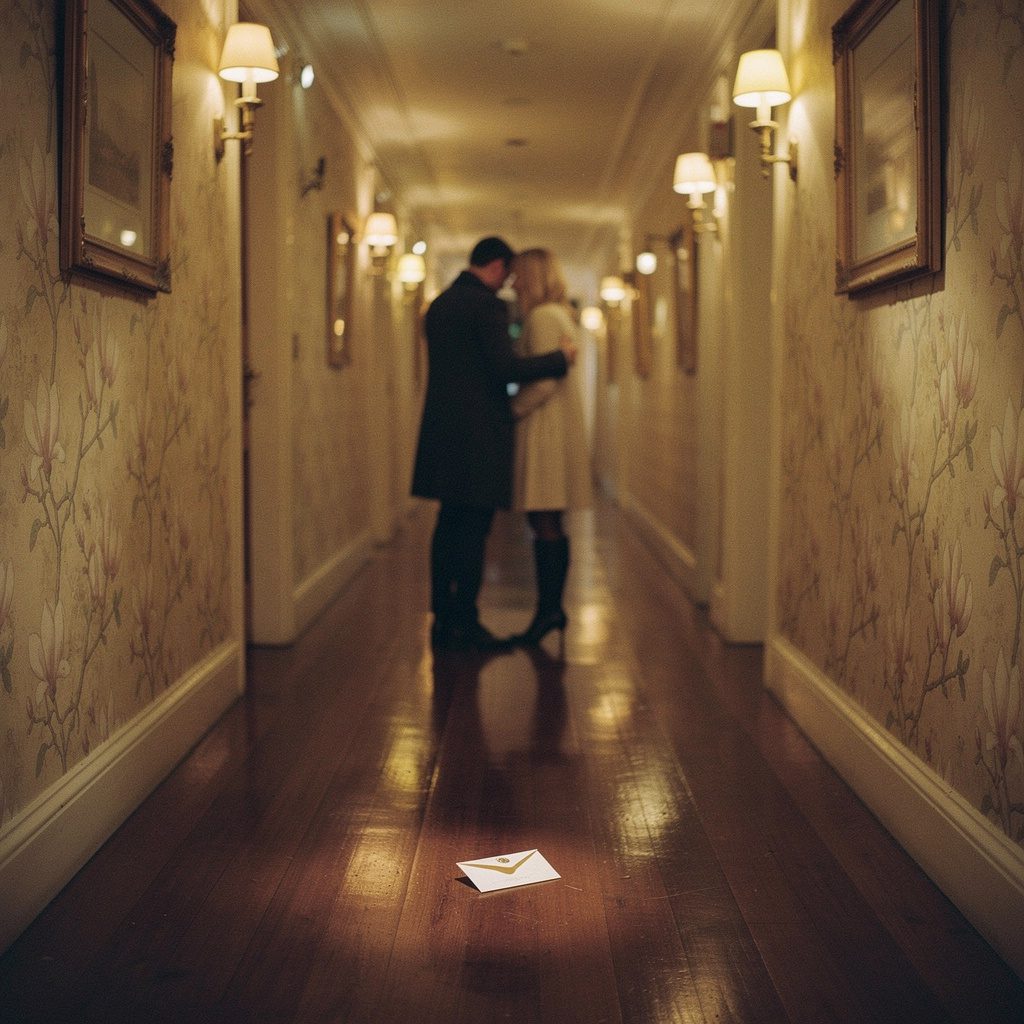
The conference started Wednesday morning. Viktor gave his keynote at eleven.
Nadia sat in the fourth row because the front felt too obvious and the back felt like cowardice.
He was good at this — she’d forgotten that, or maybe she’d suppressed it. He spoke the way he thought: methodically, then suddenly with a burst of real feeling that caught you off guard. He said something about how old buildings remember the people who built them, that renovation wasn’t erasing history but learning to live inside it, and Nadia found herself gripping her pen without having decided to.
He didn’t look at her during the talk.
Afterward, she thought: good. That was good. We can be professional about this.
Then he appeared at her elbow during the coffee break and said, “You’re still doing that thing with your pen.”
“What thing?”
“You hold it like you’re about to throw it at someone.”
“Maybe I am.”
He smiled. Not the polished keynote smile. The real one, the one that went slightly sideways.
She looked away. “You were good up there.”
“You sound surprised.”
“I’m not surprised. I’m —” She stopped.
“What?”
“I’m trying to decide if this is easier or harder than I thought it would be.”
He was quiet for a moment. “Which is it?”
“Both,” she said. “Somehow.”
She refilled her coffee and went back to her seat before the next panel started. He let her go.
—
Viktor had run into Dmytro six months ago, in Warsaw, at a mutual colleague’s retirement dinner. They’d been civil. Dmytro had remarried — happily, it seemed — and had shown Viktor photos of a new baby with the uncomplicated pride of a man who had gotten what he wanted eventually.
Dmytro had asked, casually, if Viktor was still in touch with “that consultant, the one from the Podil project.”
Viktor had said no.
Dmytro had nodded and moved on to the salmon.
That was all. Seven years of weight, and it had weighed nothing to Dmytro. Viktor had sat with that for a long time afterward.
The thing about a promise made in the doorway of a Kyiv building in the rain: it doesn’t expire just because the circumstances change. It just waits.
He’d spent seven years telling himself the waiting was impractical. That he didn’t even know where she was. That people moved on.
And then the conference roster had come through and her name had been on it and the only thing he’d felt, underneath the shock, was something that had no word in English and only an approximate one in Ukrainian.
Ready. He’d felt ready.
—
Wednesday night, there was a reception in the hotel’s courtyard garden.
Charleston in October meant the air was warm but not heavy, the jasmine still faintly there, string lights threaded through the iron fence. Someone had put candles on every surface and the whole thing looked like a photograph of the kind of evening people remember.
Nadia had almost skipped it. She’d stood in her room for ten minutes in the dress she’d packed for exactly this kind of event, and she’d thought: I could order room service. I could call my sister. I could be sensible.
She went down.
Viktor was already there, talking to two other attendees near the fountain. He was in a dark jacket, no tie, and he looked like someone who belonged in old buildings, which she supposed was the point.
He caught her eye across the courtyard.
She raised her glass, very slightly, in something that wasn’t quite a toast.
He excused himself.
—
They ended up in the far corner of the garden, where the candles were fewer and the jasmine was stronger, and they talked for two hours without either of them seeming to notice the time.
She told him about the firm she’d started. He told her about the project in Lisbon that had nearly broken him and then hadn’t. She told him about her mother’s decline and recovery, the year she’d lost to hospitals and paperwork, and he listened the way he always had — fully, without filling the pauses.
At some point the reception thinned and they were nearly alone in the garden and neither of them moved to leave.
“Dmytro’s remarried,” Viktor said. Not as a preamble. Just as a fact.
“I heard,” Nadia said. “Last year sometime.”
“He seemed happy.”

 WhatsApp
 Telegram
 Email







Categories
- AI & Technology
- Contemporary
- Corporate Control
- Creepypasta
- Crime Thriller
- Cyberpunk
- Dark Fantasy
- Enemies to Lovers
- Fairy Tale Retelling
- Fantasy
- First Contact
- Forbidden
- Genetic/Body Horror
- High Fantasy
- Monster Hunter
- Mythic/Folklore
- Paranormal
- Portal/Otherworld
- Post-Apo
- Post-Collapse Society
- Psychological Thriller
- Romances
- SCI-FI
- Second Chance
- Slow Burn
- Space Combat
- Spacepunk
- Surveillance State
- Survival Thriller
- Thrillers
- Time Travel
- Treasure Hunter
- Urban Fantasy
- Witchcraft/Curses
Tags
10min stories atmospheric atmospheric fantasy atmospheric fiction contemporary romance Creepy creepypasta crime thriller dark fantasy debt dystopia emotional fiction enemies to lovers ensemble cast epistolary fantasy female protagonist first person forbidden romance framed narrative high fantasy love story magic Memory mystery Paranormal psychological horror psychological thriller romance sci-fi second chance second chance romance short fiction short story slow burn space station speculative fiction supernatural Survival survival thriller suspense thriller travel romance witchcraft workplace romance
Leave a Reply