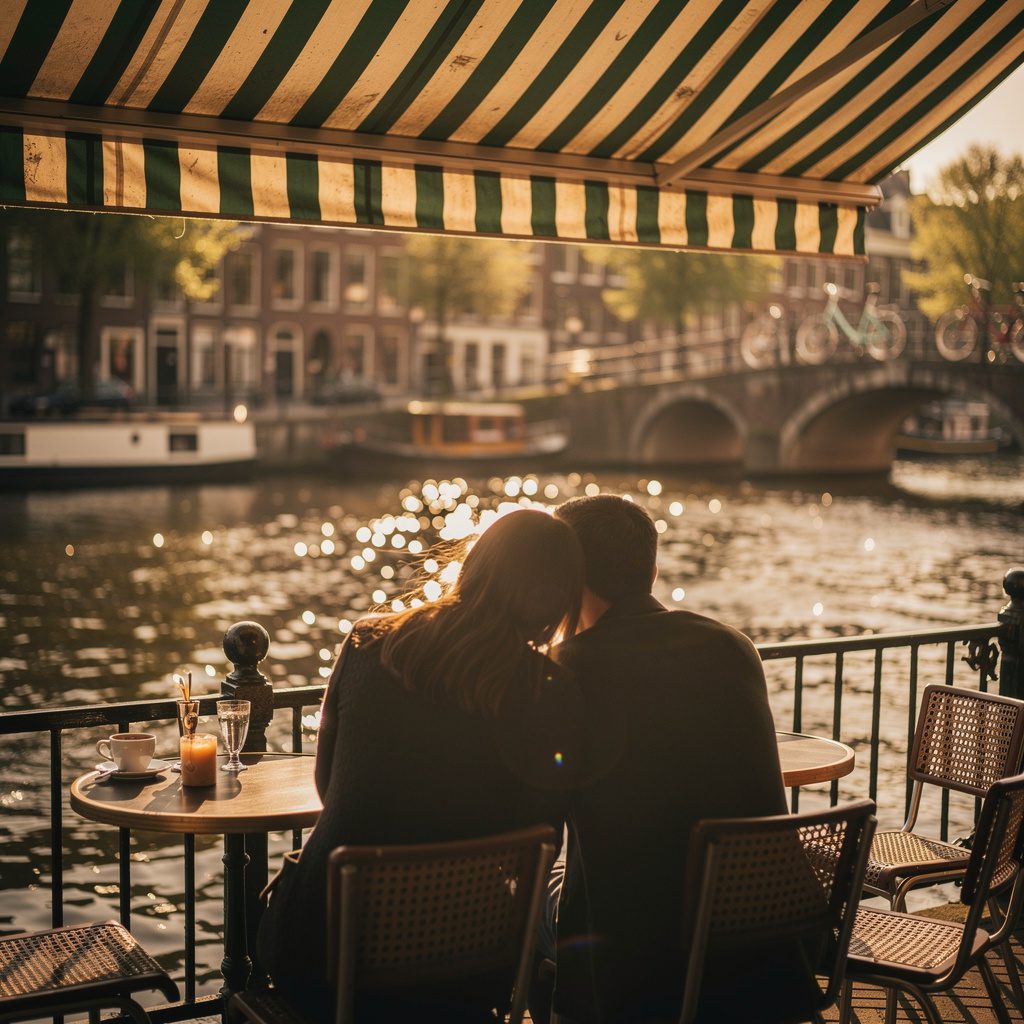
And that was the moment. That was the exact moment I stopped pretending.
Which is, of course, when Dolores walked in.
I saw her before she saw me. She was standing at the café entrance, scanning the terrace, wearing a red coat I remembered from two years ago. My stomach dropped in the specific, unpleasant way it does when the past appears without warning — not painful exactly, just disorienting, like a door opening onto a room you thought you’d locked.
Dolores Fuentes. My ex. We’d ended things on reasonable terms, which in retrospect meant we’d ended them without quite finishing the conversation. She’d moved to Rotterdam for a fellowship; I’d moved to Amsterdam for the research position. The city was smaller than it looked on a map.
She spotted me. She smiled — genuinely, warmly, the way she always had — and made her way over.
What followed was the most surreal fifteen minutes of my adult life.
Dolores was friendly and easy and completely unbothered, because Dolores had always been better at composure than I was. She said hello to the table, shook hands with Rafael, charmed Simona within approximately forty-five seconds. She explained she was meeting a friend nearby and had stopped in for coffee. She sat in the empty chair that had appeared at the end of the table — because of course there was an empty chair — and the conversation folded around her naturally.
I was acutely, painfully aware of Nana beside me. She’d gone quiet. Not cold — Nana was never cold — but careful, in the way she got when she was processing something she wasn’t ready to name.
At one point, Dolores glanced between us and said, with a brightness that was either oblivious or deliberate, “You two seem close.”
I opened my mouth. Closed it.
Nana said, “We work together.”
Three words. Perfectly neutral. And yet I felt them like a small door closing.
Dolores left after her coffee, kissed me on the cheek in a way that was entirely European and entirely meaningless, and disappeared back into the Jordaan. The table exhaled. Rafael immediately ordered dessert. Simona said something about the red coat. The moment dissolved into the ordinary hum of the afternoon.
But something had shifted.
Nana was quieter. Not unkind — she answered when spoken to, laughed at Ignacio’s jokes, poured herself more water from the carafe on the table. But the warmth that had been building between us all afternoon had pulled back, like a tide retreating, and I didn’t know how to call it forward again without naming it directly. And I wasn’t sure I had the right to name it. Not yet. Not here, with Rafael monologuing and Simona refilling everyone’s glasses and the whole day watching.
The lunch wound down slowly, the way good ones do. People drifted off in twos and threes. Jia Lin and Ignacio headed toward the tram. Rafael announced he was going to find a bookshop and invited everyone with the confidence of a man who expected to be declined. Simona went with him, which surprised everyone including Simona.
And then it was just us.
Nana was pulling on her jacket, looking out at the canal. The afternoon light had gone amber, the water below us catching it in slow, shifting pieces. A houseboat was moored just beyond the railing, its window boxes full of late-season geraniums, improbably red against the grey stone.
I said her name.
She turned.
I didn’t have a speech. I hadn’t planned anything. I just said, “She’s not — that wasn’t — “ and then stopped, because I was doing a terrible job of it.
Nana waited. She was good at waiting.
“I didn’t know she’d be here,” I said. “And it doesn’t matter that she was. I just want you to know that.”
A long pause. The canal moved. A bicycle bell rang somewhere on the bridge above us.
“I know,” Nana said. Simply. Like it was the easiest thing.
We stood there for another moment, not moving, not speaking, the city doing what Amsterdam does in the late afternoon — turning golden and unhurried and a little bit like a dream you don’t want to wake from.
Then she said, “I walked here from the hotel. Do you want to walk back?”
And I said yes.
We walked along the canal as the light went low and the street lamps came on one by one, their reflections stretching long and gold across the water. She found a loose thread on her jacket sleeve and wound it around her finger absentmindedly as she talked. I didn’t rush anything. Neither did she. We just walked, and talked, and let the city hold us for a little while longer.
That’s the story, as best I can tell it. It didn’t end with a declaration or a dramatic moment at a railing. It ended with two people walking beside a canal in the early dark, close enough that their shoulders almost touched, neither of them in any hurry to arrive.

 WhatsApp
 Telegram
 Email







Categories
- AI & Technology
- Contemporary
- Corporate Control
- Creepypasta
- Crime Thriller
- Cyberpunk
- Dark Fantasy
- Enemies to Lovers
- Fairy Tale Retelling
- Fantasy
- First Contact
- Forbidden
- Genetic/Body Horror
- High Fantasy
- Monster Hunter
- Mythic/Folklore
- Paranormal
- Portal/Otherworld
- Post-Apo
- Post-Collapse Society
- Psychological Thriller
- Romances
- SCI-FI
- Second Chance
- Slow Burn
- Space Combat
- Spacepunk
- Surveillance State
- Survival Thriller
- Thrillers
- Time Travel
- Treasure Hunter
- Urban Fantasy
- Witchcraft/Curses
Tags
10min stories atmospheric atmospheric fantasy atmospheric fiction contemporary romance Creepy creepypasta crime thriller dark fantasy debt dystopia emotional fiction enemies to lovers ensemble cast epistolary fantasy female protagonist first person forbidden romance framed narrative high fantasy love story magic Memory mystery Paranormal psychological horror psychological thriller romance sci-fi second chance second chance romance short fiction short story slow burn space station speculative fiction supernatural Survival survival thriller suspense thriller travel romance witchcraft workplace romance
Leave a Reply